THE ADVENTURE COLLECTIVE® · Independent discovery and booking for outdoor travel

Walk the sea floor without scuba certification: a helmet supplies air while you stand 15 feet down among reef fish. Ideal for families and first-time underwater explorers, this short, guided activity blends safety briefings with close-up marine encounters.
Walk the sea floor without scuba certification: a helmet supplies air while you stand 15 feet down among reef fish. Ideal for families and first-time underwater explorers, this short, guided activity blends safety briefings with close-up marine encounters.
The reef waits a few paddle strokes from shore, water a clear, warm bowl that reflects the Bali sky. Participants step off a shallow platform, strap on a weighted helmet that supplies air from a surface tank, and lower into about 4–5 meters (≈15 feet) of sea where tropical fish thread through coral fingers and sunlight strips down in moving bands.
Verified experiences and guided adventures in the surrounding area.
Operated by Rukmana Bali Tour · Tanjung Benoa, Bali
The reef waits a few paddle strokes from shore, water a clear, warm bowl that reflects the Bali sky. Participants step off a shallow platform, strap on a weighted helmet that supplies air from a surface tank, and lower into about 4–5 meters (≈15 feet) of sea where tropical fish thread through coral fingers and sunlight strips down in moving bands.
Tanjung Benoa was a quiet fishing spit until tourism transformed it into Bali’s water-sports corridor; the shoreline sits on young coral limestone shaped by reef growth and wave action, with the southern Bali coast exposed to Indonesian throughflows that keep water clear most of the year. Sea walking here is less a technical dive than a guided encounter—no certification required, minimal training, and usually a 30-minute walk on the seabed accompanied by an instructor.
Expect to stand on sand and low reef, reach out to colorful damselfish and wrasse, and hear the hiss of the surface line through the helmet. Instructors brief on safety, entry, and hand signals; showers, lockers, and optional hotel transfers are common at operators.
Practical guidance: wear swimwear and water shoes, apply reef-safe sunscreen before arrival, and plan for about 3–4 hours total with transfers and briefings. People with significant cardiovascular, spinal, or pregnancy concerns should not participate; minimum age is commonly 10. Book in the morning for calmer seas and clearer visibility, and avoid touching coral—let the fish come to you. This experience trades depth for accessibility: it’s immediate, social, and an efficient way to meet Bali’s underwater life without learning to scuba.
easy.
3–4 hours (includes transfers and briefings).
Light to moderate fitness; must be able to walk short distances and stand in shallow water for 30 minutes
No—sea walking uses a helmet connected to surface air and requires only a short safety briefing; no certification is needed.
Typical depth is about 4–5 meters (≈15 feet), shallow enough to stand on the seabed while breathing from the helmet.
Minimum age is commonly 10 years, though policies can vary—check operator rules when booking.
People with serious cardiovascular, respiratory, or spinal conditions, and pregnant travelers, are generally advised not to participate—disclose health issues at booking.
Tanjung Benoa evolved from a fishing community into Bali’s water-sports hub over recent decades, driven by beach development on the Nusa Dua peninsula.
Coral and seagrass habitats here are sensitive—operators encourage no-touch policies and the use of reef-safe sunscreens to reduce damage.
Rukmana Bali Tour operates guided outdoor trips and adventures with an emphasis on safety, stewardship, and memorable experiences.
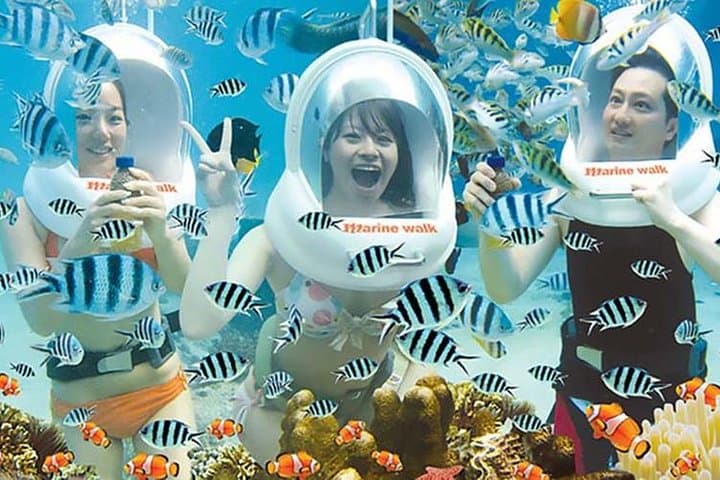
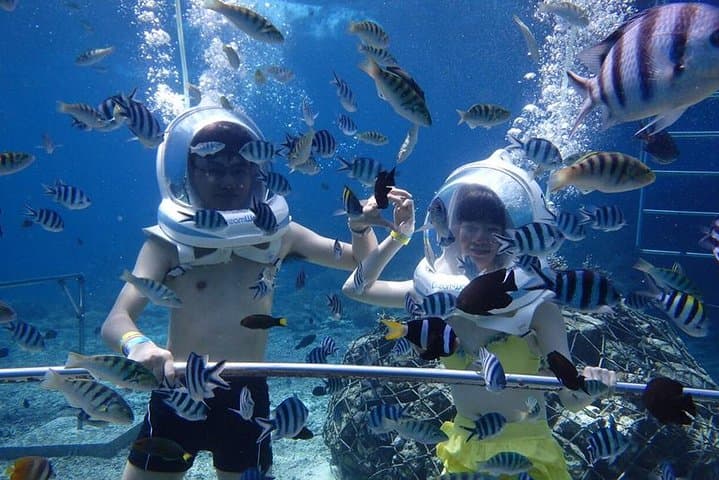
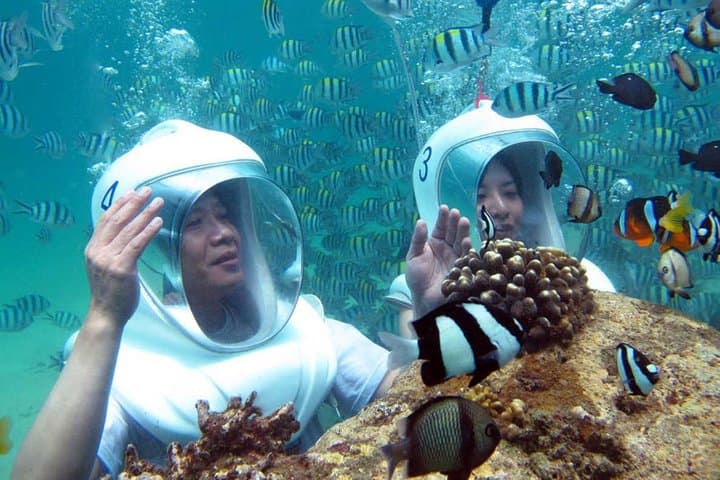
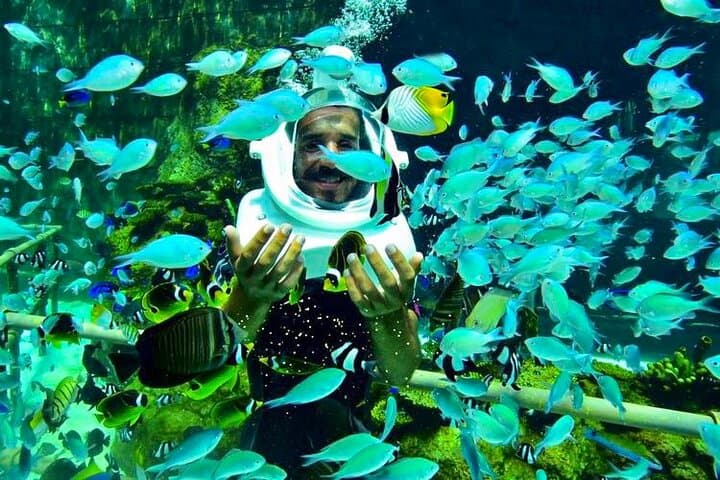
The reef waits a few paddle strokes from shore, water a clear, warm bowl that reflects the Bali sky. Participants step off a shallow platform, strap on a weighted helmet that supplies air from a surface tank, and lower into about 4–5 meters (≈15 feet) of sea where tropical fish thread through coral fingers and sunlight strips down in moving bands.
The reef waits a few paddle strokes from shore, water a clear, warm bowl that reflects the Bali sky. Participants step off a shallow platform, strap on a weighted helmet that supplies air from a surface tank, and lower into about 4–5 meters (≈15 feet) of sea where tropical fish thread through coral fingers and sunlight strips down in moving bands.
Tanjung Benoa was a quiet fishing spit until tourism transformed it into Bali’s water-sports corridor; the shoreline sits on young coral limestone shaped by reef growth and wave action, with the southern Bali coast exposed to Indonesian throughflows that keep water clear most of the year. Sea walking here is less a technical dive than a guided encounter—no certification required, minimal training, and usually a 30-minute walk on the seabed accompanied by an instructor.
Expect to stand on sand and low reef, reach out to colorful damselfish and wrasse, and hear the hiss of the surface line through the helmet. Instructors brief on safety, entry, and hand signals; showers, lockers, and optional hotel transfers are common at operators.
Practical guidance: wear swimwear and water shoes, apply reef-safe sunscreen before arrival, and plan for about 3–4 hours total with transfers and briefings. People with significant cardiovascular, spinal, or pregnancy concerns should not participate; minimum age is commonly 10. Book in the morning for calmer seas and clearer visibility, and avoid touching coral—let the fish come to you. This experience trades depth for accessibility: it’s immediate, social, and an efficient way to meet Bali’s underwater life without learning to scuba.