THE ADVENTURE COLLECTIVE® · Independent discovery and booking for outdoor travel

Walk the ocean floor at Sea TREK Curaçao without swimming — a helmet-diving experience that brings vibrant reef life within arm’s reach. Perfect for families and first-time underwater explorers, the tour offers dry helmets, trained guides, and close encounters with tropical fish.
Walk the ocean floor at Sea TREK Curaçao without swimming — a helmet-diving experience that brings vibrant reef life within arm’s reach. Perfect for families and first-time underwater explorers, the tour offers dry helmets, trained guides, and close encounters with tropical fish.
Sand cools underfoot and the Caribbean opens like a shallow blue room. At Sea TREK Curaçao you step into shoulder-deep water, lower your chin into a custom helmet and, in minutes, the reef becomes a living street. Schools of small fish curve around the helmet and coral ridges stand like low walls guiding your path; the ocean’s motion nudges you forward, never demanding you swim.
Verified experiences and guided adventures in the surrounding area.
Operated by Sea Trek Curacao · Willemstad, Curaçao
Sand cools underfoot and the Caribbean opens like a shallow blue room. At Sea TREK Curaçao you step into shoulder-deep water, lower your chin into a custom helmet and, in minutes, the reef becomes a living street. Schools of small fish curve around the helmet and coral ridges stand like low walls guiding your path; the ocean’s motion nudges you forward, never demanding you swim.
Curaçao’s reefs sit on the southern flank of the Caribbean Plate, a fringe of coral built over centuries by hardier species adapted to clear, warm water. The island’s Dutch colonial ports and Afro-Caribbean fishing culture shaped a coastline where early trade and local livelihoods still meet modern tourism — you’ll often hear Papiamentu and Dutch on arrival.
The experience is sensory and direct: no mouthpieces, no heavy tanks, hair and face stay dry. Staff feed the fish to encourage close encounters; expect parrotfish, tangs, and small reef species spinning through the water like curious neighbors. The route is about 100 meters of shallow seabed, with 25–30 minutes underwater time and roughly an hour total including briefing and prep.
Practical guidance: arrive with swimwear and water shoes (water shoes are provided), listen closely to the safety briefing, and avoid applying non–reef-safe sunscreens before entering. People eight and up and those comfortable walking in shoulder-deep water do best; the activity is not suitable for pregnant guests or those with serious respiratory or cardiac issues. Morning slots often mean calmer water and clearer visibility; professional photos are usually available to purchase since personal cameras aren’t allowed underwater. Hydrate, wear sun protection on the walk back to shore, and treat the reef with respect — move slowly, let marine life approach on its own, and take memories rather than touching coral.
easy.
1 hour (25–30 min underwater).
Moderate fitness — participants should be able to walk in shoulder-deep water and follow briefings
No — the Sea TREK helmet keeps your head dry and you walk on the seabed in shoulder-deep water, so swimming skills are not required.
No personal cameras or GoPros are permitted underwater; professional photo/video packages are typically offered by the operator.
Participants should be at least 8 years old; operators may require parental consent for minors.
Not recommended for pregnant guests or people with significant heart/lung conditions, recent surgery, epilepsy, or those who have a history of blackouts; disclose medical issues when booking.
Curaçao’s reefs developed along limestone and volcanic substrata; the island’s colonial ports and fishing traditions shaped coastal communities and early marine resource use.
Operators encourage reef-safe practices and limit contact; avoid touching coral and use reef-safe sunscreen to reduce chemical impact on local ecosystems.
Sea Trek Curacao operates guided outdoor trips and adventures with an emphasis on safety, stewardship, and memorable experiences.
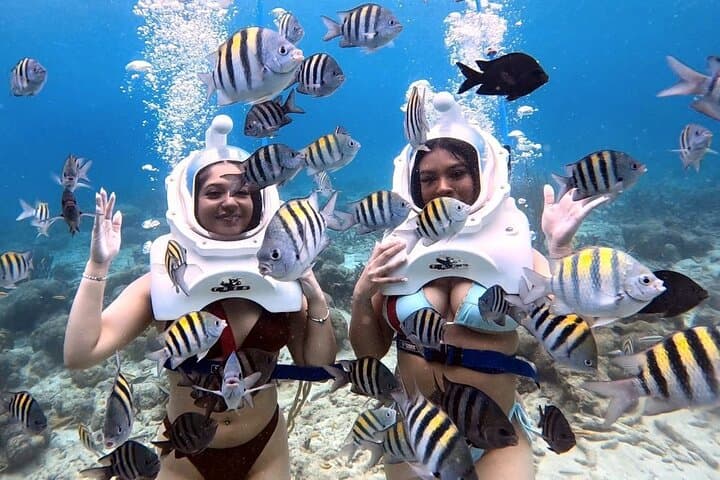
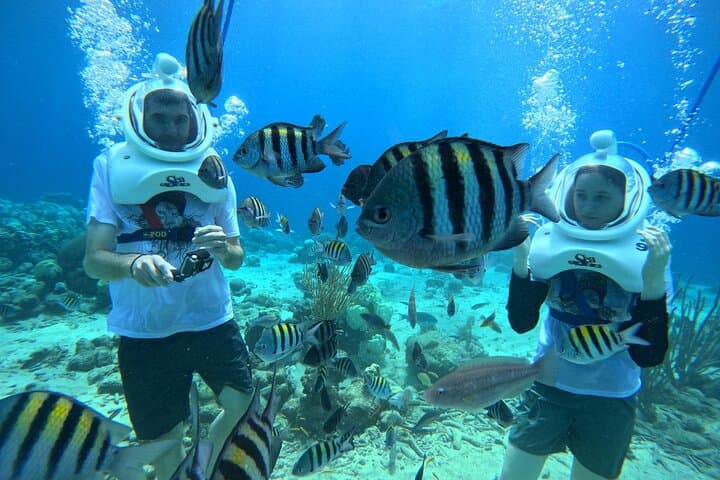
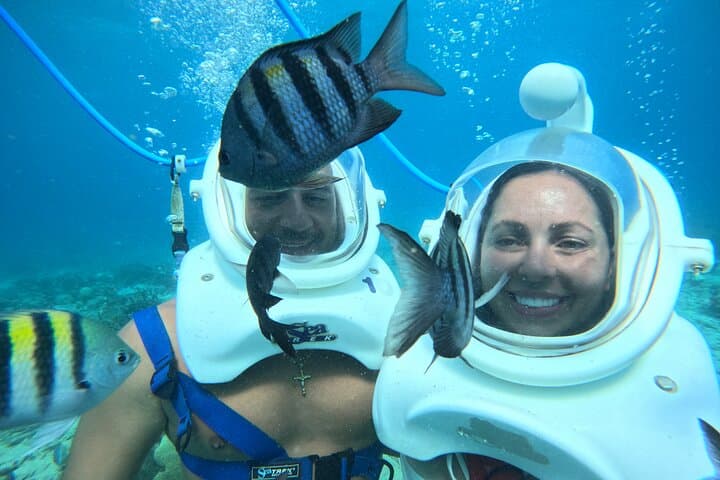
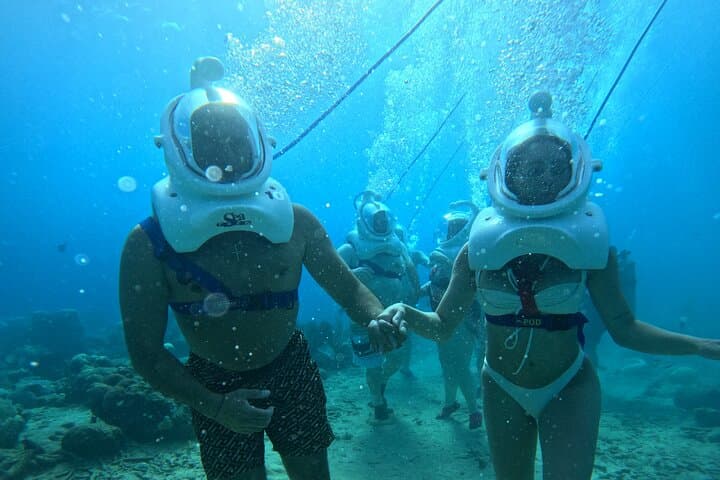
Sand cools underfoot and the Caribbean opens like a shallow blue room. At Sea TREK Curaçao you step into shoulder-deep water, lower your chin into a custom helmet and, in minutes, the reef becomes a living street. Schools of small fish curve around the helmet and coral ridges stand like low walls guiding your path; the ocean’s motion nudges you forward, never demanding you swim.
Sand cools underfoot and the Caribbean opens like a shallow blue room. At Sea TREK Curaçao you step into shoulder-deep water, lower your chin into a custom helmet and, in minutes, the reef becomes a living street. Schools of small fish curve around the helmet and coral ridges stand like low walls guiding your path; the ocean’s motion nudges you forward, never demanding you swim.
Curaçao’s reefs sit on the southern flank of the Caribbean Plate, a fringe of coral built over centuries by hardier species adapted to clear, warm water. The island’s Dutch colonial ports and Afro-Caribbean fishing culture shaped a coastline where early trade and local livelihoods still meet modern tourism — you’ll often hear Papiamentu and Dutch on arrival.
The experience is sensory and direct: no mouthpieces, no heavy tanks, hair and face stay dry. Staff feed the fish to encourage close encounters; expect parrotfish, tangs, and small reef species spinning through the water like curious neighbors. The route is about 100 meters of shallow seabed, with 25–30 minutes underwater time and roughly an hour total including briefing and prep.
Practical guidance: arrive with swimwear and water shoes (water shoes are provided), listen closely to the safety briefing, and avoid applying non–reef-safe sunscreens before entering. People eight and up and those comfortable walking in shoulder-deep water do best; the activity is not suitable for pregnant guests or those with serious respiratory or cardiac issues. Morning slots often mean calmer water and clearer visibility; professional photos are usually available to purchase since personal cameras aren’t allowed underwater. Hydrate, wear sun protection on the walk back to shore, and treat the reef with respect — move slowly, let marine life approach on its own, and take memories rather than touching coral.