THE ADVENTURE COLLECTIVE® · Independent discovery and booking for outdoor travel

Ride into the foothills, meet the dawn at Pasar Agung, and push to Mount Agung’s 3,031 m summit on a single long day. This guided trek blends volcanic geology and Balinese temple culture with a steep, technical ascent.
Ride into the foothills, meet the dawn at Pasar Agung, and push to Mount Agung’s 3,031 m summit on a single long day. This guided trek blends volcanic geology and Balinese temple culture with a steep, technical ascent.
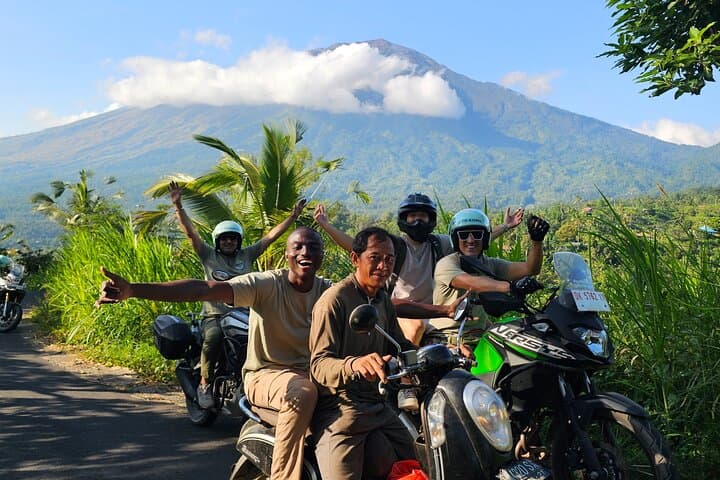
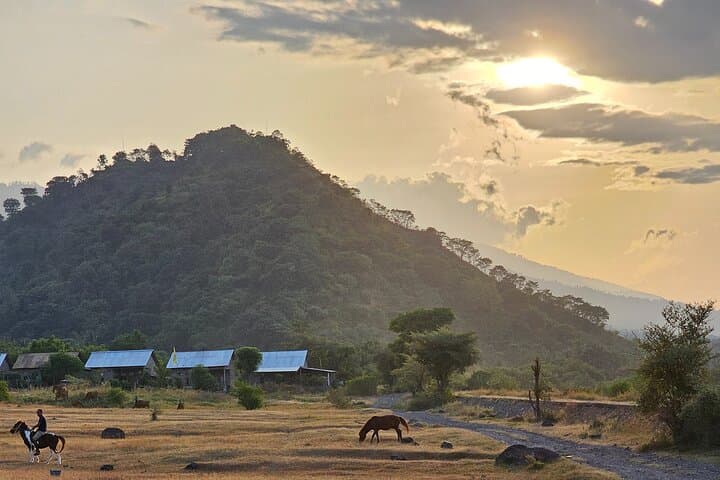
The sky is cobalt before dawn as riders ferry you 62 km from the coast to Pasar Agung. Helmet lights bob like fireflies; the island’s silhouette sharpens as you assemble at the temple that marks the mountain’s base. By headlamp you begin—steep pitches, volcanic scree, and a rhythm set by steady breathing.
Verified experiences and guided adventures in the surrounding area.
Operated by Bali Bike Tour · Amlapura, Bali
The sky is cobalt before dawn as riders ferry you 62 km from the coast to Pasar Agung. Helmet lights bob like fireflies; the island’s silhouette sharpens as you assemble at the temple that marks the mountain’s base. By headlamp you begin—steep pitches, volcanic scree, and a rhythm set by steady breathing.
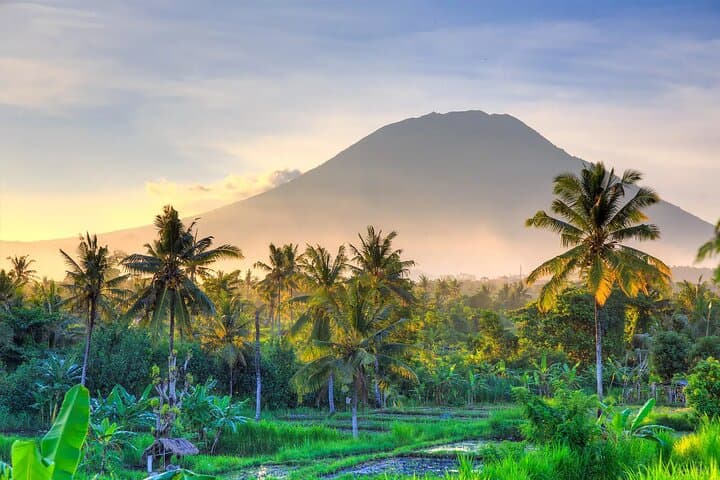
Mount Agung (Gunung Agung) rises to 3,031 meters and dominates eastern Bali. Geologically it’s a stratovolcano born where the Indo‑Australian plate dives beneath the Sunda arc, and its 2017–2018 eruptions are still fresh in local memory. Culturally the slopes host Pasar Agung and the nearby Pura Besakih, Bali’s largest temple complex — pilgrimage and ritual thread the climb with meaning.
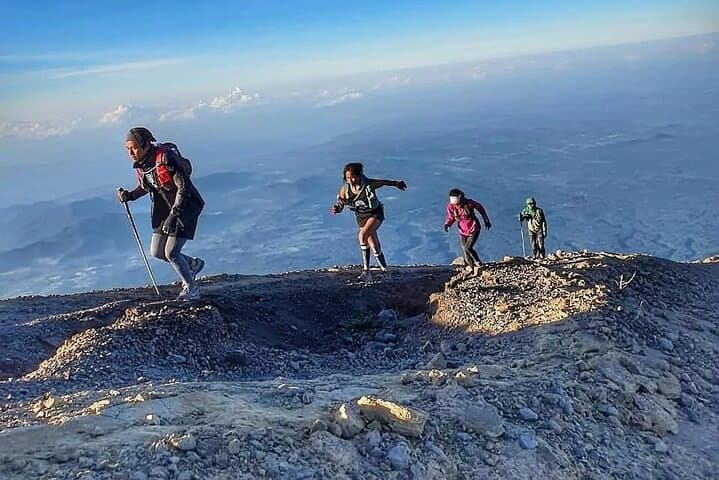
Expect a demanding ascent: this itinerary schedules roughly three hours up and about 2½ down, with early‑morning starts to catch the panorama of Bali, Lombok and the Flores Sea. Terrain alternates packed volcanic soil, loose scree and narrow ridgelines; weather shifts quickly—wind and fog can appear without warning.
Practical guidance: start well hydrated, carry a powerful headlamp, and wear rigid‑soled boots with ankle support. Layers are essential for the cold summit air; allow time to acclimatize and watch for altitude symptoms. Guided groups generally supply helmets, rain gear and basic first aid, but personal water and high‑calorie snacks make a big difference. Plan transfers back to coastal towns in daylight; phone service is intermittent on the upper slopes.
This is a spiritual, physical and geological day: intense, elemental and resolutely real — a climb that rewards preparation as much as persistence.
challenging.
10–11 hours.
Good cardiovascular fitness and strong legs; prior experience with steep, sustained hiking recommended.
This itinerary schedules about three hours to summit and roughly 2½ hours to descend; total door‑to‑door is around 10–11 hours including transfers.
No technical climbing skills are required, but you should be comfortable with steep, sustained hiking and loose scree; guides handle navigation and safety.
Yes—symptoms can appear above 2,500 m; ascend at a steady pace, hydrate, and inform guides immediately if you feel unwell.
Typical inclusions are helmets, rain gear, bottled water, basic first aid, and motorbike transfer to the base; confirm specifics when booking.
Mount Agung is central to Balinese Hindu cosmology; Pura Besakih on its slopes is the island’s principal temple complex with centuries of ritual significance.
Trails are fragile; stick to established paths, pack out all waste, and avoid loud noise during temple approaches to respect local practices.
Bali Bike Tour operates guided outdoor trips and adventures with an emphasis on safety, stewardship, and memorable experiences.
The sky is cobalt before dawn as riders ferry you 62 km from the coast to Pasar Agung. Helmet lights bob like fireflies; the island’s silhouette sharpens as you assemble at the temple that marks the mountain’s base. By headlamp you begin—steep pitches, volcanic scree, and a rhythm set by steady breathing.
The sky is cobalt before dawn as riders ferry you 62 km from the coast to Pasar Agung. Helmet lights bob like fireflies; the island’s silhouette sharpens as you assemble at the temple that marks the mountain’s base. By headlamp you begin—steep pitches, volcanic scree, and a rhythm set by steady breathing.
Mount Agung (Gunung Agung) rises to 3,031 meters and dominates eastern Bali. Geologically it’s a stratovolcano born where the Indo‑Australian plate dives beneath the Sunda arc, and its 2017–2018 eruptions are still fresh in local memory. Culturally the slopes host Pasar Agung and the nearby Pura Besakih, Bali’s largest temple complex — pilgrimage and ritual thread the climb with meaning.
Expect a demanding ascent: this itinerary schedules roughly three hours up and about 2½ down, with early‑morning starts to catch the panorama of Bali, Lombok and the Flores Sea. Terrain alternates packed volcanic soil, loose scree and narrow ridgelines; weather shifts quickly—wind and fog can appear without warning.
Practical guidance: start well hydrated, carry a powerful headlamp, and wear rigid‑soled boots with ankle support. Layers are essential for the cold summit air; allow time to acclimatize and watch for altitude symptoms. Guided groups generally supply helmets, rain gear and basic first aid, but personal water and high‑calorie snacks make a big difference. Plan transfers back to coastal towns in daylight; phone service is intermittent on the upper slopes.
This is a spiritual, physical and geological day: intense, elemental and resolutely real — a climb that rewards preparation as much as persistence.