THE ADVENTURE COLLECTIVE® · Independent discovery and booking for outdoor travel

Explore sea-access caves on Mallorca’s east coast with experienced caving guides. Expect a coastal walk, optional jump or rappel into crystalline lakes, and a guided visit through Jurassic limestone rooms.
Explore sea-access caves on Mallorca’s east coast with experienced caving guides. Expect a coastal walk, optional jump or rappel into crystalline lakes, and a guided visit through Jurassic limestone rooms.
Blue light slices the entrance as the Mediterranean nudges the shore — you assemble on a coastal track, backpacks snug, neoprene waiting. A half-hour walk drops to a stony beach where guides fit helmets and lights, and the sea becomes your corridor: choices open by tide and skill — a short swim, a 4 m jump into clear water, or a 20 m rappel down a cliff to the cave mouth.
Verified experiences and guided adventures in the surrounding area.
Operated by AVcaving-mallorca · Porto Cristo, Balearic Islands
Blue light slices the entrance as the Mediterranean nudges the shore — you assemble on a coastal track, backpacks snug, neoprene waiting. A half-hour walk drops to a stony beach where guides fit helmets and lights, and the sea becomes your corridor: choices open by tide and skill — a short swim, a 4 m jump into clear water, or a 20 m rappel down a cliff to the cave mouth.
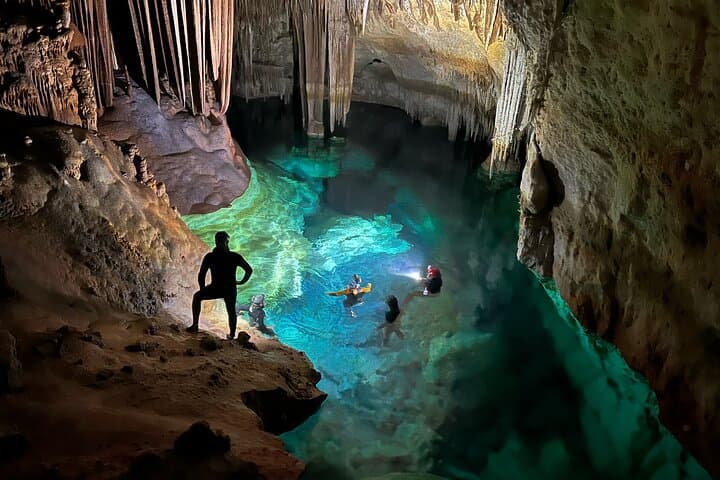
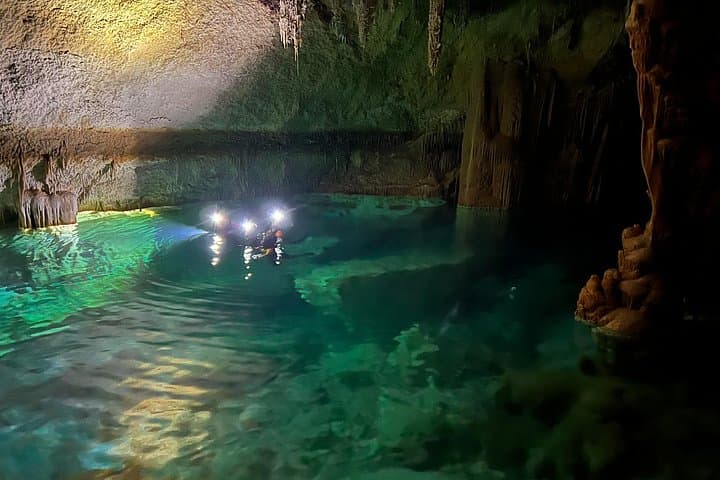
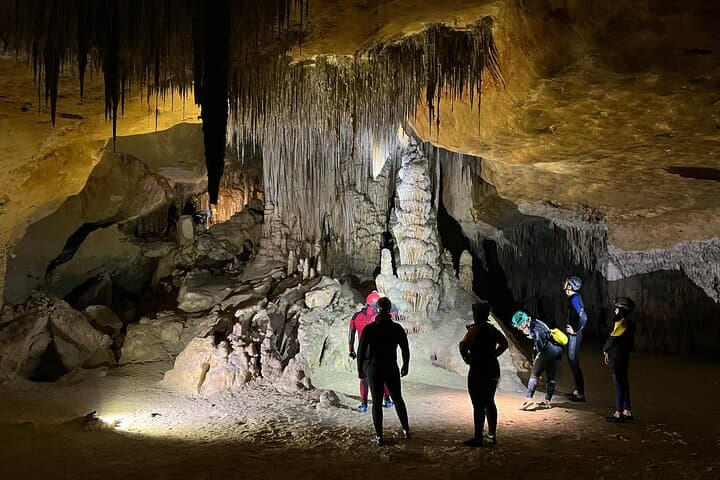
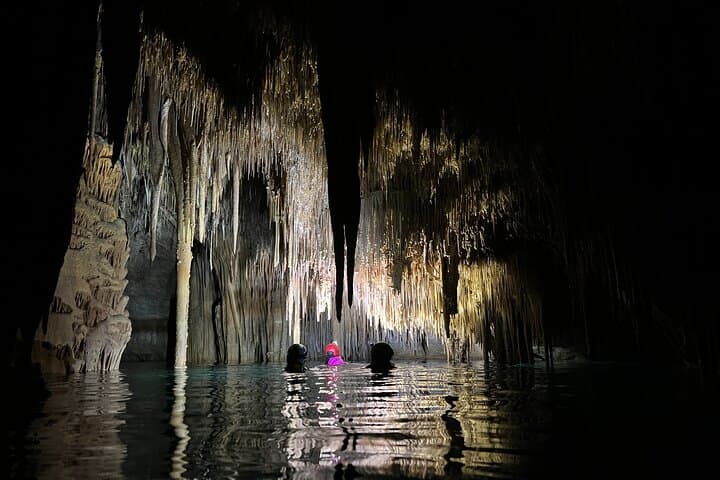
The caves here are carved from Jurassic limestone; stalactites and flowstone frame mirrored lakes whose clarity makes every rock and drop feel deliberate. Mallorca’s east coast bears evidence of ancient seas and tectonic lift, so formations often appear sheer and sculptural. Local guides blend sport and geology, pointing out fossil layers and explaining how freshwater lenses sit atop seawater in coastal cavities.
Respect for the site is strict: silence inside, no touching formations, no jumping into inner lakes. That preserves fragile calcite and the quiet that lets you hear water breathing through passages.
Practically: allow four hours for the full tour, including gear-up and the walk. Bring a towel, change of clothes, and a small dry bag for valuables (phones may be photographed by guides). Good water shoes or stiff-soled neoprene boots make the beach approach easier; wetsuits and helmets are provided. Swim competency is required; options are offered to match comfort and sea state. Morning departures are calmer and warmer for photos; if arriving by cruise, pre-book to sync schedules. This trip marries a short coastal approach with technical moments — it rewards curiosity, steady footing, and a willingness to move quietly through an ancient, watery chamber.
moderate.
4 hours.
Suitable for people in reasonable physical shape who can swim and manage short cliff approaches and stairs; expect light hiking and brief technical moves.
No — guides provide instruction and equipment; however you must be comfortable swimming and following safety briefings.
Yes — neoprene suits, helmets, and cave footwear are included with the tour.
Age and weight limits may apply; confirm with the operator when booking and ensure any child can swim confidently.
Sea conditions determine access; some entry options are only available in calm conditions and the operator may reschedule or alter the route for safety.
The eastern Mallorca coast records sedimentary layers from the Jurassic, and many coastal caves formed as sea levels and uplift reshaped the shoreline over millions of years.
Visitors are asked not to touch or disturb cave formations and to follow quiet, no-litter rules; maintaining low impact preserves speleothem growth and aquatic clarity.
AVcaving-mallorca operates guided outdoor trips and adventures with an emphasis on safety, stewardship, and memorable experiences.
Blue light slices the entrance as the Mediterranean nudges the shore — you assemble on a coastal track, backpacks snug, neoprene waiting. A half-hour walk drops to a stony beach where guides fit helmets and lights, and the sea becomes your corridor: choices open by tide and skill — a short swim, a 4 m jump into clear water, or a 20 m rappel down a cliff to the cave mouth.
Blue light slices the entrance as the Mediterranean nudges the shore — you assemble on a coastal track, backpacks snug, neoprene waiting. A half-hour walk drops to a stony beach where guides fit helmets and lights, and the sea becomes your corridor: choices open by tide and skill — a short swim, a 4 m jump into clear water, or a 20 m rappel down a cliff to the cave mouth.
The caves here are carved from Jurassic limestone; stalactites and flowstone frame mirrored lakes whose clarity makes every rock and drop feel deliberate. Mallorca’s east coast bears evidence of ancient seas and tectonic lift, so formations often appear sheer and sculptural. Local guides blend sport and geology, pointing out fossil layers and explaining how freshwater lenses sit atop seawater in coastal cavities.
Respect for the site is strict: silence inside, no touching formations, no jumping into inner lakes. That preserves fragile calcite and the quiet that lets you hear water breathing through passages.
Practically: allow four hours for the full tour, including gear-up and the walk. Bring a towel, change of clothes, and a small dry bag for valuables (phones may be photographed by guides). Good water shoes or stiff-soled neoprene boots make the beach approach easier; wetsuits and helmets are provided. Swim competency is required; options are offered to match comfort and sea state. Morning departures are calmer and warmer for photos; if arriving by cruise, pre-book to sync schedules. This trip marries a short coastal approach with technical moments — it rewards curiosity, steady footing, and a willingness to move quietly through an ancient, watery chamber.