THE ADVENTURE COLLECTIVE® · Independent discovery and booking for outdoor travel

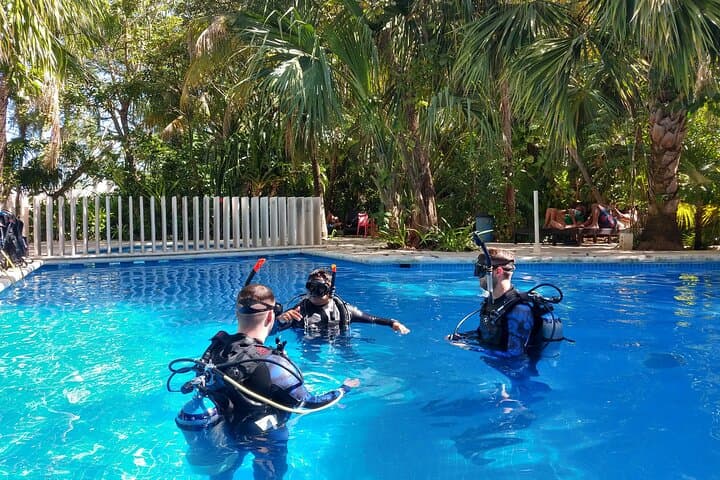
Earn an SDI Open Water certification over two focused days in Cancún — pool drills, two dives at the MUSA underwater museum and two reef dives, plus full gear and e-learning included. Practical, hands-on training gets you diving-ready with an emphasis on safety and reef stewardship.
Earn an SDI Open Water certification over two focused days in Cancún — pool drills, two dives at the MUSA underwater museum and two reef dives, plus full gear and e-learning included. Practical, hands-on training gets you diving-ready with an emphasis on safety and reef stewardship.
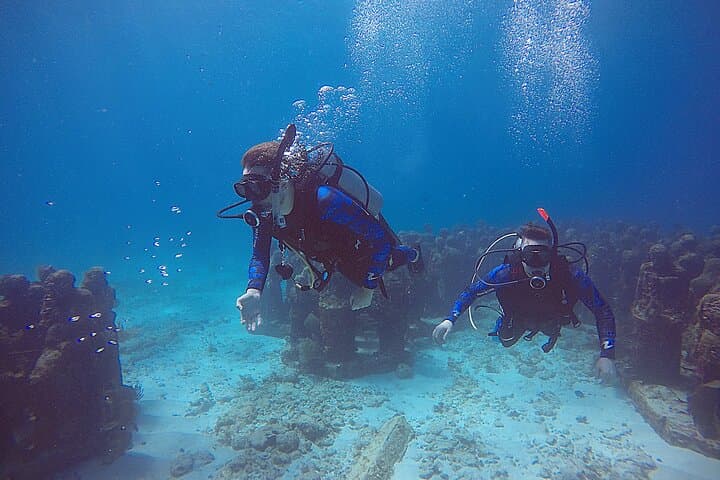
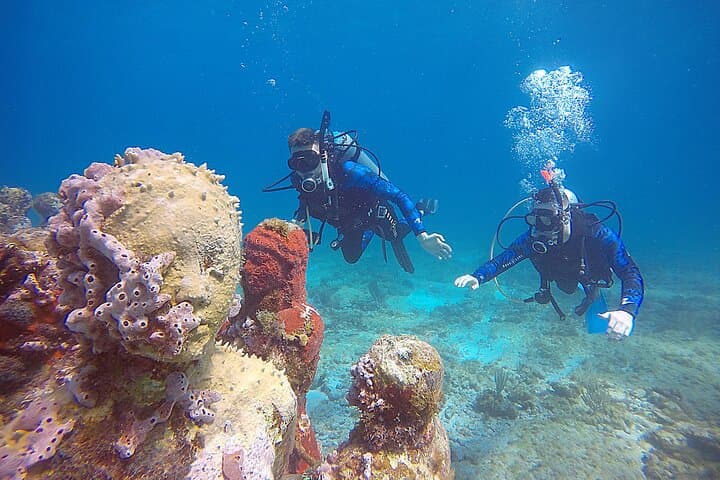
You step off the dock with salt on your lips and the Caribbean spread like a bright, restless floor beneath the boat. Instructors gesture toward the pale shapes of submerged sculptures nearby; the sea here doesn't just receive visitors, it challenges them — currents nudging, thermoclines reminding you that this is an environment with its own rules.
Verified experiences and guided adventures in the surrounding area.
Operated by A' HA' Scuba Diving · Cancún, Quintana Roo
You step off the dock with salt on your lips and the Caribbean spread like a bright, restless floor beneath the boat. Instructors gesture toward the pale shapes of submerged sculptures nearby; the sea here doesn't just receive visitors, it challenges them — currents nudging, thermoclines reminding you that this is an environment with its own rules.
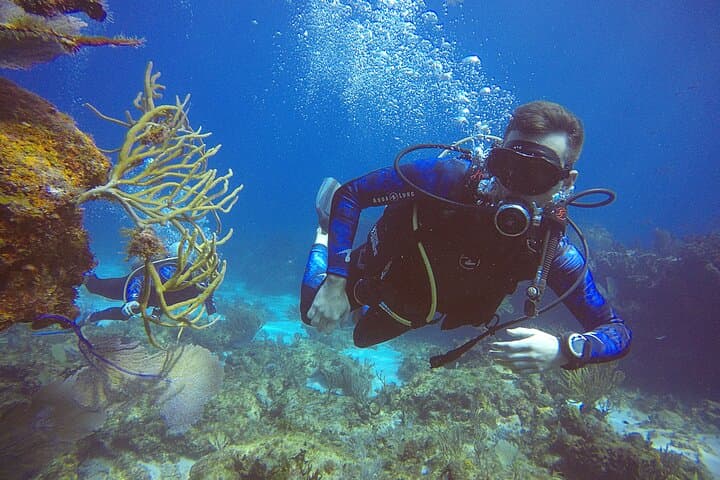
The two-day SDI Open Water course pairs classroom e-learning with pool drills and four open-water dives: two at the MUSA underwater museum and two on nearby reef formations. MUSA — installed in the late 2000s — was created to both house contemporary sculptures and alleviate pressure on natural reef structures, so students witness art and conservation side-by-side. Geologically the coast is low limestone karst, with reef ridges and sand channels that shape where life concentrates: parrotfish and corals cling to the high spurs; turtles cruise the flats.
Local dive culture mixes international students with Mexican dive professionals; briefings are direct, bilingual at times, and focused on safety and reef etiquette. Expect practical skills training in a pool followed by guided open-water sessions where buoyancy, regulator clearing, and buddy protocols are practiced repeatedly.
Bring sensible sun protection (rash guards, hats between dives), hydrate, and time your flights — you must wait 24 hours after diving before flying. If you have medical conditions listed by diving medical standards, get physician clearance. For first-time divers this course is immersive but structured: you’ll leave certified, logged, and with a clearer sense of how to move thoughtfully in a fragile underwater world.
moderate.
2 days (about 48 hours total).
Moderate fitness: comfortable swimming and ability to perform repeated pool and open-water skills.
SDI offers junior certifications; minimum age can be 10 for junior programs—confirm with the operator for age-specific requirements and parental consent.
Yes—participants must be comfortable in the water and able to swim; basic swimming ability and comfort with face-in-water skills are required.
Yes — full SCUBA equipment (BCD, regulator, mask, fins, wetsuit, tanks, weights) is included in the course package.
You must wait at least 24 hours after your last dive before flying to reduce the risk of decompression sickness.
The MUSA project was installed in the late 2000s both as an art initiative and a reef-relief effort to divert snorkel traffic from natural coral zones.
Operators enforce no-sunscreen rules and buoyancy discipline to protect delicate corals; divers are encouraged to log and report sightings to assist local monitoring.
A' HA' Scuba Diving operates guided outdoor trips and adventures with an emphasis on safety, stewardship, and memorable experiences.
You step off the dock with salt on your lips and the Caribbean spread like a bright, restless floor beneath the boat. Instructors gesture toward the pale shapes of submerged sculptures nearby; the sea here doesn't just receive visitors, it challenges them — currents nudging, thermoclines reminding you that this is an environment with its own rules.
You step off the dock with salt on your lips and the Caribbean spread like a bright, restless floor beneath the boat. Instructors gesture toward the pale shapes of submerged sculptures nearby; the sea here doesn't just receive visitors, it challenges them — currents nudging, thermoclines reminding you that this is an environment with its own rules.
The two-day SDI Open Water course pairs classroom e-learning with pool drills and four open-water dives: two at the MUSA underwater museum and two on nearby reef formations. MUSA — installed in the late 2000s — was created to both house contemporary sculptures and alleviate pressure on natural reef structures, so students witness art and conservation side-by-side. Geologically the coast is low limestone karst, with reef ridges and sand channels that shape where life concentrates: parrotfish and corals cling to the high spurs; turtles cruise the flats.
Local dive culture mixes international students with Mexican dive professionals; briefings are direct, bilingual at times, and focused on safety and reef etiquette. Expect practical skills training in a pool followed by guided open-water sessions where buoyancy, regulator clearing, and buddy protocols are practiced repeatedly.
Bring sensible sun protection (rash guards, hats between dives), hydrate, and time your flights — you must wait 24 hours after diving before flying. If you have medical conditions listed by diving medical standards, get physician clearance. For first-time divers this course is immersive but structured: you’ll leave certified, logged, and with a clearer sense of how to move thoughtfully in a fragile underwater world.