THE ADVENTURE COLLECTIVE® · Independent discovery and booking for outdoor travel

Descend into the Yucatán’s clear underground rivers on guided cenote dives. Small groups, focused guides, and layered caverns make these half-day trips ideal for certified divers looking for dramatic, low-current cave and cavern experiences.
Descend into the Yucatán’s clear underground rivers on guided cenote dives. Small groups, focused guides, and layered caverns make these half-day trips ideal for certified divers looking for dramatic, low-current cave and cavern experiences.
Blue-streak shafts of light cut through still water as divers slip beneath a stone ceiling — the cenote greets you with silence and sharp clarity. The first breaths underwater are often the most memorable: cool, fresh groundwater, suspended roots and limestone formations hovering like sculpted fossils.
Verified experiences and guided adventures in the surrounding area.
Operated by Be Diving Scuba Academy · Playa del Carmen, Quintana Roo
Blue-streak shafts of light cut through still water as divers slip beneath a stone ceiling — the cenote greets you with silence and sharp clarity. The first breaths underwater are often the most memorable: cool, fresh groundwater, suspended roots and limestone formations hovering like sculpted fossils.
These cenotes formed over hundreds of thousands of years as rainwater dissolved the Yucatán’s limestone, collapsing caverns to expose underground rivers. Many sites along the Playa–Tulum corridor sit on routes used by the Maya for ritual and freshwater collection; today they combine geological theatre with cultural weight. Expect layered passages, haloclines where fresh and salt water meet, and chambers that preserve fragile speleothems.
Practically, the tour runs about six hours from Playa del Carmen and includes two guided dives (roughly 45–60 minutes each) with small groups — maximum four certified divers per guide. Depth limits depend on certification: Open Water up to ~18 m, Advanced to ~30 m, and Deep specialty for deeper explorations. Surface intervals include snacks and bottled water; cenote entrance fees are usually paid separately.
Prepare for restricted light, tight overhead environments (cavern vs cave rules apply), and fragile ecosystems — buoyancy control is essential. Photographers will find dramatic shafts and formations, but keep lights steady and avoid touching formations. Nitrox is available at extra cost for those with certification. With private transfers, focused guides, and attention to safety, cenote diving is an accessible way to experience Yucatán’s underground waterways — visceral, quiet, and geologically singular.
moderate.
6 hours (approx.).
Moderate fitness recommended: able to carry gear, perform entries, and swim with control for ~45–60 minute dives.
No — most tours exclude site entrance fees; pay the cenote’s admission on arrival (prices vary by site).
Open Water divers can access shallower cavern zones (to ~18 m); Advanced and Deep specialty certifications are required for deeper or more technical passages.
Beginner certified divers can join restricted cavern dives, but those with limited experience should choose gentler sites and small-group guides; non-certified snorkel options are often available.
Participants must meet basic fitness standards; not recommended for people with spinal, cardiac issues, or pregnancy — check with the operator for age limits and medical clearance.
Many cenotes were freshwater sources and ceremonial sites for the Maya; explorers have mapped extensive underground river networks that connect coastal aquifers.
Cenotes are fragile freshwater systems — avoid sunscreens, limit plastic use, and follow guide rules to reduce sediment disturbance and contamination.
Be Diving Scuba Academy operates guided outdoor trips and adventures with an emphasis on safety, stewardship, and memorable experiences.


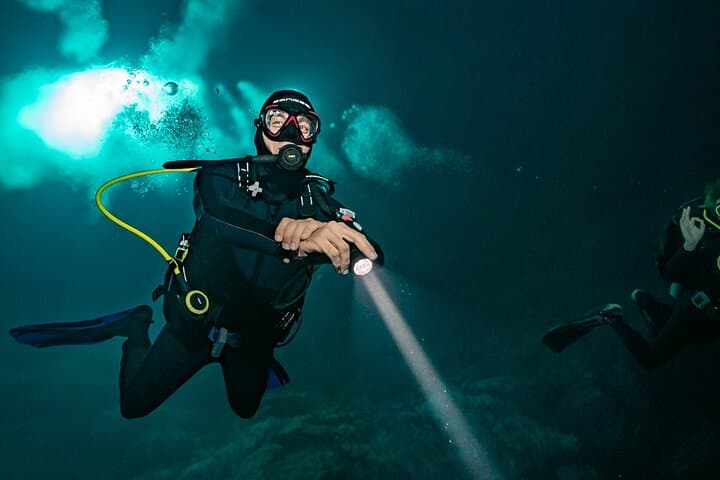
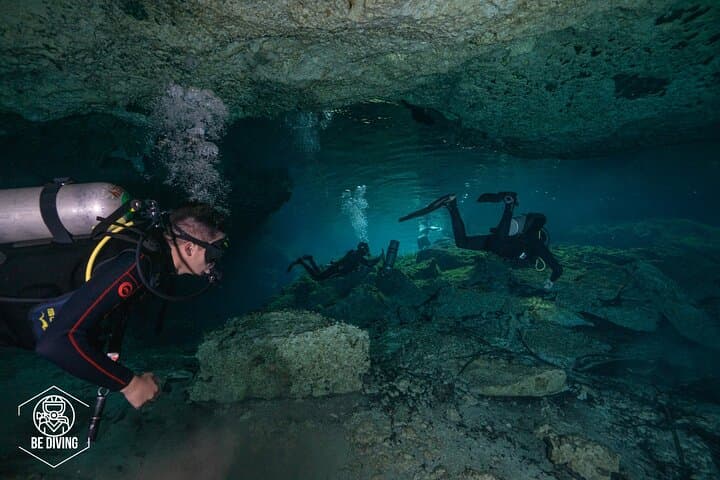
Blue-streak shafts of light cut through still water as divers slip beneath a stone ceiling — the cenote greets you with silence and sharp clarity. The first breaths underwater are often the most memorable: cool, fresh groundwater, suspended roots and limestone formations hovering like sculpted fossils.
Blue-streak shafts of light cut through still water as divers slip beneath a stone ceiling — the cenote greets you with silence and sharp clarity. The first breaths underwater are often the most memorable: cool, fresh groundwater, suspended roots and limestone formations hovering like sculpted fossils.
These cenotes formed over hundreds of thousands of years as rainwater dissolved the Yucatán’s limestone, collapsing caverns to expose underground rivers. Many sites along the Playa–Tulum corridor sit on routes used by the Maya for ritual and freshwater collection; today they combine geological theatre with cultural weight. Expect layered passages, haloclines where fresh and salt water meet, and chambers that preserve fragile speleothems.
Practically, the tour runs about six hours from Playa del Carmen and includes two guided dives (roughly 45–60 minutes each) with small groups — maximum four certified divers per guide. Depth limits depend on certification: Open Water up to ~18 m, Advanced to ~30 m, and Deep specialty for deeper explorations. Surface intervals include snacks and bottled water; cenote entrance fees are usually paid separately.
Prepare for restricted light, tight overhead environments (cavern vs cave rules apply), and fragile ecosystems — buoyancy control is essential. Photographers will find dramatic shafts and formations, but keep lights steady and avoid touching formations. Nitrox is available at extra cost for those with certification. With private transfers, focused guides, and attention to safety, cenote diving is an accessible way to experience Yucatán’s underground waterways — visceral, quiet, and geologically singular.