THE ADVENTURE COLLECTIVE® · Independent discovery and booking for outdoor travel

Tailored, guide-led loops through the McDowell Sonoran Preserve that pair geology, plants and valley views with 2–3 hours of hiking. Choose your level—from easy strolls to strenuous ridge climbs—and finish with trail snacks and cold drinks.
Tailored, guide-led loops through the McDowell Sonoran Preserve that pair geology, plants and valley views with 2–3 hours of hiking. Choose your level—from easy strolls to strenuous ridge climbs—and finish with trail snacks and cold drinks.
You step out of the car before sunrise and the desert is already awake: breeze-stiffened creosote, a saguaro casting an angular shadow, and the low heat of the sun nudging the granite ribs of the McDowell range. Your guide tightens a backpack strap, hands you a bottle of water and points up the switchbacks—today’s loop will open like a map, revealing washes, ridgelines and a saddle that looks back over the Valley of the Sun.
Verified experiences and guided adventures in the surrounding area.
Operated by Mad Desert Trekking · Scottsdale, Arizona
You step out of the car before sunrise and the desert is already awake: breeze-stiffened creosote, a saguaro casting an angular shadow, and the low heat of the sun nudging the granite ribs of the McDowell range. Your guide tightens a backpack strap, hands you a bottle of water and points up the switchbacks—today’s loop will open like a map, revealing washes, ridgelines and a saddle that looks back over the Valley of the Sun.
The McDowell Sonoran Preserve is not an alpine amphitheater; it’s a living classroom. At more than 30,500 acres, it’s one of the largest city-owned preserves in the U.S., a deliberate stretch of desert set aside in the 1990s as Scottsdale grew around it. Geologically, the preserve is a collection of ancient granite outcrops and fault-sheared canals; wind-scoured boulders keep their scars from millennia of erosion, and washes still carry episodic floods that rework the soil.
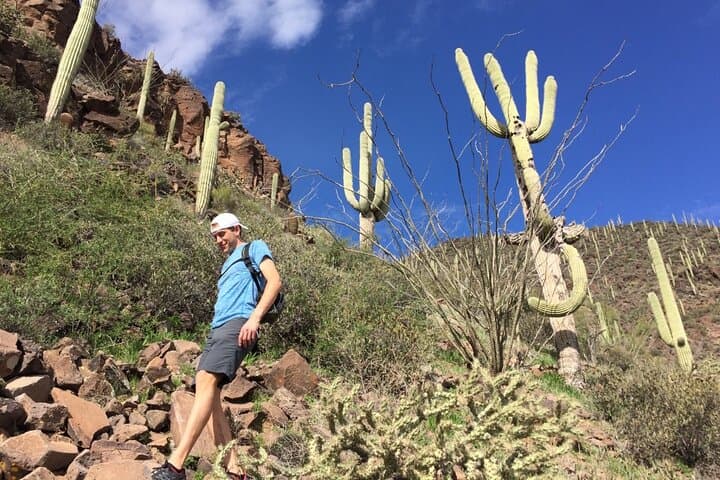
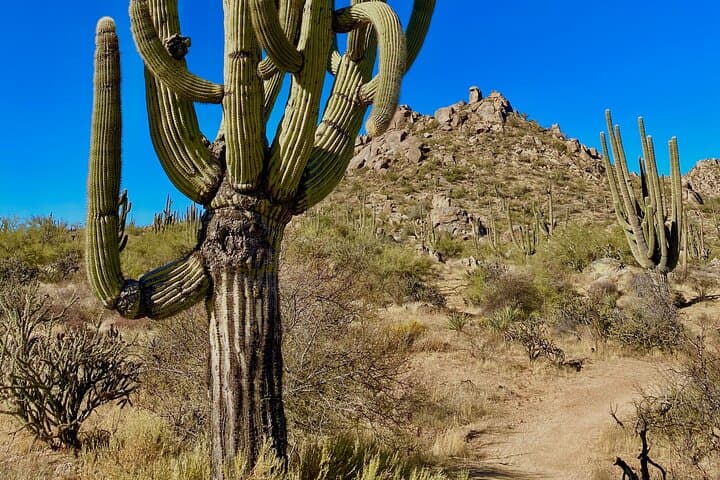
Culturally the land carries traces of Hohokam and Yavapai use—stone scatter and seasonal trails echo a human presence that predates the suburb beneath it. Your guide will point out the Sonoran’s signature plants—palo verde with its green trunk, the branching arms of saguaros, and the delicate ocotillo—explaining their water strategies and the small economies of life they support. Lizards sun themselves on warm rock slabs; hawks quarter the thermals; a javelina family may push through a mesquite stand if you’re lucky.
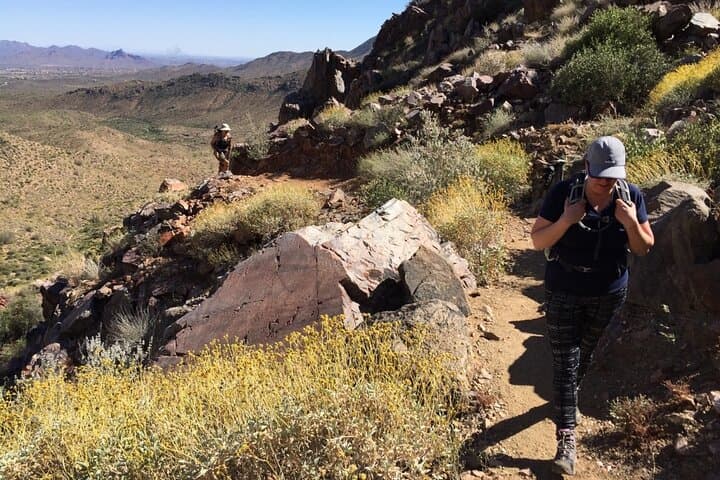
On the trail you’ll move between surfaces: compacted dirt, tile-sized granite, and loose scree where the trail narrows. Expect 2–3 hours on trail time; guides tailor mileage and intensity to your wishes, from a mellow 3–4 mile ramble with minimal climb to a steeper 6–8 mile loop with 800–1,200 feet of elevation gain. Snacks and cold beverages are provided at a viewpoint—an earned pause where the desert seems to unfold sixty miles to the west.
Practical essentials: wear sturdy hiking shoes with grip for short scrambles, sun-protective layers, and bring electrolytes—Arizona’s dry heat sneaks up. Start early in summer to avoid peak temps; in shoulder seasons, mid-morning departures are comfortable. The guides supply backpacks, sunscreen, water and snacks; they also know the preserve’s quieter corners and will adjust the route if you want more solitude or more challenge.
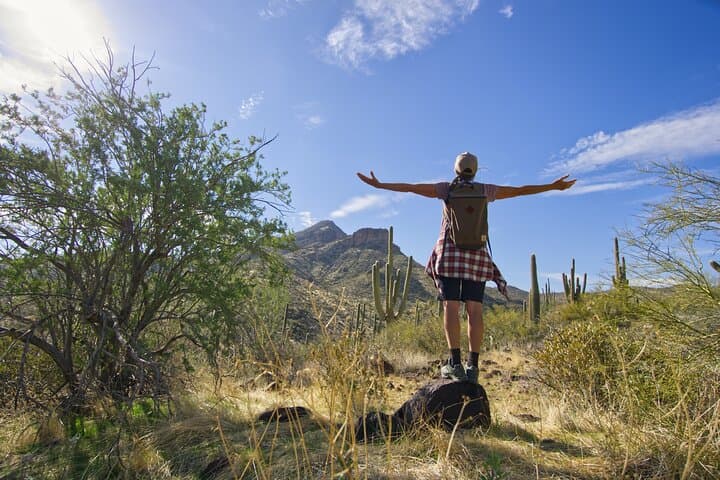
This is an accessible way to meet the Sonoran Desert on its own terms: hands-on learning, an honest workout, and a viewpoint that reorients how you see the city and the wild at its margins. Whether you come for the plants, the geology, or simply to stand above the valley with the wind pushing at your back, the Scottsdale Desert Classic arranges the terrain and the timing so the desert’s voice is clear and immediate.
moderate.
2–3 hours.
Moderate fitness: able to walk uneven singletrack for several miles and climb up to 1,200 ft if choosing the strenuous option.
Guides plan 2–3 hours on trail; chosen mileage can range roughly from 3 to 8 miles depending on difficulty selected.
Yes; guides tailor the route to ability levels from easy walks to strenuous climbs—inform them of your comfort level when booking.
Backpacks, sunscreen, bottled water, sports drinks, trail snacks and cold beverages after the hike are included.
Gateway Trailhead, 18333 N Thompson Peak Parkway, Scottsdale—guides often suggest ride-share drop-off near the Starbucks at the trailhead area.
Service animals are allowed, but pets are generally not recommended on guided trips due to temperature and wildlife considerations—check with the operator first.
Full refund if you cancel at least 24 hours before departure; trips may be canceled for bad weather.
The preserve was protected through civic land purchases starting in the 1990s, preserving land once traversed by Hohokam and Yavapai people and later by ranchers and miners.
Stay on trails to protect cryptobiotic soils and native plants; the preserve operates under a ‘leave no trace’ ethic and relies on visitor stewardship to limit erosion and habitat loss.
Mad Desert Trekking operates guided outdoor trips and adventures with an emphasis on safety, stewardship, and memorable experiences.
You step out of the car before sunrise and the desert is already awake: breeze-stiffened creosote, a saguaro casting an angular shadow, and the low heat of the sun nudging the granite ribs of the McDowell range. Your guide tightens a backpack strap, hands you a bottle of water and points up the switchbacks—today’s loop will open like a map, revealing washes, ridgelines and a saddle that looks back over the Valley of the Sun.
You step out of the car before sunrise and the desert is already awake: breeze-stiffened creosote, a saguaro casting an angular shadow, and the low heat of the sun nudging the granite ribs of the McDowell range. Your guide tightens a backpack strap, hands you a bottle of water and points up the switchbacks—today’s loop will open like a map, revealing washes, ridgelines and a saddle that looks back over the Valley of the Sun.
The McDowell Sonoran Preserve is not an alpine amphitheater; it’s a living classroom. At more than 30,500 acres, it’s one of the largest city-owned preserves in the U.S., a deliberate stretch of desert set aside in the 1990s as Scottsdale grew around it. Geologically, the preserve is a collection of ancient granite outcrops and fault-sheared canals; wind-scoured boulders keep their scars from millennia of erosion, and washes still carry episodic floods that rework the soil.
Culturally the land carries traces of Hohokam and Yavapai use—stone scatter and seasonal trails echo a human presence that predates the suburb beneath it. Your guide will point out the Sonoran’s signature plants—palo verde with its green trunk, the branching arms of saguaros, and the delicate ocotillo—explaining their water strategies and the small economies of life they support. Lizards sun themselves on warm rock slabs; hawks quarter the thermals; a javelina family may push through a mesquite stand if you’re lucky.
On the trail you’ll move between surfaces: compacted dirt, tile-sized granite, and loose scree where the trail narrows. Expect 2–3 hours on trail time; guides tailor mileage and intensity to your wishes, from a mellow 3–4 mile ramble with minimal climb to a steeper 6–8 mile loop with 800–1,200 feet of elevation gain. Snacks and cold beverages are provided at a viewpoint—an earned pause where the desert seems to unfold sixty miles to the west.
Practical essentials: wear sturdy hiking shoes with grip for short scrambles, sun-protective layers, and bring electrolytes—Arizona’s dry heat sneaks up. Start early in summer to avoid peak temps; in shoulder seasons, mid-morning departures are comfortable. The guides supply backpacks, sunscreen, water and snacks; they also know the preserve’s quieter corners and will adjust the route if you want more solitude or more challenge.
This is an accessible way to meet the Sonoran Desert on its own terms: hands-on learning, an honest workout, and a viewpoint that reorients how you see the city and the wild at its margins. Whether you come for the plants, the geology, or simply to stand above the valley with the wind pushing at your back, the Scottsdale Desert Classic arranges the terrain and the timing so the desert’s voice is clear and immediate.