THE ADVENTURE COLLECTIVE® · Independent discovery and booking for outdoor travel

Walk Schwabing’s wide boulevards and narrow village lanes with a local guide who mixes artistic lore, neighborhood scandals and hidden courtyards. This urban walk balances bohemian history with practical tips for enjoying Munich’s most storied district.
Walk Schwabing’s wide boulevards and narrow village lanes with a local guide who mixes artistic lore, neighborhood scandals and hidden courtyards. This urban walk balances bohemian history with practical tips for enjoying Munich’s most storied district.
A late-afternoon light slants across Leopoldstraße, catching the varnish on café tables and turning the tram rails into a thin silver river. Walkers slow, students argue, and street art eyes you from an underpass — Schwabing moves with a bohemian confidence that still dares you to keep up.
Verified experiences and guided adventures in the surrounding area.
Operated by Schwabinger Max · Munich, Bavaria
A late-afternoon light slants across Leopoldstraße, catching the varnish on café tables and turning the tram rails into a thin silver river. Walkers slow, students argue, and street art eyes you from an underpass — Schwabing moves with a bohemian confidence that still dares you to keep up.
Once an independent village on Munich’s northern edge, Schwabing sharpened its reputation in the 19th and 20th centuries as a magnet for artists, writers and political agitators. The neighborhood’s streets carry layers of history: early farmhouses in the Dorfkern, the scars and stories of the Schwabinger 7 pub, and relics of modernist architecture where debates about urban life played out. Geologically flat and close to the Isar and the English Garden, the district’s public spaces are oriented around long boulevards and small squares rather than dramatic topography.
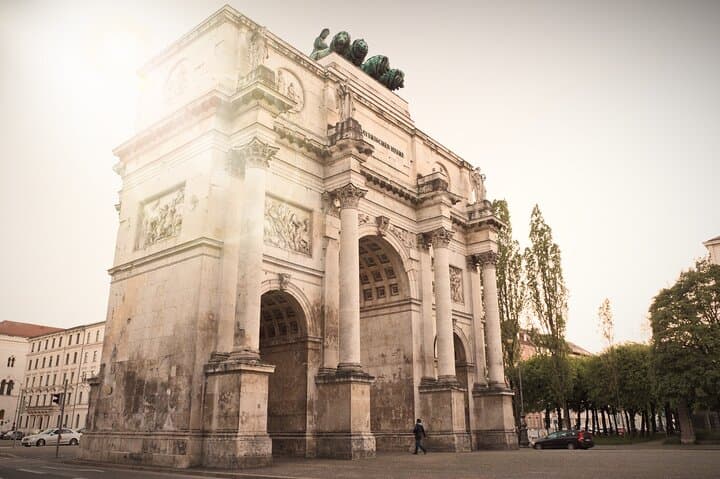
On a guided walk here you’ll bounce between Leopoldstraße’s ‘see and be seen’ energy, small village lanes, beer gardens and unexpected staircases at the Siegestor. Local guides fold in myths and documented revolt with equal appetite, and the route often includes a welcome drink and insider stops off the main drag.
Practicalities: plan for 1.5–5 hours depending on your variant; wear comfortable walking shoes and bring a light layer for changing weather. Public transit (U-Bahn/ tram) drops you close to start points, and tours are stroller-friendly. Respect residential areas, carry water, and leave larger backpacks on quieter days — Schwabing rewards slow feet and curious questions.
easy.
1.5–5 hours.
Suitable for most fitness levels; participants should be able to walk for several hours with periodic stops.
The tour runs between 90 minutes and 5 hours depending on the chosen itinerary variant and stops; most guests select the 2–3 hour option.
The route is generally stroller-accessible with some uneven cobbles; wheelchair accessibility varies by specific streets—check with the operator for accommodations.
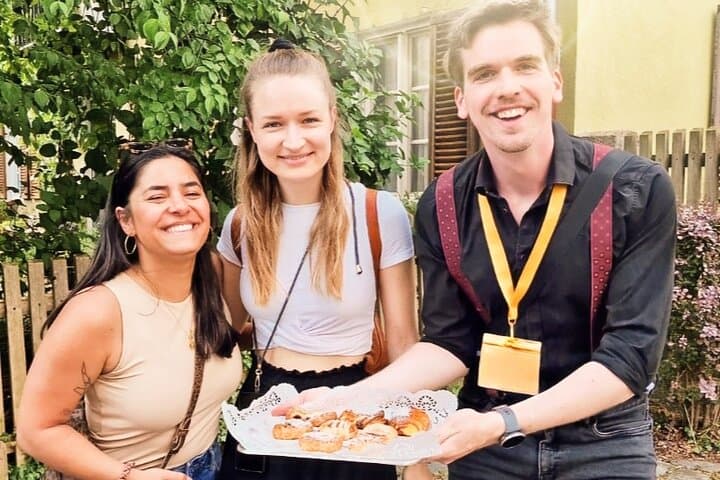
The tour includes one welcome drink at the Deubl Glass Cube (beer or soft drink); additional food and drink at stops are at your own expense.
Guides are native to the Schwabing neighborhood and typically offer the tour in German and English; confirm language availability when booking.
Schwabing grew from an old village into Munich’s bohemian quarter in the 19th century, later becoming a hub for artists, students and political activists; landmarks like the Siegestor recall public debates and social change.
Respect local residents by keeping noise down in evenings, use public trash bins, and support independent cafés and shops to help sustain the neighborhood’s character.
Schwabinger Max operates guided outdoor trips and adventures with an emphasis on safety, stewardship, and memorable experiences.
A late-afternoon light slants across Leopoldstraße, catching the varnish on café tables and turning the tram rails into a thin silver river. Walkers slow, students argue, and street art eyes you from an underpass — Schwabing moves with a bohemian confidence that still dares you to keep up.
A late-afternoon light slants across Leopoldstraße, catching the varnish on café tables and turning the tram rails into a thin silver river. Walkers slow, students argue, and street art eyes you from an underpass — Schwabing moves with a bohemian confidence that still dares you to keep up.
Once an independent village on Munich’s northern edge, Schwabing sharpened its reputation in the 19th and 20th centuries as a magnet for artists, writers and political agitators. The neighborhood’s streets carry layers of history: early farmhouses in the Dorfkern, the scars and stories of the Schwabinger 7 pub, and relics of modernist architecture where debates about urban life played out. Geologically flat and close to the Isar and the English Garden, the district’s public spaces are oriented around long boulevards and small squares rather than dramatic topography.
On a guided walk here you’ll bounce between Leopoldstraße’s ‘see and be seen’ energy, small village lanes, beer gardens and unexpected staircases at the Siegestor. Local guides fold in myths and documented revolt with equal appetite, and the route often includes a welcome drink and insider stops off the main drag.
Practicalities: plan for 1.5–5 hours depending on your variant; wear comfortable walking shoes and bring a light layer for changing weather. Public transit (U-Bahn/ tram) drops you close to start points, and tours are stroller-friendly. Respect residential areas, carry water, and leave larger backpacks on quieter days — Schwabing rewards slow feet and curious questions.