THE ADVENTURE COLLECTIVE® · Independent discovery and booking for outdoor travel

Sail Salvador’s big bay on a classic schooner to Ilha dos Frades and Itaparica—two very different island stops that combine shallow swimming, beachfront restaurants and a sunset return. This full-day run mixes coastal history, live samba and practical island time.
Sail Salvador’s big bay on a classic schooner to Ilha dos Frades and Itaparica—two very different island stops that combine shallow swimming, beachfront restaurants and a sunset return. This full-day run mixes coastal history, live samba and practical island time.
The schooner nudges away from Comércio as the early light slices across the harbor, and Salvador’s high city recedes into a string of red roofs and baroque church towers. On deck, the breeze carries the sharp, citrusy scent of sea and the low pulse of percussion—the standard samba set the crew keeps for afternoons like this. You feel the boat settling into the long swell of Baía de Todos os Santos; the day ahead is measured in salt, little islands, and wide tidal arms.
Verified experiences and guided adventures in the surrounding area.
Operated by Passeios as ilhas · Salvador, Bahia
The schooner nudges away from Comércio as the early light slices across the harbor, and Salvador’s high city recedes into a string of red roofs and baroque church towers. On deck, the breeze carries the sharp, citrusy scent of sea and the low pulse of percussion—the standard samba set the crew keeps for afternoons like this. You feel the boat settling into the long swell of Baía de Todos os Santos; the day ahead is measured in salt, little islands, and wide tidal arms.
Geology here reads as marine history: islands of coarse sand and ancient reefs that once felt the push of Pleistocene seas. Ilha dos Frades is small but ecologically important—fringed by mangroves and shallow coral gardens—while Itaparica, the bay’s largest island, shows traces of colonial settlement and long-running local fishing communities. As the schooner sweeps past the Fort of São Marcelo and the cliffs of the Itapagipe peninsula, a guide with multilingual savvy will point out the Bonfim Church and sketch the colonial rivalry that shaped Salvador’s shoreline defenses.
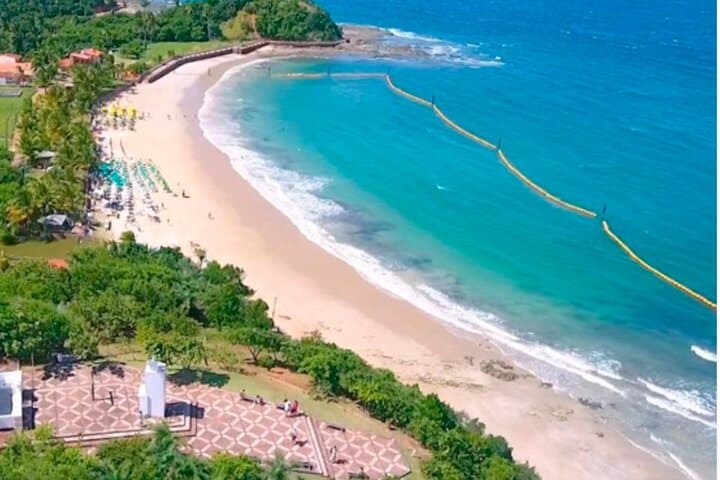
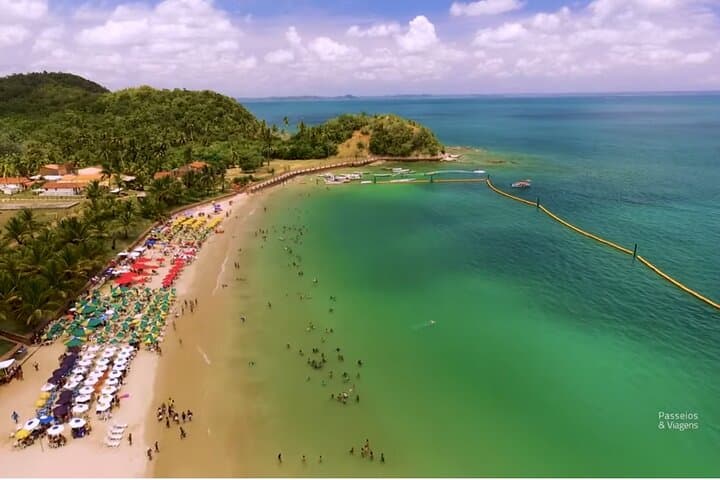
The day is laid out and pragmatic: a 1.5-hour crossing to Frades for a three-hour beach stop, 40 minutes to Itaparica for lunch and two hours ashore, then about 1 hour 10 minutes back to Salvador, totaling roughly eight hours. On Frades you’ll find shallow, warm water good for swimming; on Itaparica there’s a larger beach scene and optional restaurants in Ponta de Areia. Expect live music aboard, a stocked bar, padded seating and a company that emphasizes multilingual guides.
Practicalities matter more than romance here. The nautical terminal charges a boarding fee (R$20) and Ilha dos Frades levies a preservation fee (R$25); both are paid on site—carry cash or small bills. Bring reef-safe sunscreen and a hat, and plan for sun exposure and sudden sea spray. Deck space is comfortable but moving between shore and boat requires steady footing; those prone to seasickness should prep accordingly. The trip runs best as a leisurely day: swimming, a beachfront lunch on Itaparica if you choose, and a return that often coincides with a glowing bay sunset.
Cultural notes: Itaparica was historically important for colonial trade and ship repair, and its beaches remain a living slice of Bahian coastal life. Conservation is active here—preservation fees fund island management—so respect marked trails, avoid trampling dunes and take out what you bring in.
If you want easy access to Salvador’s architecture before or after the trip, schedule time in the Pelourinho; for photography, the boat’s bow gives the best skyline shots and the evening return can deliver spectacular golden-hour color. For a day that combines coastal history, warm water, and uncomplicated island time, this schooner run is an efficient, spirited way to know the bay.
easy.
8 hours.
Light fitness—able to walk short distances on sand and step up/down from small docks; minimal exertion required
The tour runs about eight hours: departures around 08:00 with return to Salvador in the late afternoon.
No — a boarding fee (R$20) at the nautical terminal and a preservation fee (R$25) for Ilha dos Frades are paid on site.
Yes—Ilha dos Frades offers calm, shallow swimming; Itaparica also has beaches suitable for a dip and sunbathing.
Lunch is optional; the boat includes fruit rounds and a bar service, but restaurants on Itaparica require separate payment.
Yes — guides often speak English, Spanish, French, Italian and German, according to operator notes.
Yes—this activity is rated easy and stroller-accessible, but infants must sit on laps and parents should supervise at beach landings.
The islands played roles in colonial-era trade and defense around Salvador; São Marcelo Fort and Itaparica’s colonial settlements reflect centuries of maritime activity.
Environmental preservation fees fund local conservation; stick to marked paths, avoid single-use plastics and use reef-safe sunscreen to limit impact.
Passeios as ilhas operates guided outdoor trips and adventures with an emphasis on safety, stewardship, and memorable experiences.

The schooner nudges away from Comércio as the early light slices across the harbor, and Salvador’s high city recedes into a string of red roofs and baroque church towers. On deck, the breeze carries the sharp, citrusy scent of sea and the low pulse of percussion—the standard samba set the crew keeps for afternoons like this. You feel the boat settling into the long swell of Baía de Todos os Santos; the day ahead is measured in salt, little islands, and wide tidal arms.
The schooner nudges away from Comércio as the early light slices across the harbor, and Salvador’s high city recedes into a string of red roofs and baroque church towers. On deck, the breeze carries the sharp, citrusy scent of sea and the low pulse of percussion—the standard samba set the crew keeps for afternoons like this. You feel the boat settling into the long swell of Baía de Todos os Santos; the day ahead is measured in salt, little islands, and wide tidal arms.
Geology here reads as marine history: islands of coarse sand and ancient reefs that once felt the push of Pleistocene seas. Ilha dos Frades is small but ecologically important—fringed by mangroves and shallow coral gardens—while Itaparica, the bay’s largest island, shows traces of colonial settlement and long-running local fishing communities. As the schooner sweeps past the Fort of São Marcelo and the cliffs of the Itapagipe peninsula, a guide with multilingual savvy will point out the Bonfim Church and sketch the colonial rivalry that shaped Salvador’s shoreline defenses.
The day is laid out and pragmatic: a 1.5-hour crossing to Frades for a three-hour beach stop, 40 minutes to Itaparica for lunch and two hours ashore, then about 1 hour 10 minutes back to Salvador, totaling roughly eight hours. On Frades you’ll find shallow, warm water good for swimming; on Itaparica there’s a larger beach scene and optional restaurants in Ponta de Areia. Expect live music aboard, a stocked bar, padded seating and a company that emphasizes multilingual guides.
Practicalities matter more than romance here. The nautical terminal charges a boarding fee (R$20) and Ilha dos Frades levies a preservation fee (R$25); both are paid on site—carry cash or small bills. Bring reef-safe sunscreen and a hat, and plan for sun exposure and sudden sea spray. Deck space is comfortable but moving between shore and boat requires steady footing; those prone to seasickness should prep accordingly. The trip runs best as a leisurely day: swimming, a beachfront lunch on Itaparica if you choose, and a return that often coincides with a glowing bay sunset.
Cultural notes: Itaparica was historically important for colonial trade and ship repair, and its beaches remain a living slice of Bahian coastal life. Conservation is active here—preservation fees fund island management—so respect marked trails, avoid trampling dunes and take out what you bring in.
If you want easy access to Salvador’s architecture before or after the trip, schedule time in the Pelourinho; for photography, the boat’s bow gives the best skyline shots and the evening return can deliver spectacular golden-hour color. For a day that combines coastal history, warm water, and uncomplicated island time, this schooner run is an efficient, spirited way to know the bay.