THE ADVENTURE COLLECTIVE® · Independent discovery and booking for outdoor travel

Skip weather delays and return to Kathmandu in under an hour on a helicopter transfer from Lukla. Enjoy dramatic aerial views of the Khumbu Valley, glaciers, and Sherpa settlements while avoiding uncertain domestic flights.
Skip weather delays and return to Kathmandu in under an hour on a helicopter transfer from Lukla. Enjoy dramatic aerial views of the Khumbu Valley, glaciers, and Sherpa settlements while avoiding uncertain domestic flights.
The helicopter lifts off and the Khumbu valley contracts beneath you—terraced slopes, the braided Dudh Koshi daring the eye, and jagged, snow-washed ridgelines sliding past as if the mountains themselves are seeing you off.
Verified experiences and guided adventures in the surrounding area.
Operated by Master Himalaya Treks and Expedition · Lukla, Province No. 1
The helicopter lifts off and the Khumbu valley contracts beneath you—terraced slopes, the braided Dudh Koshi daring the eye, and jagged, snow-washed ridgelines sliding past as if the mountains themselves are seeing you off.
This short aerial crossing (about 40–60 minutes door-to-door) is the most efficient way to exit the Everest region after a trek. Lukla—home to the Tenzing-Hillary Airport at roughly 2,860 m—has long been the gateway for climbers and trekkers. The air route traces young Himalayan geology: uplifted marine deposits folded into sharp peaks by the collision of the Indian and Eurasian plates, and glacial tongues carving the deep valleys below.
Culture remains visible even from the window: scattered Sherpa villages, mani walls, and remote gompas that mark centuries of Himalayan pilgrimage. The flight provides a compact lesson in local life—trading hubs, high pastures with grazing yaks, and tea houses that punctuate the trail.
Practical guidance is straightforward. Book with flexible weather policies—fixed-wing flights are frequently delayed, while helicopters operate with greater tolerance. Expect small passenger loads, strict weight limits, and a brief pre-flight safety briefing; hotel pickup and drop-off are commonly included. Carry your passport and essential documents in an easy-to-reach pocket, keep cameras charged, and sit on the side facing Everest for the best views when departures align.
For travelers finishing a multi-day trek, the helicopter delivers a stress-free, scenic end: faster transit, predictable timing, and an unforgettable last look at the world’s highest peaks.
easy.
40–60 minutes total (transfer time varies).
No special fitness required beyond basic mobility—passengers should be able to board and unboard independently.
The airborne portion is roughly 20–30 minutes; total door-to-door time including transfers is typically 40–60 minutes depending on pick-up and drop-off logistics.
Yes—operators cancel flights in poor visibility or high winds; choose a provider with clear weather-cancellation and refund policies.
Yes—small helicopters limit total passenger and baggage weight; carriers require pre-departure weight declarations and may charge or deny carriage for excess load.
While not always mandatory, travel insurance that covers helicopter transfers, cancellations, and medical evacuation is strongly recommended for Himalayan travel.
Lukla acts as the traditional gateway to the Everest region; the Tenzing-Hillary Airport is named after the first climbers to summit Everest, and the town grew as a trading and trekking hub.
High trekker numbers strain local waste and water systems—choose operators who practice responsible waste management and support local lodges to minimize impact.
Master Himalaya Treks and Expedition operates guided outdoor trips and adventures with an emphasis on safety, stewardship, and memorable experiences.
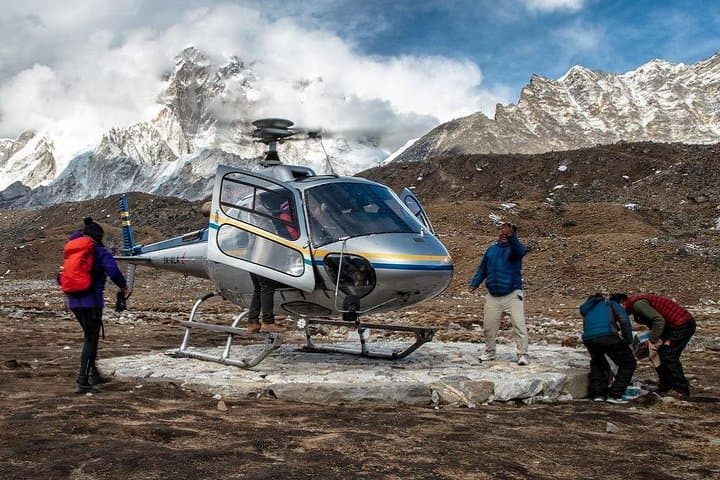
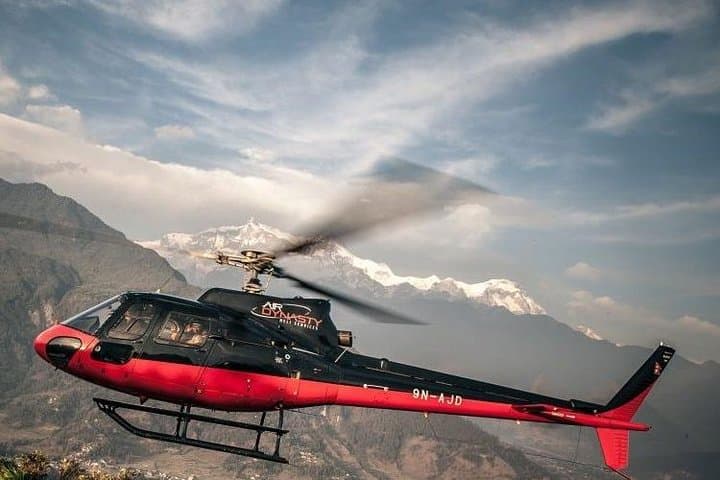
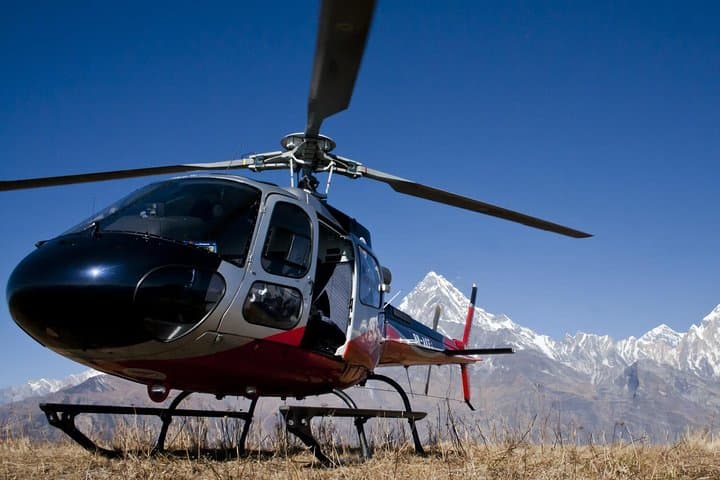
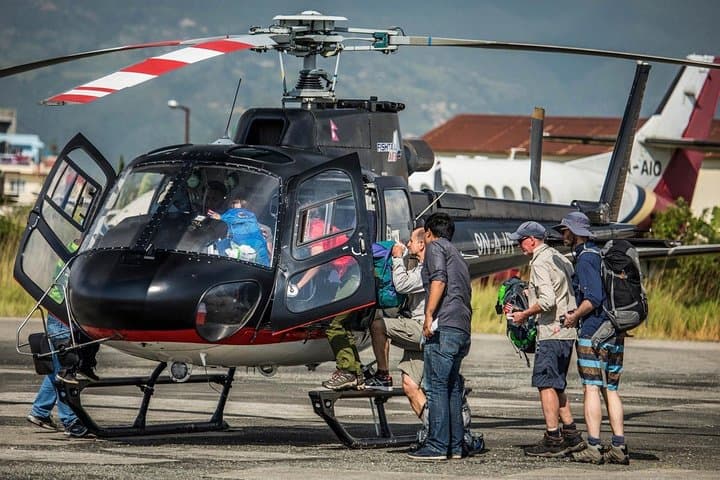
The helicopter lifts off and the Khumbu valley contracts beneath you—terraced slopes, the braided Dudh Koshi daring the eye, and jagged, snow-washed ridgelines sliding past as if the mountains themselves are seeing you off.
The helicopter lifts off and the Khumbu valley contracts beneath you—terraced slopes, the braided Dudh Koshi daring the eye, and jagged, snow-washed ridgelines sliding past as if the mountains themselves are seeing you off.
This short aerial crossing (about 40–60 minutes door-to-door) is the most efficient way to exit the Everest region after a trek. Lukla—home to the Tenzing-Hillary Airport at roughly 2,860 m—has long been the gateway for climbers and trekkers. The air route traces young Himalayan geology: uplifted marine deposits folded into sharp peaks by the collision of the Indian and Eurasian plates, and glacial tongues carving the deep valleys below.
Culture remains visible even from the window: scattered Sherpa villages, mani walls, and remote gompas that mark centuries of Himalayan pilgrimage. The flight provides a compact lesson in local life—trading hubs, high pastures with grazing yaks, and tea houses that punctuate the trail.
Practical guidance is straightforward. Book with flexible weather policies—fixed-wing flights are frequently delayed, while helicopters operate with greater tolerance. Expect small passenger loads, strict weight limits, and a brief pre-flight safety briefing; hotel pickup and drop-off are commonly included. Carry your passport and essential documents in an easy-to-reach pocket, keep cameras charged, and sit on the side facing Everest for the best views when departures align.
For travelers finishing a multi-day trek, the helicopter delivers a stress-free, scenic end: faster transit, predictable timing, and an unforgettable last look at the world’s highest peaks.