THE ADVENTURE COLLECTIVE® · Independent discovery and booking for outdoor travel

Descend through a 60 m sinkhole to walk across a subterranean glacier in the Apuseni Mountains. This one-day car tour from Oradea combines dramatic karst geology, village stops, and an unforgettable icy interior.
Descend through a 60 m sinkhole to walk across a subterranean glacier in the Apuseni Mountains. This one-day car tour from Oradea combines dramatic karst geology, village stops, and an unforgettable icy interior.
The route falls away into spruce-scented hills, a wide sinkhole yawning like a natural amphitheater at the trailhead. Visitors pass a 60 m diameter entrance that drops roughly 48 m to the cave floor, where a blue-white mass of ice fills the chamber. Air here hangs cold and still—around freezing year-round—so every exhale fogs and footsteps echo against stone and centuries of compacted ice.
Verified experiences and guided adventures in the surrounding area.
Operated by Romaniatourism · Gârda de Sus, Alba
The route falls away into spruce-scented hills, a wide sinkhole yawning like a natural amphitheater at the trailhead. Visitors pass a 60 m diameter entrance that drops roughly 48 m to the cave floor, where a blue-white mass of ice fills the chamber. Air here hangs cold and still—around freezing year-round—so every exhale fogs and footsteps echo against stone and centuries of compacted ice.
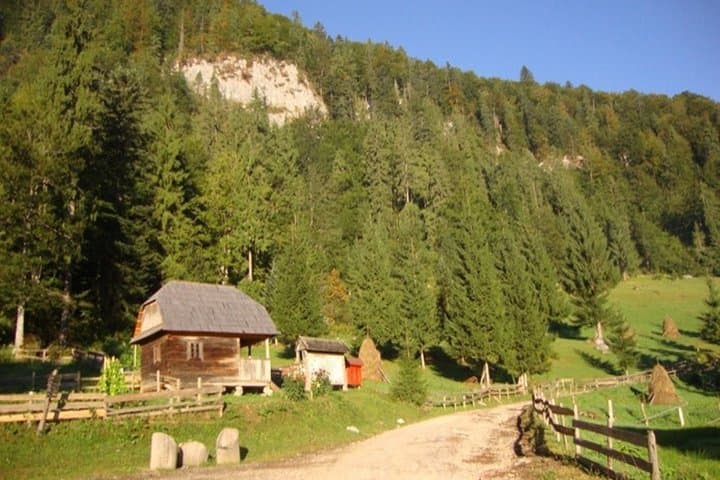
Geology and local history press close: Scarisoara contains one of Romania’s largest underground glaciers, an ice block measured in tens of thousands of cubic meters and up to about 20 m thick in places. The cave sits on the northern edge of the Apuseni range, carved from limestone karst; nearby hamlets like Casa de Piatră and Gârda de Sus reflect a centuries-old mountain culture of shepherding and woodcraft.
Expect a straightforward but physical visit: a guided descent, icy walking surfaces, and narrow passages. The full-day drive-from-Oradea format (about 9–11 hours total) typically includes stops at Tauz Spring and smaller caves like Coiba Mare and Coiba Mică, offering short walks and viewpoints between transfers.
Practical guidance: wear sturdy mountain boots with good grip, bring an insulated jacket and gloves, and carry a headlamp or flashlight even if interiors are lit—glare off ice can be disorienting. Be prepared for uneven steps and a steady 0°C environment; those with serious cardiovascular or spinal conditions, or who are pregnant, should avoid the descent. Photography is excellent but bring spare batteries—the cold drains them fast.
moderate.
9–11 hours.
Moderate fitness recommended: ability to walk on uneven stone and descend/ascend stairs for up to 30–40 minutes inside the cave.
The guided visit inside Scarisoara typically lasts 20–40 minutes of walking; the whole on-site visit may be 1.5–3 hours depending on group movements and queueing.
Children can visit but must be accompanied; narrow passages and cold conditions make supervision essential and some families choose to stay near the entrance.
No technical gear is required for the standard public route—sturdy boots, warm clothing and a flashlight are sufficient; ropes or helmets are not normally provided or needed.
This tour runs by car/minivan with pickup from Oradea; the cave is roughly 120–140 km away, with about 2–3 hours driving each way depending on stops and road conditions.
Locals have known the site for centuries, but systematic scientific exploration of Scarisoara and its glacier began in the 19th century as karst studies expanded across the Carpathians.
The underground glacier is sensitive to human impact and changing climate; stay on marked paths, avoid touching ice formations, and follow guide instructions to minimize damage.
Romaniatourism operates guided outdoor trips and adventures with an emphasis on safety, stewardship, and memorable experiences.
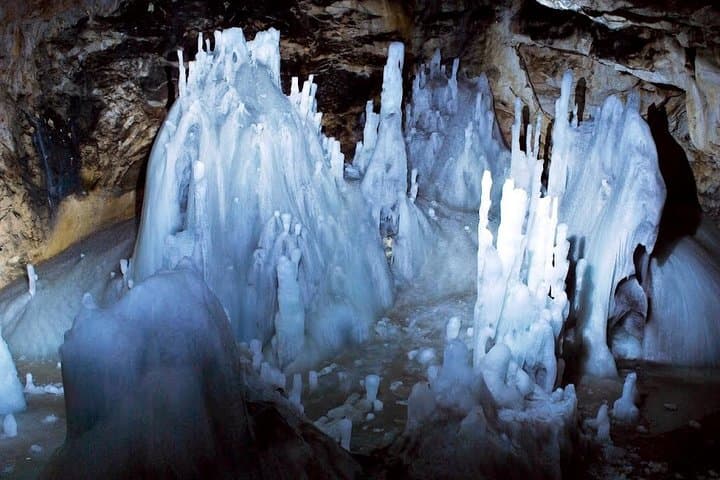
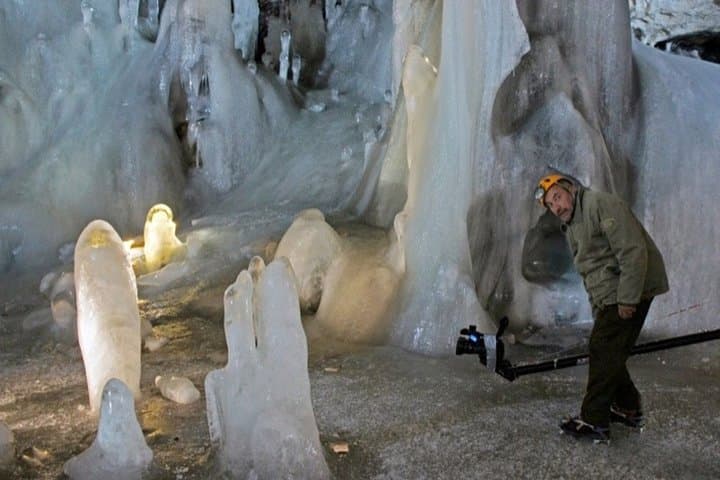
The route falls away into spruce-scented hills, a wide sinkhole yawning like a natural amphitheater at the trailhead. Visitors pass a 60 m diameter entrance that drops roughly 48 m to the cave floor, where a blue-white mass of ice fills the chamber. Air here hangs cold and still—around freezing year-round—so every exhale fogs and footsteps echo against stone and centuries of compacted ice.
The route falls away into spruce-scented hills, a wide sinkhole yawning like a natural amphitheater at the trailhead. Visitors pass a 60 m diameter entrance that drops roughly 48 m to the cave floor, where a blue-white mass of ice fills the chamber. Air here hangs cold and still—around freezing year-round—so every exhale fogs and footsteps echo against stone and centuries of compacted ice.
Geology and local history press close: Scarisoara contains one of Romania’s largest underground glaciers, an ice block measured in tens of thousands of cubic meters and up to about 20 m thick in places. The cave sits on the northern edge of the Apuseni range, carved from limestone karst; nearby hamlets like Casa de Piatră and Gârda de Sus reflect a centuries-old mountain culture of shepherding and woodcraft.
Expect a straightforward but physical visit: a guided descent, icy walking surfaces, and narrow passages. The full-day drive-from-Oradea format (about 9–11 hours total) typically includes stops at Tauz Spring and smaller caves like Coiba Mare and Coiba Mică, offering short walks and viewpoints between transfers.
Practical guidance: wear sturdy mountain boots with good grip, bring an insulated jacket and gloves, and carry a headlamp or flashlight even if interiors are lit—glare off ice can be disorienting. Be prepared for uneven steps and a steady 0°C environment; those with serious cardiovascular or spinal conditions, or who are pregnant, should avoid the descent. Photography is excellent but bring spare batteries—the cold drains them fast.