THE ADVENTURE COLLECTIVE® · Independent discovery and booking for outdoor travel

Make a 1 hour 20 minute drive from Manuel Antonio to the Savegre River for an active Class III rafting run through jungle-lined chutes. Expect 2½ hours in the raft, a safety kayaker on the water, and a homemade Costa Rican meal at the finish.
Make a 1 hour 20 minute drive from Manuel Antonio to the Savegre River for an active Class III rafting run through jungle-lined chutes. Expect 2½ hours in the raft, a safety kayaker on the water, and a homemade Costa Rican meal at the finish.
The raft cuts into warm Pacific-fed water and the river answers — current tugging at the bow, jungle leaves brushing the guide's shoulder like a slow hand. Guests collected in Manuel Antonio board a minivan for a 1 hour 20 minute drive out of town, passing African palm stands, small rivers and towns that still show traces of United Fruit Company-era infrastructure.
Verified experiences and guided adventures in the surrounding area.
Operated by Destination Services Costa Rica · Manuel Antonio, Puntarenas
The raft cuts into warm Pacific-fed water and the river answers — current tugging at the bow, jungle leaves brushing the guide's shoulder like a slow hand. Guests collected in Manuel Antonio board a minivan for a 1 hour 20 minute drive out of town, passing African palm stands, small rivers and towns that still show traces of United Fruit Company-era infrastructure.
Geology here is straightforward: a steep coastal watershed funnels rapid flows from the foothills to the sea, producing short, punchy Class III rapids that demand attention but reward with wide, sunlit pools between breaks. Culturally, the route threads through Quepos’ banana-plantation history; guides point out “cuadrantes,” community hubs formed during the plantation era while explaining contemporary conservation efforts.
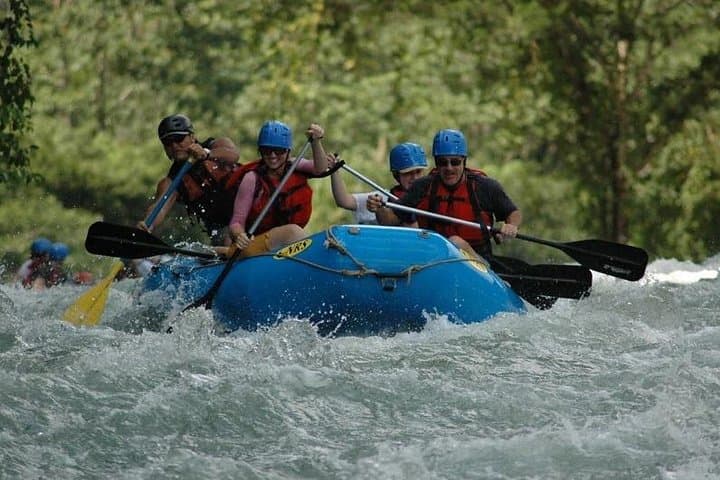
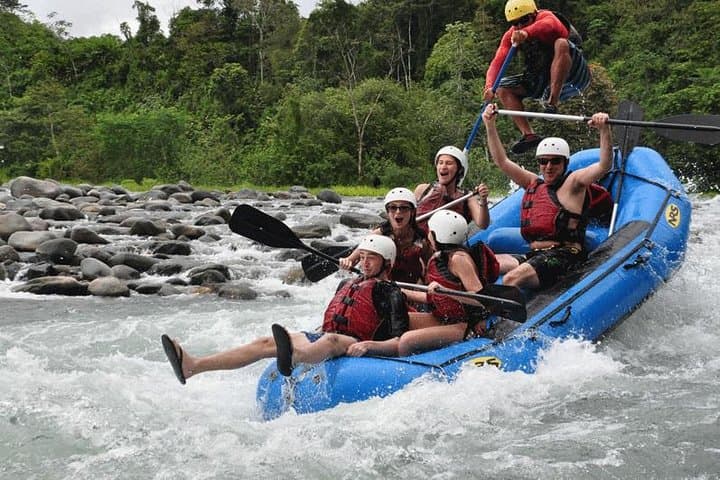
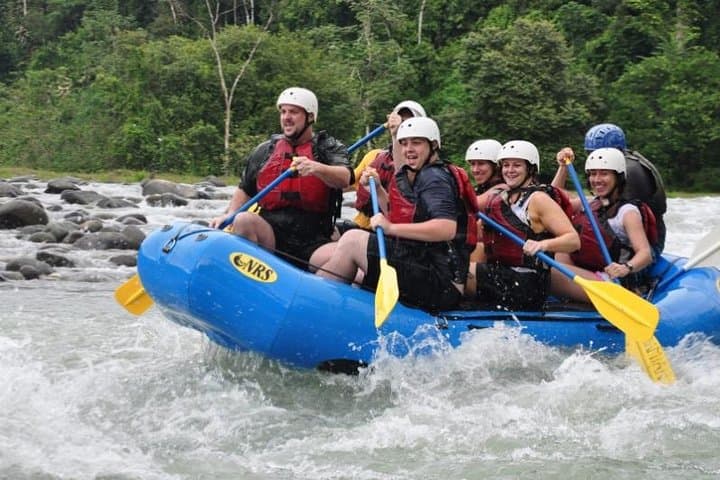
On the river, paddlers alternate hard bursts and quiet drift: the water dares you through chutes, then offers calm for birdwatching and photos. The trip includes a safety briefing, a safety kayaker, riverside stops, and roughly 2½ hours of active rafting. After the run, expect a change of clothes and a homemade Costa Rican meal.
Practicalities: minimum age is 8, high cardiovascular fitness is recommended, and operators provide life jackets and instruction. Bring rubber-soled shoes, a quick-dry swimsuit and waterproof sun protection; pack a dry change of clothes. Aim for morning departures to avoid the hottest midday sun and shifting afternoon weather. Respect the river: follow guide instructions, keep a steady paddle cadence, and leave no trace — the watershed’s health depends on it.
challenging.
5–6 hours.
Good cardiovascular fitness and comfort in moving water; able to paddle actively for 2–3 hours.
You’ll spend approximately 2½ hours actively rafting on the Savegre River; total tour time including transport and meals is about 5–6 hours.
Minimum age is 8 years; operators advise a high level of physical fitness due to sustained paddling and potential swimming.
Yes — pickup from Manuel Antonio hotels is included and the drive to the river is roughly 1 hour 20 minutes each way.
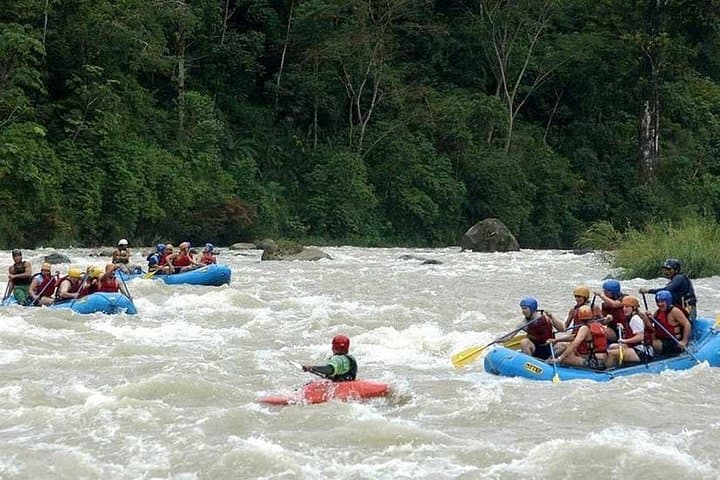
Guides provide a safety briefing, life jackets, helmets when needed, and a safety kayaker who follows the raft to assist in swims or tricky rapids.
The drive reveals Quepos’ plantation history; guides often point out settlements and infrastructure linked to banana and palm operations from the United Fruit Company era.
The Savegre watershed supports local biodiversity and water quality is a priority — follow guide instructions, pack out trash, and avoid contaminating the river with sunscreen or soaps.
Destination Services Costa Rica operates guided outdoor trips and adventures with an emphasis on safety, stewardship, and memorable experiences.
The raft cuts into warm Pacific-fed water and the river answers — current tugging at the bow, jungle leaves brushing the guide's shoulder like a slow hand. Guests collected in Manuel Antonio board a minivan for a 1 hour 20 minute drive out of town, passing African palm stands, small rivers and towns that still show traces of United Fruit Company-era infrastructure.
The raft cuts into warm Pacific-fed water and the river answers — current tugging at the bow, jungle leaves brushing the guide's shoulder like a slow hand. Guests collected in Manuel Antonio board a minivan for a 1 hour 20 minute drive out of town, passing African palm stands, small rivers and towns that still show traces of United Fruit Company-era infrastructure.
Geology here is straightforward: a steep coastal watershed funnels rapid flows from the foothills to the sea, producing short, punchy Class III rapids that demand attention but reward with wide, sunlit pools between breaks. Culturally, the route threads through Quepos’ banana-plantation history; guides point out “cuadrantes,” community hubs formed during the plantation era while explaining contemporary conservation efforts.
On the river, paddlers alternate hard bursts and quiet drift: the water dares you through chutes, then offers calm for birdwatching and photos. The trip includes a safety briefing, a safety kayaker, riverside stops, and roughly 2½ hours of active rafting. After the run, expect a change of clothes and a homemade Costa Rican meal.
Practicalities: minimum age is 8, high cardiovascular fitness is recommended, and operators provide life jackets and instruction. Bring rubber-soled shoes, a quick-dry swimsuit and waterproof sun protection; pack a dry change of clothes. Aim for morning departures to avoid the hottest midday sun and shifting afternoon weather. Respect the river: follow guide instructions, keep a steady paddle cadence, and leave no trace — the watershed’s health depends on it.