THE ADVENTURE COLLECTIVE® · Independent discovery and booking for outdoor travel

Walk from Forsyth Park to the River Street waterfront on a private three-hour tour that covers Savannah’s best-known squares, antebellum architecture, and local stories. Expect 1.5–2.5 miles of mostly flat walking, frequent photo stops, and a light bite at the end.
Walk from Forsyth Park to the River Street waterfront on a private three-hour tour that covers Savannah’s best-known squares, antebellum architecture, and local stories. Expect 1.5–2.5 miles of mostly flat walking, frequent photo stops, and a light bite at the end.
Forsyth Park’s fountain marks the beginning of a three-hour sweep through Savannah’s ordered squares, where Spanish moss brushes streetlamps and cobblestones sing underfoot.
Verified experiences and guided adventures in the surrounding area.
Operated by Travel Curious · Savannah, Georgia
Forsyth Park’s fountain marks the beginning of a three-hour sweep through Savannah’s ordered squares, where Spanish moss brushes streetlamps and cobblestones sing underfoot.
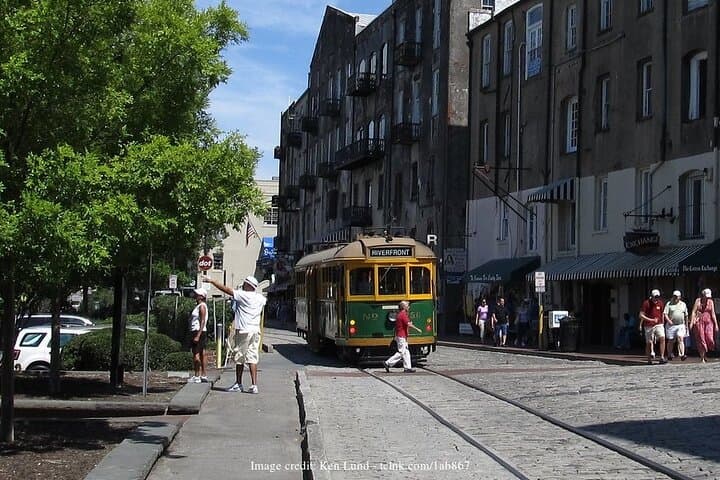
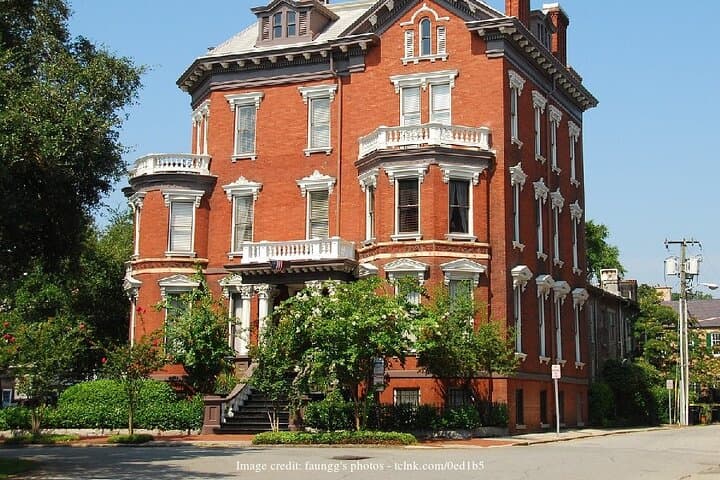
The route threads from the park across neatly paved squares to the River Street waterfront, passing the 143-year-old Cathedral Basilica of St. John the Baptist, the Federal-style Davenport House, and Chippewa Square — the bench scene from Forrest Gump — each stop an architectural chapter in the city’s story. Guides set these landmarks in context: Savannah’s 1733 founding as a planned colonial town, its antebellum prosperity, Civil War hospitals like the Marshall House, and the social networks that shaped the port’s neighborhoods.
Geology here is subtle: a flat coastal plain of marshes and tidal creeks underlies the brick streets; expect minimal elevation gain (under 100 ft) but uneven surfaces where historic cobbles meet modern pavement. The culture is visible in balcony gardens, local foodways, and plaques that bring lesser-known figures to light.
Practical guidance: the tour covers roughly 1.5–2.5 miles over three hours on mostly flat terrain, with frequent stops for photos and stories. Wear closed-toe, grippy shoes for cobbles and bring a refillable water bottle — summer humidity can make walking feel harder than the distance suggests. Morning and late-afternoon departures reduce heat and crowds.
The private format includes a light bite and personalized tips from your guide, making this a compact way to orient yourself to Savannah’s history, architecture, and waterfront dining options before exploring independently.
moderate.
3 hours.
Able to walk 1.5–2.5 miles over a few hours with short standing stops; moderate fitness recommended.
Meet at the Forsyth Park fountain; the tour typically departs from this central, easy-to-find landmark.
Infants and small children can use a stroller; some streets are cobbled so parents should plan accordingly.
Gratuities are not included; tipping your guide for personalized service is customary.
Savannah was founded in 1733 as a planned colonial city and retains over 1,100 historically significant buildings and a unique system of public squares laid out by James Oglethorpe.
Historic preservation and sensible tourism are priorities; stick to marked paths, avoid climbing on monuments, and support local businesses to keep the district economically sustainable.
Travel Curious operates guided outdoor trips and adventures with an emphasis on safety, stewardship, and memorable experiences.
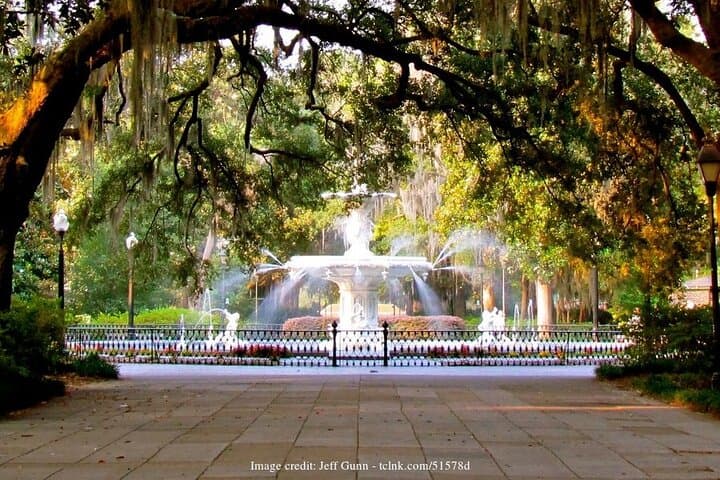
Forsyth Park’s fountain marks the beginning of a three-hour sweep through Savannah’s ordered squares, where Spanish moss brushes streetlamps and cobblestones sing underfoot.
Forsyth Park’s fountain marks the beginning of a three-hour sweep through Savannah’s ordered squares, where Spanish moss brushes streetlamps and cobblestones sing underfoot.
The route threads from the park across neatly paved squares to the River Street waterfront, passing the 143-year-old Cathedral Basilica of St. John the Baptist, the Federal-style Davenport House, and Chippewa Square — the bench scene from Forrest Gump — each stop an architectural chapter in the city’s story. Guides set these landmarks in context: Savannah’s 1733 founding as a planned colonial town, its antebellum prosperity, Civil War hospitals like the Marshall House, and the social networks that shaped the port’s neighborhoods.
Geology here is subtle: a flat coastal plain of marshes and tidal creeks underlies the brick streets; expect minimal elevation gain (under 100 ft) but uneven surfaces where historic cobbles meet modern pavement. The culture is visible in balcony gardens, local foodways, and plaques that bring lesser-known figures to light.
Practical guidance: the tour covers roughly 1.5–2.5 miles over three hours on mostly flat terrain, with frequent stops for photos and stories. Wear closed-toe, grippy shoes for cobbles and bring a refillable water bottle — summer humidity can make walking feel harder than the distance suggests. Morning and late-afternoon departures reduce heat and crowds.
The private format includes a light bite and personalized tips from your guide, making this a compact way to orient yourself to Savannah’s history, architecture, and waterfront dining options before exploring independently.