THE ADVENTURE COLLECTIVE® · Independent discovery and booking for outdoor travel

Walk through centuries of Southern history on a small-group tour that starts at the John Wesley statue and moves through Savannah’s iconic squares, River Street, and architectural highlights. Ideal for first-time visitors who want history, culture, and local tips in under three hours.
Walk through centuries of Southern history on a small-group tour that starts at the John Wesley statue and moves through Savannah’s iconic squares, River Street, and architectural highlights. Ideal for first-time visitors who want history, culture, and local tips in under three hours.
You step off the sidewalk beside the bronze John Wesley statue and the city exhales around you: live oaks lean across cobblestones, Spanish moss drips slow, and the Savannah River dares you to look toward the working port.
Verified experiences and guided adventures in the surrounding area.
Operated by Savannah Sidewalk Tours LLC · Savannah, Georgia
You step off the sidewalk beside the bronze John Wesley statue and the city exhales around you: live oaks lean across cobblestones, Spanish moss drips slow, and the Savannah River dares you to look toward the working port.
This 2¼-hour small-group walking tour threads the heart of Savannah’s 18th‑century grid of squares. Founded by James Oglethorpe in 1733, the district grew as a coastal port for rice and cotton and carries layers of Revolutionary and Civil War history in its brick facades and ironwork. Geologically, you’re on the Atlantic Coastal Plain—flat streets that cut through tidal marshes and lead toward barrier islands a short drive away.
Culture here is immediate: historic churches, the creative energy of SCAD students, old taverns turned restaurants, and River Street’s warehouses now offering food, craft shops, and river views. Guides point out architectural styles from Federal to Greek Revival, call out lesser‑known back alleys, and place local stories—merchant families, the Girl Scouts’ founder, and the Mercer‑Williams house—into context.
Practically, expect moderate walking on varied surfaces: paved streets, uneven cobbles and occasional steps. Tours begin at the Wesley statue and finish nearby; groups are capped at 15, and the operator allows wheelchairs and strollers on accessible routes. Bring comfortable shoes, water, sun protection, and a light rain layer in spring or fall. Mornings or late afternoons are best for cooler air and softer light for photos. The guide’s local knowledge makes this an efficient, interpretive introduction to Savannah—history, architecture, and the pulse of a working port city rolled into one accessible walk.
moderate.
2–3 hours.
Participants should be comfortable walking 1.5–3 miles on mixed urban surfaces and able to stand for portions of the tour.
The meeting point is next to the John Wesley statue in downtown Savannah; the tour ends a short walk away near the city center and River Street.
Yes; the operator lists wheelchair-accessible routes and allows service animals, though some areas have cobbles or steps that may require minor detours.
Admissions to buildings are not included; the tour covers outdoor stops and commentary—plan to pay for food or museum entry separately.
Full refunds are offered if you cancel at least 24 hours before the scheduled departure time.
Savannah was founded in 1733 by James Oglethorpe on a modular plan of public squares; its port shaped regional trade through the 19th century.
Historic preservation and urban forestry programs protect mature live oaks and squares; visitors are asked to stay on paths, avoid climbing trees, and not feed wildlife to reduce human impact.
Savannah Sidewalk Tours LLC operates guided outdoor trips and adventures with an emphasis on safety, stewardship, and memorable experiences.


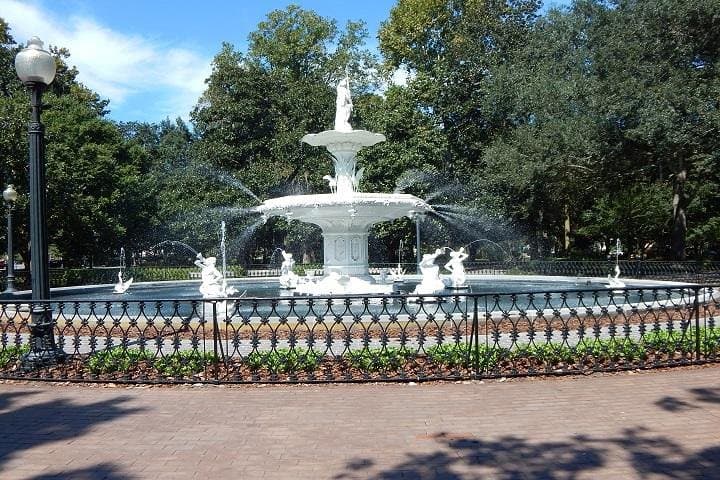
You step off the sidewalk beside the bronze John Wesley statue and the city exhales around you: live oaks lean across cobblestones, Spanish moss drips slow, and the Savannah River dares you to look toward the working port.
You step off the sidewalk beside the bronze John Wesley statue and the city exhales around you: live oaks lean across cobblestones, Spanish moss drips slow, and the Savannah River dares you to look toward the working port.
This 2¼-hour small-group walking tour threads the heart of Savannah’s 18th‑century grid of squares. Founded by James Oglethorpe in 1733, the district grew as a coastal port for rice and cotton and carries layers of Revolutionary and Civil War history in its brick facades and ironwork. Geologically, you’re on the Atlantic Coastal Plain—flat streets that cut through tidal marshes and lead toward barrier islands a short drive away.
Culture here is immediate: historic churches, the creative energy of SCAD students, old taverns turned restaurants, and River Street’s warehouses now offering food, craft shops, and river views. Guides point out architectural styles from Federal to Greek Revival, call out lesser‑known back alleys, and place local stories—merchant families, the Girl Scouts’ founder, and the Mercer‑Williams house—into context.
Practically, expect moderate walking on varied surfaces: paved streets, uneven cobbles and occasional steps. Tours begin at the Wesley statue and finish nearby; groups are capped at 15, and the operator allows wheelchairs and strollers on accessible routes. Bring comfortable shoes, water, sun protection, and a light rain layer in spring or fall. Mornings or late afternoons are best for cooler air and softer light for photos. The guide’s local knowledge makes this an efficient, interpretive introduction to Savannah—history, architecture, and the pulse of a working port city rolled into one accessible walk.