THE ADVENTURE COLLECTIVE® · Independent discovery and booking for outdoor travel

Explore Sardinia Bay’s wave-cut platforms, dune systems and rock pools on a 3–3.5 hour guided marine walk. Expect coastal geology, wildlife sightings and hands-on lessons about tides, sand movement and local conservation.
Explore Sardinia Bay’s wave-cut platforms, dune systems and rock pools on a 3–3.5 hour guided marine walk. Expect coastal geology, wildlife sightings and hands-on lessons about tides, sand movement and local conservation.
Salt wind pushes across the headland as the group steps onto the grass-topped dunes overlooking Sardinia Bay. The cliff edge opens to a 220' panoramic ledge where incoming waves cut clean terraces into the rock; the sea keeps moving, daring you to lean forward and read the language carved into stone.
Verified experiences and guided adventures in the surrounding area.
Operated by Guided Marine Tours - Port Elizabeth, South Africa · Port Elizabeth (Gqeberha), Eastern Cape
Salt wind pushes across the headland as the group steps onto the grass-topped dunes overlooking Sardinia Bay. The cliff edge opens to a 220' panoramic ledge where incoming waves cut clean terraces into the rock; the sea keeps moving, daring you to lean forward and read the language carved into stone.
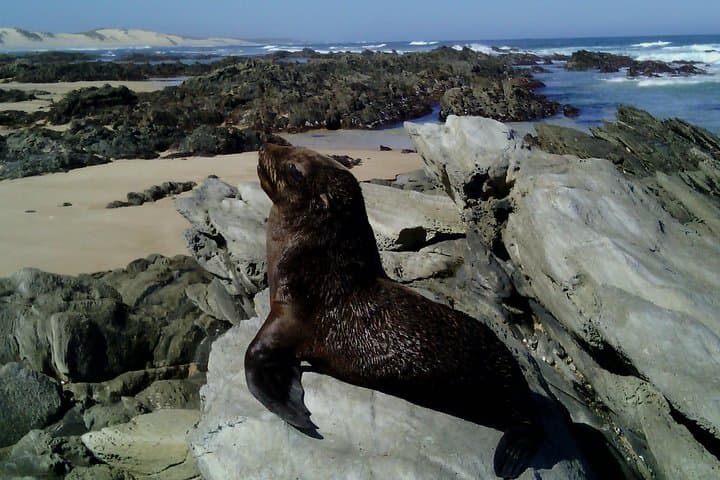
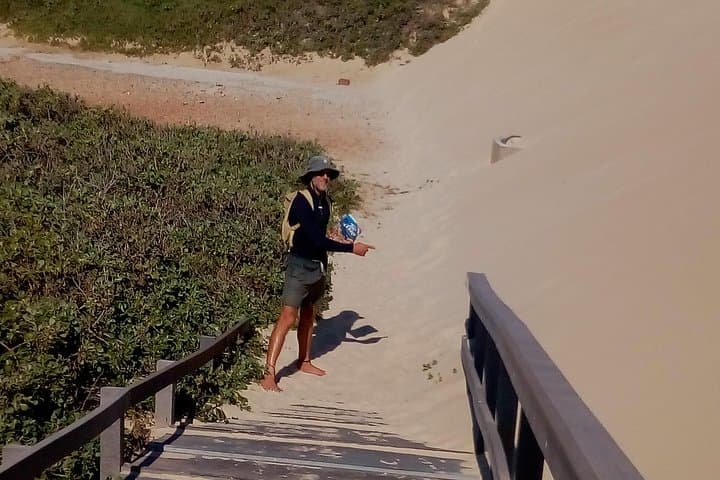
This short guided marine walk traces natural history and human traces: wave-cut platforms, sand-ripple fields, exposed mussel beds and the concrete remnants of colonial lime manufacturing. Guides point out how the sun, moon and tides orchestrate seasonal sand movement and show where small reef pools concentrate crabs, anemones and juvenile fish. Along the east-side stairs a corner beach appears—quiet, raw and regularly visited by dolphins, seals and migratory whales in season.
Geology is the lesson and culture the context—local fishing traditions and historical industry left scars and stories that explain current conservation rules. Sardinia Bay is a Marine Protected Area: no collecting, no fires and low-impact behavior is enforced to protect recovering mussel beds and intertidal life.
Practical guidance: the walk lasts about 3–3.5 hours over mostly easy, uneven coastal terrain with stairs to the lower beach. Wear sturdy shoes suitable for slippery rock, bring layered wind protection, sun protection and water; low tide reveals the richest rock pools for snorkeling or observation. Binoculars improve marine mammal sightings; follow the guide’s safety brief before any entry into rock pools or swimming. Plan visits in calm weather and check tide times—timing is everything for safe, memorable views.
easy.
3–3.5 hours.
Suitable for most fitness levels; expect uneven ground and short stair descents.
Yes—families with older children can enjoy the walk; keep kids close on rocky sections and follow the guide’s instructions near water.
Guides may point out safe rock-pool snorkeling spots and provide snorkeling equipment for calm conditions, but open-water swimming depends on sea state and guide clearance.
No—Sardinia Bay is an MPA with strict rules to protect wildlife; pets are not permitted during guided activities.
No—the route includes stairs and uneven rock platforms and is not suitable for wheelchairs.
Sardinia Bay has recorded lime and cement production residues from the 19th–20th centuries; those ruins now lie alongside recovering intertidal habitats.
The area is designated a Marine Protected Area—visitors must not collect organisms or litter; low-impact behavior helps fragile mussel beds and rock-pool communities recover.
Guided Marine Tours - Port Elizabeth, South Africa operates guided outdoor trips and adventures with an emphasis on safety, stewardship, and memorable experiences.
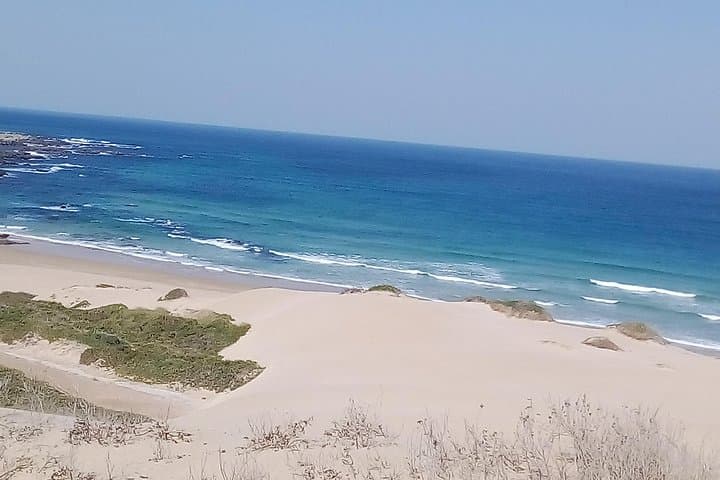
Salt wind pushes across the headland as the group steps onto the grass-topped dunes overlooking Sardinia Bay. The cliff edge opens to a 220' panoramic ledge where incoming waves cut clean terraces into the rock; the sea keeps moving, daring you to lean forward and read the language carved into stone.
Salt wind pushes across the headland as the group steps onto the grass-topped dunes overlooking Sardinia Bay. The cliff edge opens to a 220' panoramic ledge where incoming waves cut clean terraces into the rock; the sea keeps moving, daring you to lean forward and read the language carved into stone.
This short guided marine walk traces natural history and human traces: wave-cut platforms, sand-ripple fields, exposed mussel beds and the concrete remnants of colonial lime manufacturing. Guides point out how the sun, moon and tides orchestrate seasonal sand movement and show where small reef pools concentrate crabs, anemones and juvenile fish. Along the east-side stairs a corner beach appears—quiet, raw and regularly visited by dolphins, seals and migratory whales in season.
Geology is the lesson and culture the context—local fishing traditions and historical industry left scars and stories that explain current conservation rules. Sardinia Bay is a Marine Protected Area: no collecting, no fires and low-impact behavior is enforced to protect recovering mussel beds and intertidal life.
Practical guidance: the walk lasts about 3–3.5 hours over mostly easy, uneven coastal terrain with stairs to the lower beach. Wear sturdy shoes suitable for slippery rock, bring layered wind protection, sun protection and water; low tide reveals the richest rock pools for snorkeling or observation. Binoculars improve marine mammal sightings; follow the guide’s safety brief before any entry into rock pools or swimming. Plan visits in calm weather and check tide times—timing is everything for safe, memorable views.