THE ADVENTURE COLLECTIVE® · Independent discovery and booking for outdoor travel

Spend a private half-day in Sarchí exploring hand-painted oxcarts, family-run woodshops and curated artisan demonstrations. This high-end cultural tour from San José combines behind-the-scenes access with time to shop and sample traditional Costa Rican food.
Spend a private half-day in Sarchí exploring hand-painted oxcarts, family-run woodshops and curated artisan demonstrations. This high-end cultural tour from San José combines behind-the-scenes access with time to shop and sample traditional Costa Rican food.
A cool morning wind carries paint-scent and sawdust through Sarchí’s main plaza as your private vehicle eases onto the town’s sun-bright streets. Colorful oxcarts lean against workshop doors, their hand-painted motifs daring you to look closer; the mountain slopes above keep a slow, watchful presence over the valley.
Verified experiences and guided adventures in the surrounding area.
Operated by Paticas Travel · Sarchí, Alajuela
A cool morning wind carries paint-scent and sawdust through Sarchí’s main plaza as your private vehicle eases onto the town’s sun-bright streets. Colorful oxcarts lean against workshop doors, their hand-painted motifs daring you to look closer; the mountain slopes above keep a slow, watchful presence over the valley.
Sarchí sits in Costa Rica’s Central Valley, a cluster of workshops and family-run studios with roots in 19th-century farm life. The town’s fame grew around the carreta—the wooden oxcart—once vital for moving coffee and goods. Local hardwoods and simple hand tools shaped a regional craft vocabulary that became national iconography. Geologically, the area is volcanic-influenced highland terrain: fertile soils that feed the trees and the crafts that follow.
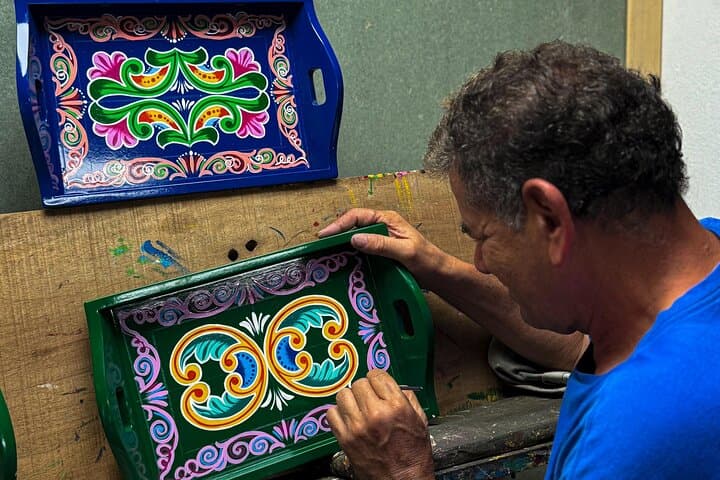
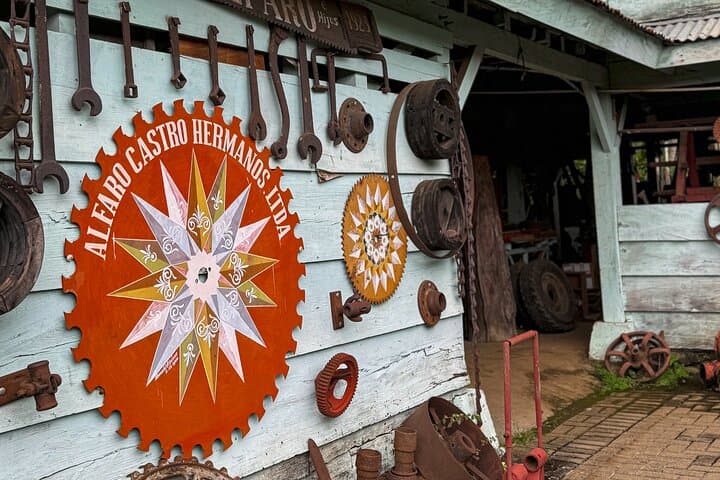
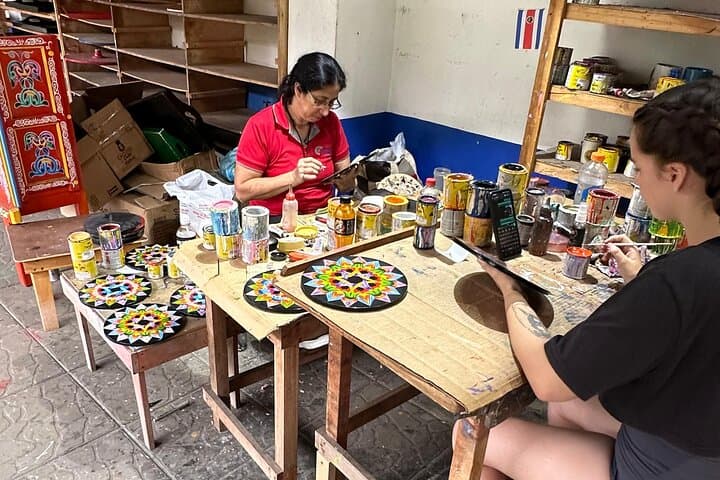
A private tour gives more than a shopping trip. You’ll step inside historic factories where artisans demonstrate carving and painting techniques, pause beneath corrugated roofs where generations pass brushes and chisels, and stand by the painted giant oxcart that marks Sarchí’s pride. Cultural context—how cooperatives and family workshops operate, and how designs reflect regional identity—threads through each stop.
Practical guidance: plan for a 5–6 hour day trip from San José, wear comfortable shoes for walking across workshop yards, and carry small bills for locally made souvenirs. Bring sunscreen and a light rain layer—weather in the highlands can flip quickly. Allow free time to browse shops; the best pieces often require time and conversation to uncover.
easy.
5–6 hours.
Suitable for most fitness levels; expect short walks on uneven surfaces and standing during demonstrations
The private tour runs approximately 5–6 hours (300–360 minutes), including visits, demonstrations, and time for lunch and shopping.
Most departures are from San José with private transportation to and from Sarchí; confirm pickup details when booking.
Yes — the itinerary is suitable for most ages and physical abilities, though some workshop areas have uneven flooring and steps.
Many artisans accept commissions or custom work, but larger or bespoke pieces require time — discuss lead times and payment directly with the artisan or guide.
Sarchí’s artisan traditions trace to 19th-century agricultural transport needs when painted carretas became both functional tools and community identity markers.
Small workshops rely on local hardwoods; many artisans now use reclaimed wood or certified supplies to reduce pressure on native forests and support sustainable sourcing.
Paticas Travel operates guided outdoor trips and adventures with an emphasis on safety, stewardship, and memorable experiences.
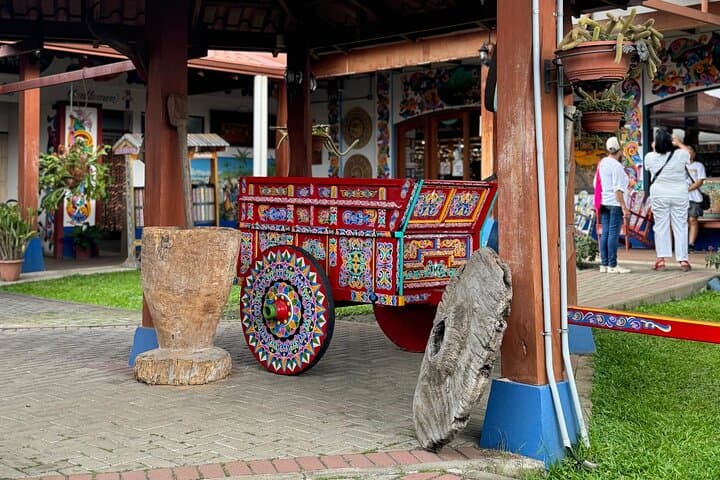
A cool morning wind carries paint-scent and sawdust through Sarchí’s main plaza as your private vehicle eases onto the town’s sun-bright streets. Colorful oxcarts lean against workshop doors, their hand-painted motifs daring you to look closer; the mountain slopes above keep a slow, watchful presence over the valley.
A cool morning wind carries paint-scent and sawdust through Sarchí’s main plaza as your private vehicle eases onto the town’s sun-bright streets. Colorful oxcarts lean against workshop doors, their hand-painted motifs daring you to look closer; the mountain slopes above keep a slow, watchful presence over the valley.
Sarchí sits in Costa Rica’s Central Valley, a cluster of workshops and family-run studios with roots in 19th-century farm life. The town’s fame grew around the carreta—the wooden oxcart—once vital for moving coffee and goods. Local hardwoods and simple hand tools shaped a regional craft vocabulary that became national iconography. Geologically, the area is volcanic-influenced highland terrain: fertile soils that feed the trees and the crafts that follow.
A private tour gives more than a shopping trip. You’ll step inside historic factories where artisans demonstrate carving and painting techniques, pause beneath corrugated roofs where generations pass brushes and chisels, and stand by the painted giant oxcart that marks Sarchí’s pride. Cultural context—how cooperatives and family workshops operate, and how designs reflect regional identity—threads through each stop.
Practical guidance: plan for a 5–6 hour day trip from San José, wear comfortable shoes for walking across workshop yards, and carry small bills for locally made souvenirs. Bring sunscreen and a light rain layer—weather in the highlands can flip quickly. Allow free time to browse shops; the best pieces often require time and conversation to uncover.