THE ADVENTURE COLLECTIVE® · Independent discovery and booking for outdoor travel

Race two-by-two off Sarangkot and drop 600 metres toward Hyangja with the Annapurna range framed ahead. This 1.8 km zipline combines Himalayan panorama, short local drives from Lakeside Pokhara, and a high-adrenaline descent suitable for most travelers.
Race two-by-two off Sarangkot and drop 600 metres toward Hyangja with the Annapurna range framed ahead. This 1.8 km zipline combines Himalayan panorama, short local drives from Lakeside Pokhara, and a high-adrenaline descent suitable for most travelers.
The wind opens like a door as you step off the launch platform at Sarangkot—trees drop away beneath you and the Annapurna massif fills the forward view. For a few long seconds the valley rearranges itself: Phewa Lake glints below, the Seti River threads the gorge, and the forested slopes crawl backward as gravity pulls you toward the landing village of Hyangja.
Verified experiences and guided adventures in the surrounding area.
Operated by Shishu Tours & Travel · Pokhara, Gandaki Province
The wind opens like a door as you step off the launch platform at Sarangkot—trees drop away beneath you and the Annapurna massif fills the forward view. For a few long seconds the valley rearranges itself: Phewa Lake glints below, the Seti River threads the gorge, and the forested slopes crawl backward as gravity pulls you toward the landing village of Hyangja.
Sarangkot sits on a ridge formed by uplifted Himalayan foothills; the viewpoint has long been used by locals for surveillance and sunrise watching. The Zip Flyer uses that cliff-line to deliver a 1.8-kilometre, 600-metre vertical drop run, built into the steep geology and barnacled by pine and mixed broadleaf canopy. The ride ties modern adrenaline engineering into a landscape of terraced fields, Gurung and Magar villages, and views of Machhapuchhre and the Annapurna range.
Expect clear mountain air, sudden gusts through the canopy and a short uphill walk at the top station; guides explain harnessing and safety before a two-person, racing launch. The operator provides shuttle pickup from Lakeside Pokhara and a guided drive up to Sarangkot. Bring layers—temperatures at 1,650 m can be much cooler than lakeside—and a secure pocket for a phone or camera. Morning launches usually have the best visibility; monsoon clouds can close in by midday.
This is an accessible yet adrenaline-packed aerial adventure: short on time but high on exposure to Himalayan topography and village life, ideal for travelers wanting a compact, memorable way to meet the Annapurna horizon.
moderate.
2–3 hours.
Suitable for most travelers with basic mobility; you should be able to walk short uphill stretches and transfer into a harness.
The run is approximately 1.8 kilometres with a vertical drop around 600 metres and a steep 56% incline; speeds are high—operators brief riders on expectations during safety checks.
Operators typically set weight and age limits for safety; confirm exact restrictions with the provider when booking or at pickup.
Standard inclusions are the Zip Flyer ride, round-trip transfer from Lakeside Pokhara to Sarangkot, and guided assistance at launch and landing.
Yes—heavy rain, high winds or poor visibility can delay or cancel runs; check cancellation policies and plan flexible timing.
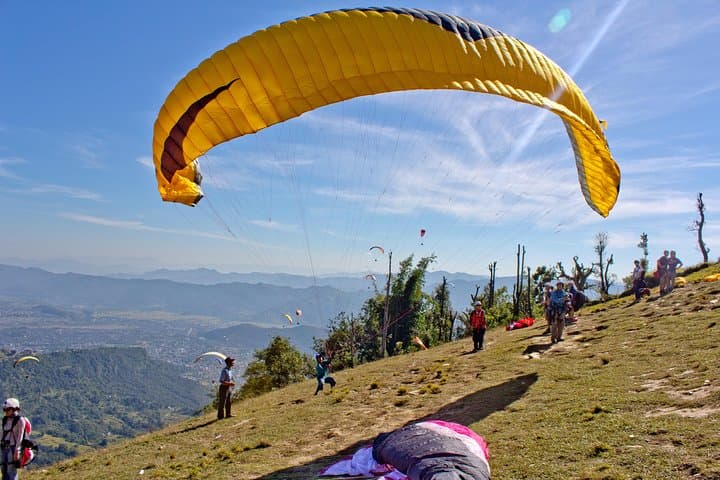
Sarangkot has long been a local vantage and lookout; more recently it has become a hub for paragliding and zipline services that leverage the ridge's steep topography.
Operators and guides encourage sticking to marked paths and minimizing noise; visitors should avoid feeding wildlife and carry out litter to reduce impact on this Himalayan foothill environment.
Shishu Tours & Travel operates guided outdoor trips and adventures with an emphasis on safety, stewardship, and memorable experiences.
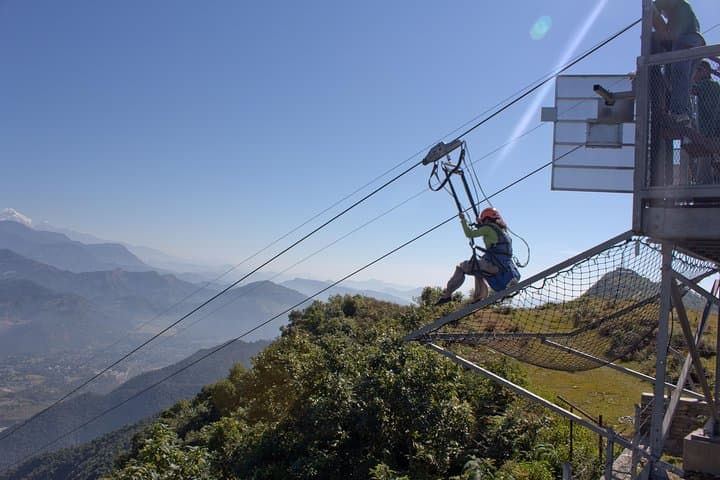
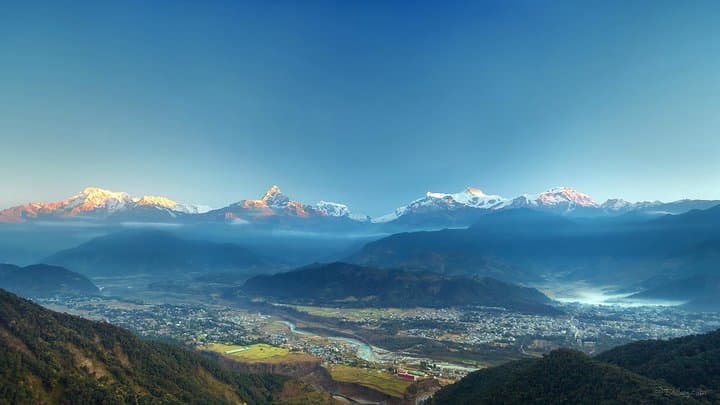
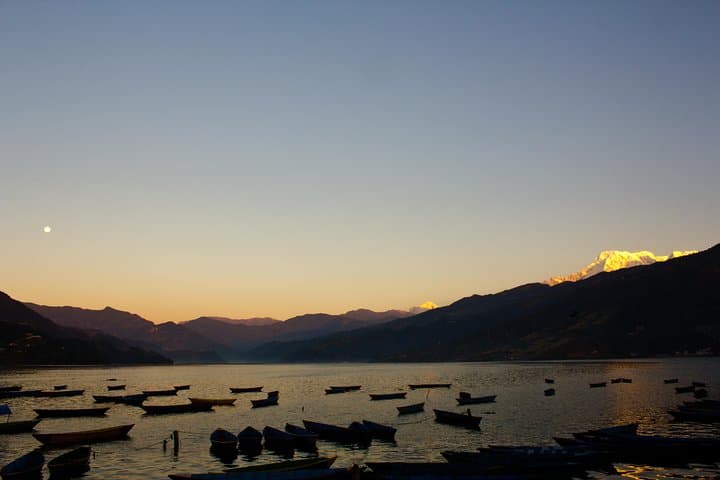
The wind opens like a door as you step off the launch platform at Sarangkot—trees drop away beneath you and the Annapurna massif fills the forward view. For a few long seconds the valley rearranges itself: Phewa Lake glints below, the Seti River threads the gorge, and the forested slopes crawl backward as gravity pulls you toward the landing village of Hyangja.
The wind opens like a door as you step off the launch platform at Sarangkot—trees drop away beneath you and the Annapurna massif fills the forward view. For a few long seconds the valley rearranges itself: Phewa Lake glints below, the Seti River threads the gorge, and the forested slopes crawl backward as gravity pulls you toward the landing village of Hyangja.
Sarangkot sits on a ridge formed by uplifted Himalayan foothills; the viewpoint has long been used by locals for surveillance and sunrise watching. The Zip Flyer uses that cliff-line to deliver a 1.8-kilometre, 600-metre vertical drop run, built into the steep geology and barnacled by pine and mixed broadleaf canopy. The ride ties modern adrenaline engineering into a landscape of terraced fields, Gurung and Magar villages, and views of Machhapuchhre and the Annapurna range.
Expect clear mountain air, sudden gusts through the canopy and a short uphill walk at the top station; guides explain harnessing and safety before a two-person, racing launch. The operator provides shuttle pickup from Lakeside Pokhara and a guided drive up to Sarangkot. Bring layers—temperatures at 1,650 m can be much cooler than lakeside—and a secure pocket for a phone or camera. Morning launches usually have the best visibility; monsoon clouds can close in by midday.
This is an accessible yet adrenaline-packed aerial adventure: short on time but high on exposure to Himalayan topography and village life, ideal for travelers wanting a compact, memorable way to meet the Annapurna horizon.