THE ADVENTURE COLLECTIVE® · Independent discovery and booking for outdoor travel

Drive up Sarangkot before dawn and watch the Annapurna range ignite as the sun climbs. This private, 2–3 hour sunrise tour from Pokhara offers short walks, sweeping lake-and-mountain views, and easy logistics ideal for photographers and early-risers.
Drive up Sarangkot before dawn and watch the Annapurna range ignite as the sun climbs. This private, 2–3 hour sunrise tour from Pokhara offers short walks, sweeping lake-and-mountain views, and easy logistics ideal for photographers and early-risers.
Before first light, a private car snakes up the switchbacks from Pokhara, headlights cutting through mist as Sarangkot’s ridge waits above the cloud line.
Verified experiences and guided adventures in the surrounding area.
Operated by Arpan Nepal · Sarangkot, Gandaki Province
Before first light, a private car snakes up the switchbacks from Pokhara, headlights cutting through mist as Sarangkot’s ridge waits above the cloud line.
You arrive at a broad viewpoint where the eastern sky is already stirring; the Annapurna massif and Machapuchare lift like slow-moving giants, their ridgelines catching the sun first and painting terraces and lakes in warm relief. The air is thin and sharp at roughly 1,600 m; the city below sleeps beside Phewa Lake while the mountains perform a quiet, patient reveal.
Geology here tells a story of collision — the Himalaya born of the Indian and Eurasian plates pushing upward over millions of years — and the landscape reflects human history too: hill farms, Gurung villages, and layered terraces that speak to centuries of highland agriculture and trade routes to northern passes.
Practical guidance follows the scene. The drive from central Pokhara is roughly 10–12 km with 700–800 m of elevation gain by road and takes 30–45 minutes; expect paved but narrow, winding roads. Many tours stop at the main paved viewpoint, with short dirt paths and a few steps to reach the best angles. Dress in warm layers, bring a headlamp for pre-dawn returns, and have comfortable walking shoes for 5–20 minute strolls between overlooks.
Photography and weather are the variable truths here: clear winter mornings give the sharpest views, monsoon months can hide peaks entirely. Plan for early pickup, allow 2–3 hours for the round trip, and leave time to sip chai at a nearby teahouse — the mountains won’t rush, but your window of light will.
easy.
2–3 hours.
Suitable for most fitness levels; minimal walking required but expect short uneven paths and some steps.
Pickup is typically 60–90 minutes before sunrise to ensure arrival with time to spare; exact time varies by season and hotel location.
On clear mornings, yes—the two and a half-hour window around sunrise offers the best visibility; monsoon months often obscure the peaks.
Yes; the tour is private with door-to-door transfers and minimal walking, but the road is steep and winding—consider mobility and motion-sickness needs.
The provider lists wheelchair accessibility for pickup and vehicle transfer, though some viewpoints have steps or uneven ground.
Sarangkot has long been a local lookout above Pokhara; its ridgeline watched trade routes and provided grazing for hill communities, with modern tourism growing around sunrise and paragliding.
Keep to paved areas and marked paths to protect fragile hillside vegetation; dispose of waste at collection points in Pokhara to prevent littering along the ridge.
Arpan Nepal operates guided outdoor trips and adventures with an emphasis on safety, stewardship, and memorable experiences.

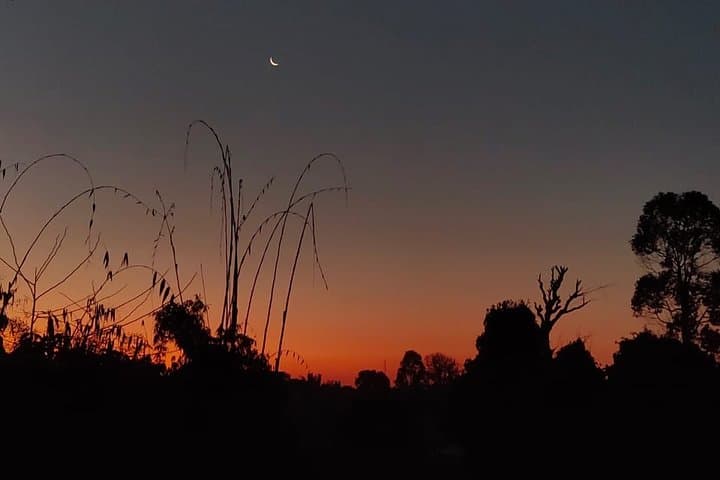


Before first light, a private car snakes up the switchbacks from Pokhara, headlights cutting through mist as Sarangkot’s ridge waits above the cloud line.
Before first light, a private car snakes up the switchbacks from Pokhara, headlights cutting through mist as Sarangkot’s ridge waits above the cloud line.
You arrive at a broad viewpoint where the eastern sky is already stirring; the Annapurna massif and Machapuchare lift like slow-moving giants, their ridgelines catching the sun first and painting terraces and lakes in warm relief. The air is thin and sharp at roughly 1,600 m; the city below sleeps beside Phewa Lake while the mountains perform a quiet, patient reveal.
Geology here tells a story of collision — the Himalaya born of the Indian and Eurasian plates pushing upward over millions of years — and the landscape reflects human history too: hill farms, Gurung villages, and layered terraces that speak to centuries of highland agriculture and trade routes to northern passes.
Practical guidance follows the scene. The drive from central Pokhara is roughly 10–12 km with 700–800 m of elevation gain by road and takes 30–45 minutes; expect paved but narrow, winding roads. Many tours stop at the main paved viewpoint, with short dirt paths and a few steps to reach the best angles. Dress in warm layers, bring a headlamp for pre-dawn returns, and have comfortable walking shoes for 5–20 minute strolls between overlooks.
Photography and weather are the variable truths here: clear winter mornings give the sharpest views, monsoon months can hide peaks entirely. Plan for early pickup, allow 2–3 hours for the round trip, and leave time to sip chai at a nearby teahouse — the mountains won’t rush, but your window of light will.