THE ADVENTURE COLLECTIVE® · Independent discovery and booking for outdoor travel

Catch sunrise from Sarangkot and spend a full day touring Pokhara’s top natural and cultural sights—Phewa Lake, Devi’s Fall, Bindhyabasini temple and the Seti Gorge. This private day tour blends mountain views, short walks and local history into a single, accessible outing.
Catch sunrise from Sarangkot and spend a full day touring Pokhara’s top natural and cultural sights—Phewa Lake, Devi’s Fall, Bindhyabasini temple and the Seti Gorge. This private day tour blends mountain views, short walks and local history into a single, accessible outing.
Before dawn the road out of Pokhara narrows and the city lights give way to hill-crest silhouettes. At Sarangkot (≈1,600 m) the eastern sky loosens—first a cool blue, then a blade of gold that slices along Annapurna, Dhaulagiri and Machapuchare. The mountains hold their shape; the low cloud swirls below like a moving plain. Travelers spend quiet minutes on the ridge, cameras held steady, breath visible in the chilly air.
Verified experiences and guided adventures in the surrounding area.
Operated by Himalayan Smile Treks and Adventure Pvt. Ltd · Pokhara, Gandaki Province
Before dawn the road out of Pokhara narrows and the city lights give way to hill-crest silhouettes. At Sarangkot (≈1,600 m) the eastern sky loosens—first a cool blue, then a blade of gold that slices along Annapurna, Dhaulagiri and Machapuchare. The mountains hold their shape; the low cloud swirls below like a moving plain. Travelers spend quiet minutes on the ridge, cameras held steady, breath visible in the chilly air.
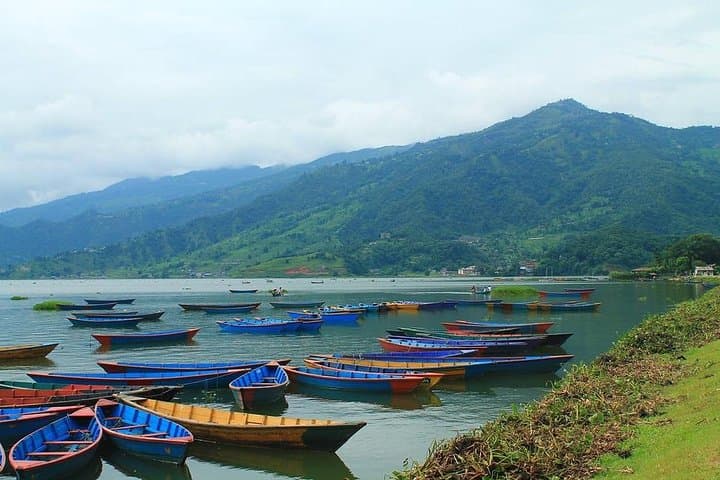
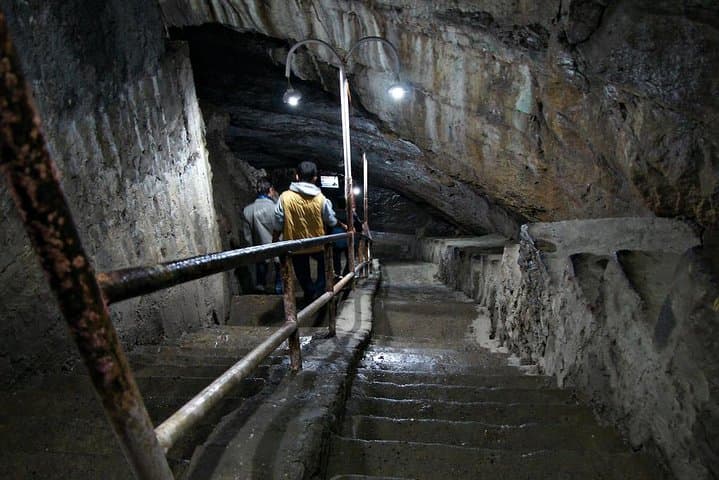
The day tour then threads through Pokhara’s cultural and geological highlights: Bindhyabasini temple, a 19th-century shrine tied to local devotion; Phewa Lake, a tectonic basin whose calm surface mirrors Machapuchare; the Seti River gorge, a pale, narrow cut of limestone and swift water that has carved dramatic scarps; and Devi’s Fall, where monsoon-fed surges disappear into an underground shaft.
These sites combine natural spectacle with living culture—temple bells, boatmen on Phewa, and cave shrines where silence is observed. Guides often point out the region’s earthquake-shaped slopes and the importance of the Annapurna range to local livelihoods.
Practical notes: start before sunrise, dress in thermal layers for the ridge, and expect several short walks and steps at each stop. Carry cash for temple donations and small boat hires. Photography windows are brief—plan to arrive at Sarangkot 30–45 minutes before sunrise for the best light. Respect religious spaces (quiet, no flash in cave shrines) and keep to marked paths near the gorge and falls; monsoon season raises water levels significantly. A private vehicle and local guide make this full-day loop efficient, leaving time to explore Lakeside cafes after the tour.
easy.
6–7 hours.
Suitable for all fitness levels; requires short walks, steps and standing for viewpoints.
The tour typically runs 6–7 hours, including the drive to Sarangkot, sunrise time, and several 20–60 minute stops around Pokhara.
Yes—this private tour involves mostly short walks and viewpoints; notify the operator about mobility needs for pickup planning.
Visibility depends on weather; clear mornings after stable nights offer the best panoramic views—clouds or haze can obscure peaks.
Inclusions vary—confirm with the operator. Small boat fees on Phewa and donations at temples are often paid on-site.
Bindhyabasini temple dates to the mid-19th century and plays a central role in Pokhara’s local religious life; the Annapurna massif has long shaped trade and pilgrimage routes.
Phewa Lake faces pressure from development and pollution—avoid single-use plastics and use marked paths to reduce erosion around the lake and gorge.
Himalayan Smile Treks and Adventure Pvt. Ltd operates guided outdoor trips and adventures with an emphasis on safety, stewardship, and memorable experiences.
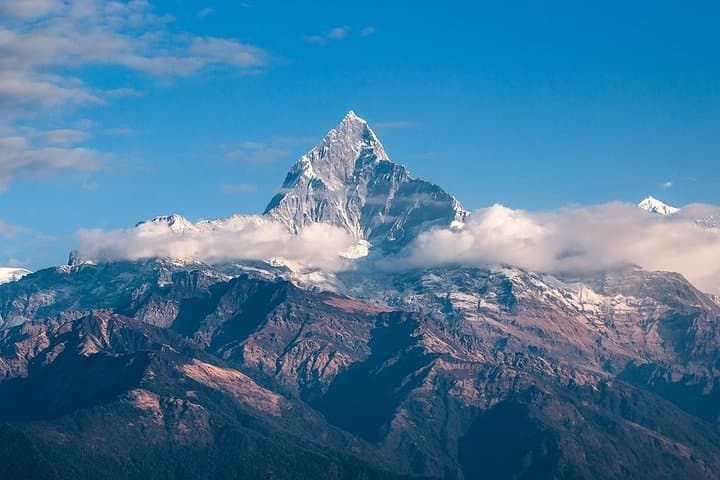
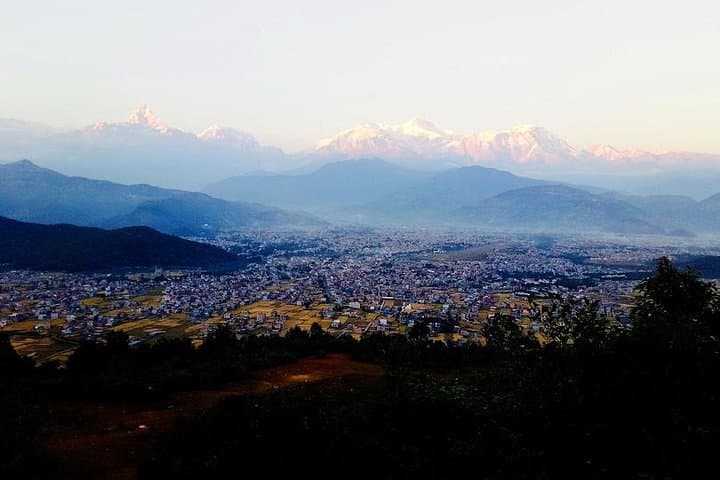
Before dawn the road out of Pokhara narrows and the city lights give way to hill-crest silhouettes. At Sarangkot (≈1,600 m) the eastern sky loosens—first a cool blue, then a blade of gold that slices along Annapurna, Dhaulagiri and Machapuchare. The mountains hold their shape; the low cloud swirls below like a moving plain. Travelers spend quiet minutes on the ridge, cameras held steady, breath visible in the chilly air.
Before dawn the road out of Pokhara narrows and the city lights give way to hill-crest silhouettes. At Sarangkot (≈1,600 m) the eastern sky loosens—first a cool blue, then a blade of gold that slices along Annapurna, Dhaulagiri and Machapuchare. The mountains hold their shape; the low cloud swirls below like a moving plain. Travelers spend quiet minutes on the ridge, cameras held steady, breath visible in the chilly air.
The day tour then threads through Pokhara’s cultural and geological highlights: Bindhyabasini temple, a 19th-century shrine tied to local devotion; Phewa Lake, a tectonic basin whose calm surface mirrors Machapuchare; the Seti River gorge, a pale, narrow cut of limestone and swift water that has carved dramatic scarps; and Devi’s Fall, where monsoon-fed surges disappear into an underground shaft.
These sites combine natural spectacle with living culture—temple bells, boatmen on Phewa, and cave shrines where silence is observed. Guides often point out the region’s earthquake-shaped slopes and the importance of the Annapurna range to local livelihoods.
Practical notes: start before sunrise, dress in thermal layers for the ridge, and expect several short walks and steps at each stop. Carry cash for temple donations and small boat hires. Photography windows are brief—plan to arrive at Sarangkot 30–45 minutes before sunrise for the best light. Respect religious spaces (quiet, no flash in cave shrines) and keep to marked paths near the gorge and falls; monsoon season raises water levels significantly. A private vehicle and local guide make this full-day loop efficient, leaving time to explore Lakeside cafes after the tour.