THE ADVENTURE COLLECTIVE® · Independent discovery and booking for outdoor travel

Launch from Sarangkot and glide over Fewa Lake with direct views of the Annapurna range. This 30-minute tandem flight pairs accessible adrenaline with unmatched Himalayan panoramas.
Launch from Sarangkot and glide over Fewa Lake with direct views of the Annapurna range. This 30-minute tandem flight pairs accessible adrenaline with unmatched Himalayan panoramas.
You step onto Sarangkot’s grassy ridge with the Annapurna massif filling the sky—sharp ridgelines and snowfields backlit by early sun, Fewa Lake a glassy mirror far below. Wind teases the wing; the pilot runs, the canopy snaps upright, and suddenly the world tilts into flight. For thirty minutes you float above terraces, pine-dotted slopes, and the compact boats of Lakeside.
Verified experiences and guided adventures in the surrounding area.
Operated by Couch Adventure Nepal (CAN) · Pokhara, Gandaki Province
You step onto Sarangkot’s grassy ridge with the Annapurna massif filling the sky—sharp ridgelines and snowfields backlit by early sun, Fewa Lake a glassy mirror far below. Wind teases the wing; the pilot runs, the canopy snaps upright, and suddenly the world tilts into flight. For thirty minutes you float above terraces, pine-dotted slopes, and the compact boats of Lakeside.
Sarangkot sits at roughly 1,590 m and has been a paragliding launch for decades, its uplift driven by predictable Himalayan thermals and the lee of the Pokhara Valley. Geologically, the Annapurna range is young and uplifted, carved by recent glaciation—those jagged summits are the reason pilots prize the view here. Culturally, flights begin and end amid Gurung and Newar communities around Pokhara, where lakeside cafés and temples frame the landing zone.
Expect a steep grassy takeoff and a calm, open touchdown near Lakeside. Operators provide harnesses, helmets, and video/photo packages; pickup within Pokhara is common. Flights favor clear mornings for stable air and visibility of Annapurna I, Dhaulagiri and Machapuchare. Operators screen for pregnancy and require passenger weight and ID for safety.
Practical tips: wear closed shoes and layered clothing—temperatures can drop in the air—bring sunglasses and a small windproof jacket, and allow 2–3 hours for transport, briefing, and media transfer. If you’re prone to motion sickness, take a light remedy beforehand. Weather cancels are routine; a pilot-led tandem in Pokhara is a low-skill, high-thrill way to see the Himalaya from a rare angle.
moderate.
2–3 hours (30-minute flight).
Minimal aerobic fitness required—must be able to run a short launch and stand during briefing.
The airborne portion is typically about 20–30 minutes; allow 2–3 hours total for pickup, briefing, flight, and media transfer.
Yes—flights are tandem with a trained pilot; participants need only basic mobility for a short run at takeoff and to stand during briefing.
Limits vary by operator—you’ll be asked to provide your weight when booking; heavier or lighter passengers may be assessed for safety on a case-by-case basis.
Flights are cancelled in unstable or low-visibility conditions; operators typically offer a full refund or rebooking and monitor morning conditions closely.
Sarangkot evolved from a local viewpoint into a global paragliding site over the last two decades as pilots exploited consistent valley thermals and easy access from Pokhara.
Stick to marked paths at launch and landing, avoid littering in the fragile alpine transition zones, and choose operators who follow local waste and noise guidelines.
Couch Adventure Nepal (CAN) operates guided outdoor trips and adventures with an emphasis on safety, stewardship, and memorable experiences.
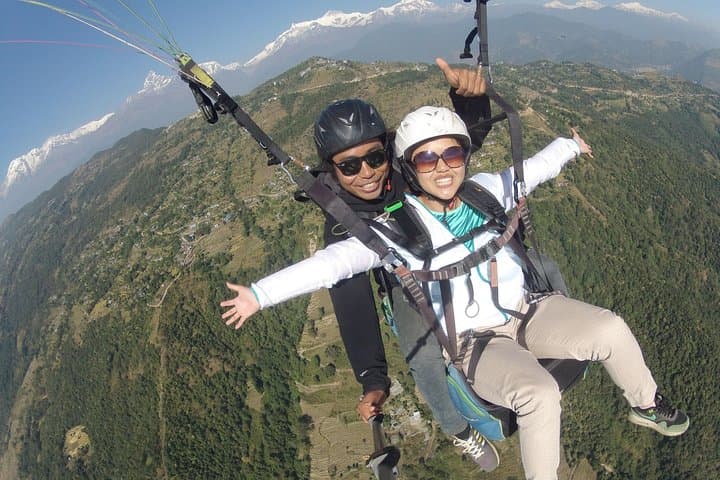
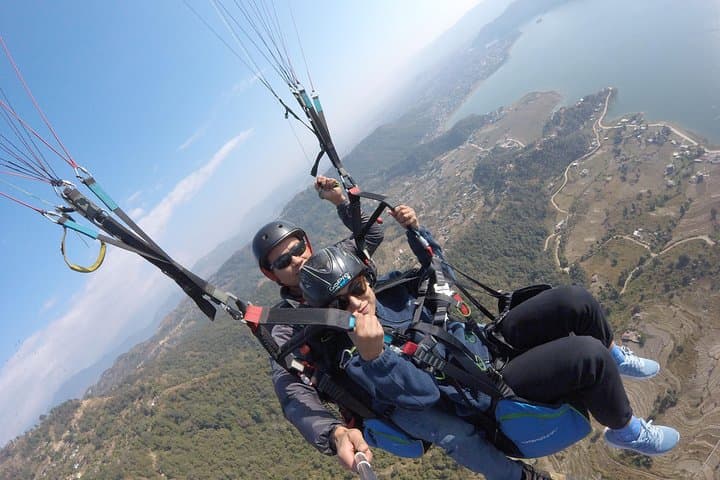
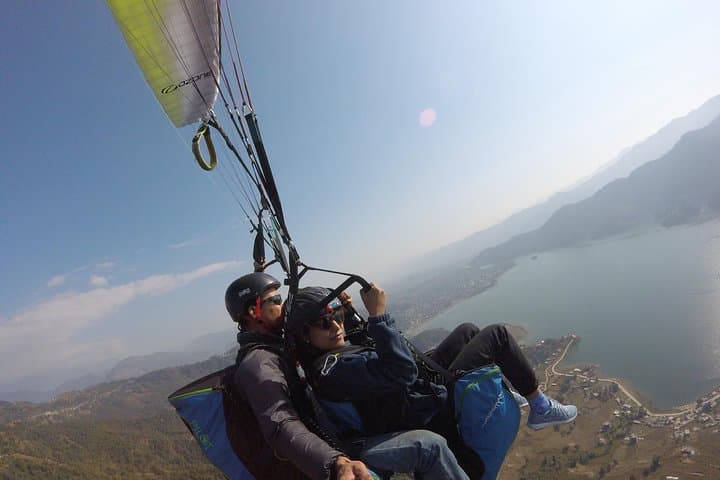
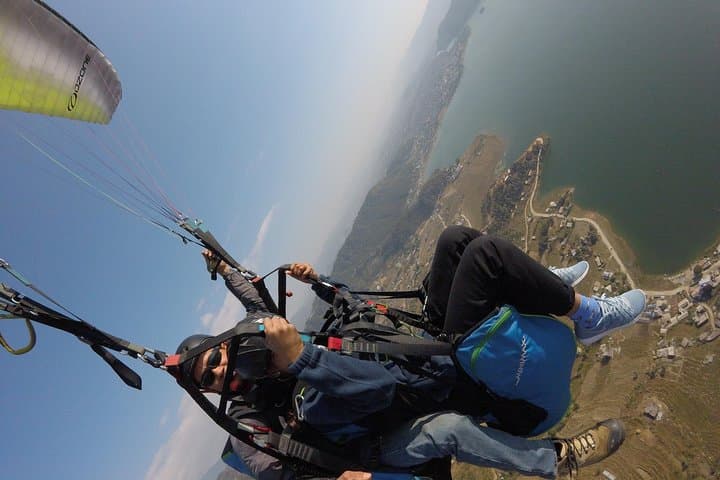
You step onto Sarangkot’s grassy ridge with the Annapurna massif filling the sky—sharp ridgelines and snowfields backlit by early sun, Fewa Lake a glassy mirror far below. Wind teases the wing; the pilot runs, the canopy snaps upright, and suddenly the world tilts into flight. For thirty minutes you float above terraces, pine-dotted slopes, and the compact boats of Lakeside.
You step onto Sarangkot’s grassy ridge with the Annapurna massif filling the sky—sharp ridgelines and snowfields backlit by early sun, Fewa Lake a glassy mirror far below. Wind teases the wing; the pilot runs, the canopy snaps upright, and suddenly the world tilts into flight. For thirty minutes you float above terraces, pine-dotted slopes, and the compact boats of Lakeside.
Sarangkot sits at roughly 1,590 m and has been a paragliding launch for decades, its uplift driven by predictable Himalayan thermals and the lee of the Pokhara Valley. Geologically, the Annapurna range is young and uplifted, carved by recent glaciation—those jagged summits are the reason pilots prize the view here. Culturally, flights begin and end amid Gurung and Newar communities around Pokhara, where lakeside cafés and temples frame the landing zone.
Expect a steep grassy takeoff and a calm, open touchdown near Lakeside. Operators provide harnesses, helmets, and video/photo packages; pickup within Pokhara is common. Flights favor clear mornings for stable air and visibility of Annapurna I, Dhaulagiri and Machapuchare. Operators screen for pregnancy and require passenger weight and ID for safety.
Practical tips: wear closed shoes and layered clothing—temperatures can drop in the air—bring sunglasses and a small windproof jacket, and allow 2–3 hours for transport, briefing, and media transfer. If you’re prone to motion sickness, take a light remedy beforehand. Weather cancels are routine; a pilot-led tandem in Pokhara is a low-skill, high-thrill way to see the Himalaya from a rare angle.