THE ADVENTURE COLLECTIVE® · Independent discovery and booking for outdoor travel

This full-day excursion from Sarandë threads archaeology, karst springs and coastal beaches into one route—visit ancient Butrint, peer into the Blue Eye, swim around Ksamil islets, and finish at Lekuresi Castle for sweeping views.
This full-day excursion from Sarandë threads archaeology, karst springs and coastal beaches into one route—visit ancient Butrint, peer into the Blue Eye, swim around Ksamil islets, and finish at Lekuresi Castle for sweeping views.
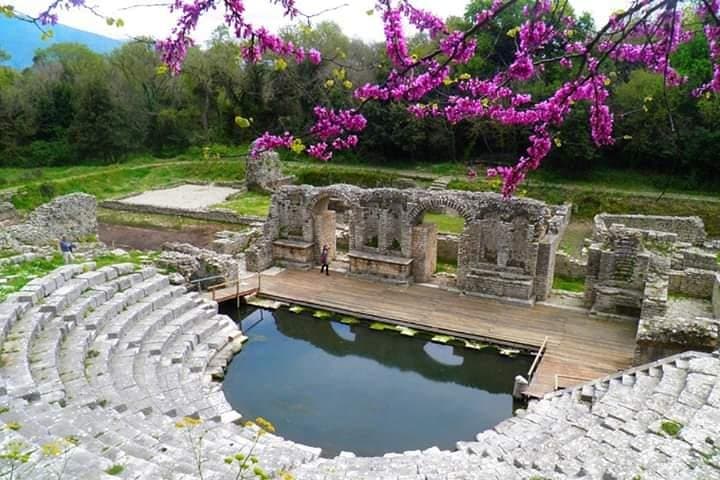
Morning light chops across the Ionian as the minibus slips out of Sarandë, the sea daring you to slow down. Within an hour the city’s modern shoreline gives way to olive-studded hills and salt-sprayed coastlines; by midmorning you stand at the excavated gates of Butrint, where stone streets and columns hold centuries of layering like pages.
Verified experiences and guided adventures in the surrounding area.
Operated by Rei Tours · Sarandë, Vlorë
Morning light chops across the Ionian as the minibus slips out of Sarandë, the sea daring you to slow down. Within an hour the city’s modern shoreline gives way to olive-studded hills and salt-sprayed coastlines; by midmorning you stand at the excavated gates of Butrint, where stone streets and columns hold centuries of layering like pages.
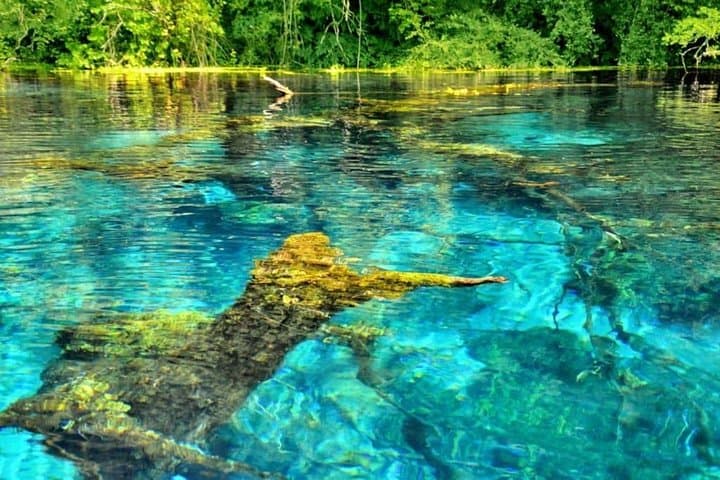
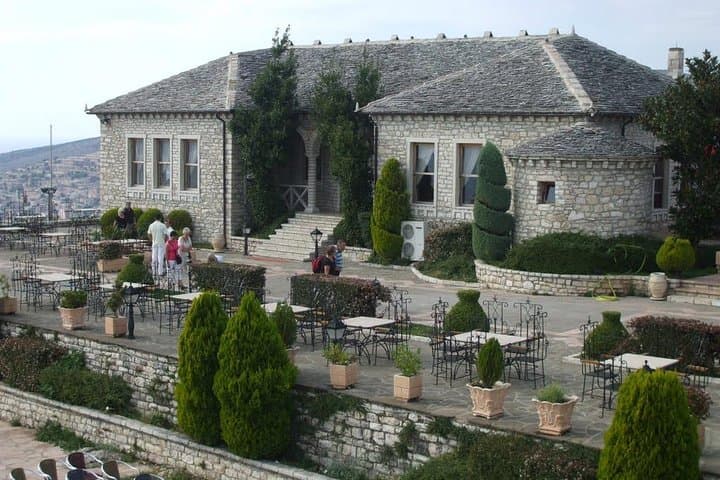
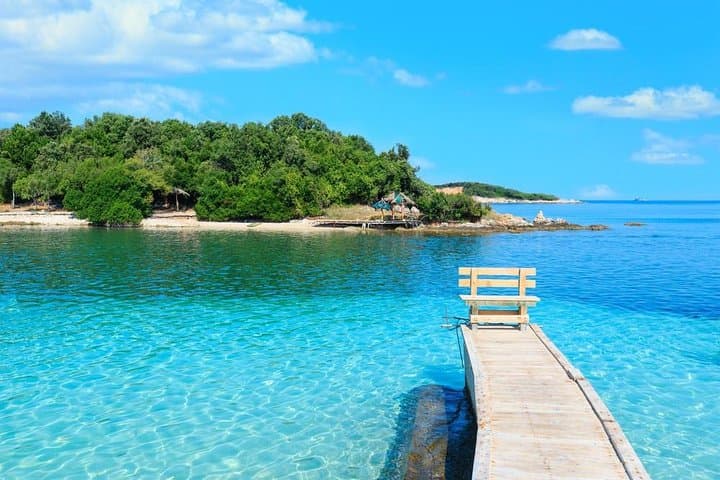
Butrint’s ruins map Greek colonies, Roman baths, Byzantine churches and Venetian and Ottoman walls—an archaeological palimpsest protected as a UNESCO site. Geologically the region sits where karst limestone yields dramatic springs: the Blue Eye (Syri i Kaltër) is a collapsed karst spring whose cobalt depths and strong outflow hint at subterranean caves and reported depths in excess of 50 meters. Ksamil, farther south, offers small sandy coves and tiny islets ringed by clear, warm water. Lekuresi Castle, built by the Ottomans in 1537, crowns a hill with a panoramic sweep back toward Sarandë and Corfu across the channel.
Practical guidance: the full loop runs about 6–7 hours with short walks at each stop—expect uneven paths and some stair sections at Butrint and Lekuresi. Start early in summer to avoid midday heat, bring sturdy shoes for cobbles and forest trails, and carry water and sun protection. Entrance fees for Blue Eye and Butrint are handled through the tour; bring small-change for cafés in Ksamil. Respect marked trails at Blue Eye—the spring is ecologically sensitive, so observe posted rules. Timing a sunset at Lekuresi caps the day with wide light and fewer crowds.
easy.
6–7 hours.
Light walking ability; able to handle short stairs and uneven surfaces for multiple short excursions during the day.
The tour covers entrance to Blue Eye Park and the Butrint archaeological site (Butrint had a listed fee historically—confirm during booking for current rates).
Pick-up and drop-off are arranged from the Rei Tours office inside Sarandë Ferry Terminal; door-to-door pickup is often available—confirm your pickup point at booking.
Swimming in the main Blue Eye pool is generally restricted to protect the spring; bring swimwear for Ksamil where swimming is encouraged.
There are brief stops for coffee or lunch by the sea and basic facilities at major sites; carry small change if you plan to buy food at local cafes.
Butrint preserves continuous occupation from the Hellenistic era through Roman, Byzantine and Venetian periods; its layered ruins reflect strategic control of the Ionian coast.
The karst spring and coastal zones are ecologically sensitive—stick to marked trails, avoid littering, and use reef-friendly sunscreens to reduce impact.
Rei Tours operates guided outdoor trips and adventures with an emphasis on safety, stewardship, and memorable experiences.
Morning light chops across the Ionian as the minibus slips out of Sarandë, the sea daring you to slow down. Within an hour the city’s modern shoreline gives way to olive-studded hills and salt-sprayed coastlines; by midmorning you stand at the excavated gates of Butrint, where stone streets and columns hold centuries of layering like pages.
Morning light chops across the Ionian as the minibus slips out of Sarandë, the sea daring you to slow down. Within an hour the city’s modern shoreline gives way to olive-studded hills and salt-sprayed coastlines; by midmorning you stand at the excavated gates of Butrint, where stone streets and columns hold centuries of layering like pages.
Butrint’s ruins map Greek colonies, Roman baths, Byzantine churches and Venetian and Ottoman walls—an archaeological palimpsest protected as a UNESCO site. Geologically the region sits where karst limestone yields dramatic springs: the Blue Eye (Syri i Kaltër) is a collapsed karst spring whose cobalt depths and strong outflow hint at subterranean caves and reported depths in excess of 50 meters. Ksamil, farther south, offers small sandy coves and tiny islets ringed by clear, warm water. Lekuresi Castle, built by the Ottomans in 1537, crowns a hill with a panoramic sweep back toward Sarandë and Corfu across the channel.
Practical guidance: the full loop runs about 6–7 hours with short walks at each stop—expect uneven paths and some stair sections at Butrint and Lekuresi. Start early in summer to avoid midday heat, bring sturdy shoes for cobbles and forest trails, and carry water and sun protection. Entrance fees for Blue Eye and Butrint are handled through the tour; bring small-change for cafés in Ksamil. Respect marked trails at Blue Eye—the spring is ecologically sensitive, so observe posted rules. Timing a sunset at Lekuresi caps the day with wide light and fewer crowds.