THE ADVENTURE COLLECTIVE® · Independent discovery and booking for outdoor travel

Walk the streets where a single act changed the 20th century. This compact two-hour tour stops at Latin Bridge, Hotel Europe and City Hall while tracing Franz Ferdinand’s final route through Sarajevo.
Walk the streets where a single act changed the 20th century. This compact two-hour tour stops at Latin Bridge, Hotel Europe and City Hall while tracing Franz Ferdinand’s final route through Sarajevo.
A late-summer light slants across the Miljacka as a small group steps off the cobbled street toward the low-arched span of the Latin Bridge. The river moves like a quiet witness, its current nudging the city’s layered past forward while the guide points to plaques, scarred facades and a single tram line that still threads history into everyday life.
Verified experiences and guided adventures in the surrounding area.
Operated by Spirit Tours Sarajevo · Sarajevo, Federation of Bosnia and Herzegovina
A late-summer light slants across the Miljacka as a small group steps off the cobbled street toward the low-arched span of the Latin Bridge. The river moves like a quiet witness, its current nudging the city’s layered past forward while the guide points to plaques, scarred facades and a single tram line that still threads history into everyday life.
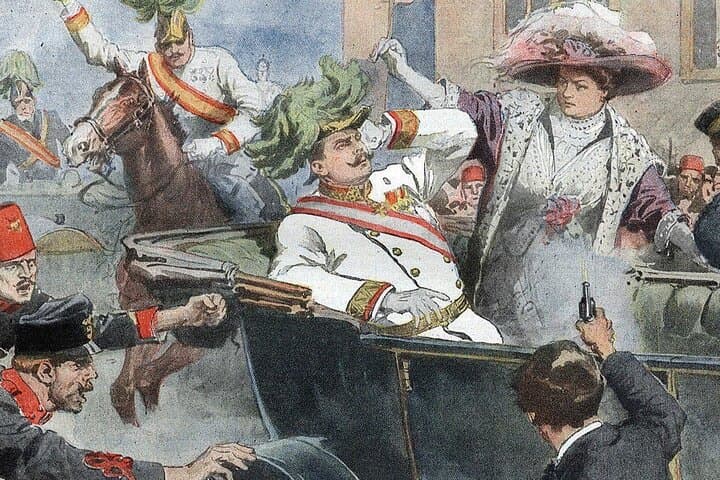
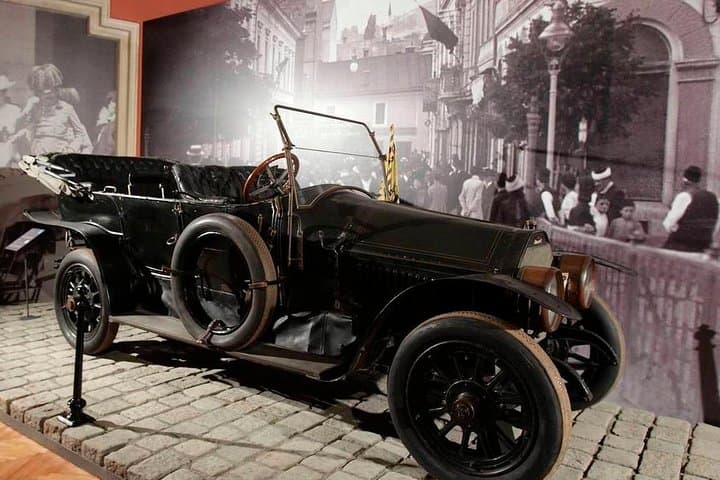
This two-hour walk follows the route taken by Archduke Franz Ferdinand and his wife Sophie on 28 June 1914, pausing at the site of the first failed assassination attempt, City Hall where the archduke spoke, the Austro-Hungarian governor’s residence, Hotel Europe and, of course, the Latin Bridge where Gavrilo Princip fired the shots that set off the chain reaction leading to World War I.
Sarajevo’s streets show Ottoman bazaars abutting Austro-Hungarian façades; volcanic bedrock and river terraces shaped the narrow route through which politics and people collided. Local guides weave in stories about Princip, urban life before 1914, and how the city’s multiethnic character influenced events.
Practicalities: expect a steady, flat 2‑hour walking pace over cobbles and sidewalks—no major climbs. The tour is family- and wheelchair-accessible, runs rain or shine with modest groups, and accepts mobile or paper tickets. Bring comfortable shoes, a light rain layer, and ID if you plan to visit nearby museums afterward. Morning or late-afternoon departures reduce heat and crowds; listen for directions at memorial sites and give artifacts and plaques space. The result is a compact, concentrated history lesson you can feel underneath your boots and hear in the stones.
easy.
2 hours.
Suitable for most fitness levels; requires standing and walking at a steady pace on flat but uneven urban surfaces.
The tour lasts approximately two hours and follows a flat walking route through Sarajevo’s historic center.
Yes—this tour is listed as wheelchair and stroller accessible with mostly paved surfaces, though cobbles may be present.
Language options vary by operator; check booking details or contact the provider to confirm guide language availability.
For a full refund cancel at least 24 hours before the scheduled departure; operators may also cancel for bad weather or insufficient travelers.
The assassination of Archduke Franz Ferdinand in Sarajevo on 28 June 1914 precipitated the First World War; the city’s streets reflect Ottoman, Austro-Hungarian and later Yugoslav layers.
Preserve plaques and monuments by not touching fragile surfaces, support licensed local guides and avoid leaving litter—historic stones are part of the city’s living record.
Spirit Tours Sarajevo operates guided outdoor trips and adventures with an emphasis on safety, stewardship, and memorable experiences.
A late-summer light slants across the Miljacka as a small group steps off the cobbled street toward the low-arched span of the Latin Bridge. The river moves like a quiet witness, its current nudging the city’s layered past forward while the guide points to plaques, scarred facades and a single tram line that still threads history into everyday life.
A late-summer light slants across the Miljacka as a small group steps off the cobbled street toward the low-arched span of the Latin Bridge. The river moves like a quiet witness, its current nudging the city’s layered past forward while the guide points to plaques, scarred facades and a single tram line that still threads history into everyday life.
This two-hour walk follows the route taken by Archduke Franz Ferdinand and his wife Sophie on 28 June 1914, pausing at the site of the first failed assassination attempt, City Hall where the archduke spoke, the Austro-Hungarian governor’s residence, Hotel Europe and, of course, the Latin Bridge where Gavrilo Princip fired the shots that set off the chain reaction leading to World War I.
Sarajevo’s streets show Ottoman bazaars abutting Austro-Hungarian façades; volcanic bedrock and river terraces shaped the narrow route through which politics and people collided. Local guides weave in stories about Princip, urban life before 1914, and how the city’s multiethnic character influenced events.
Practicalities: expect a steady, flat 2‑hour walking pace over cobbles and sidewalks—no major climbs. The tour is family- and wheelchair-accessible, runs rain or shine with modest groups, and accepts mobile or paper tickets. Bring comfortable shoes, a light rain layer, and ID if you plan to visit nearby museums afterward. Morning or late-afternoon departures reduce heat and crowds; listen for directions at memorial sites and give artifacts and plaques space. The result is a compact, concentrated history lesson you can feel underneath your boots and hear in the stones.