THE ADVENTURE COLLECTIVE® · Independent discovery and booking for outdoor travel

Walk key Sarajevo siege sites with a local guide who blends eyewitness testimony and historic context. This 3–4 hour half-day tour visits sniper positions, ruined hotels, Trebević viewpoints and the War Tunnel museum for a grounded look at the city’s wartime story.
Walk key Sarajevo siege sites with a local guide who blends eyewitness testimony and historic context. This 3–4 hour half-day tour visits sniper positions, ruined hotels, Trebević viewpoints and the War Tunnel museum for a grounded look at the city’s wartime story.
You step off the minivan onto a ridge above the city and Sarajevo unfolds below — a patchwork of orange roofs, river bends and scars from a conflict that lasted four years. The guide gestures toward a ruined hotel, points to the dark line where snipers once watched the valley, and the stones themselves seem to hold an account.
Verified experiences and guided adventures in the surrounding area.
Operated by Adventure in Bosnia | Tour Agency | Tours and Excursions · Sarajevo, Sarajevo Canton
You step off the minivan onto a ridge above the city and Sarajevo unfolds below — a patchwork of orange roofs, river bends and scars from a conflict that lasted four years. The guide gestures toward a ruined hotel, points to the dark line where snipers once watched the valley, and the stones themselves seem to hold an account.
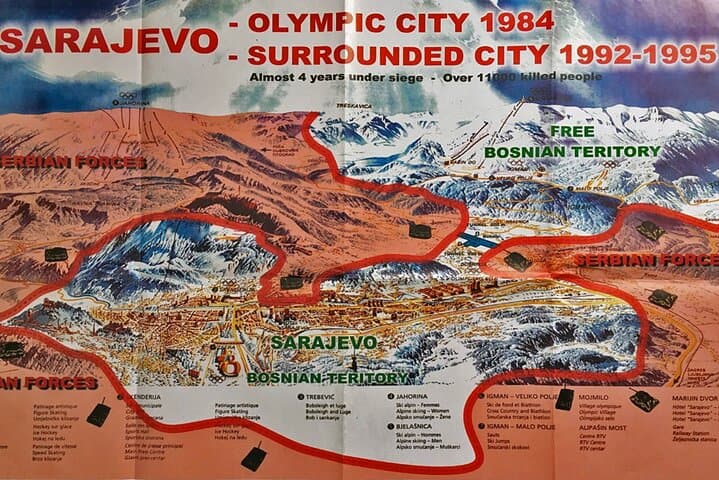
This half-day tour threads history and present-day life through the city's wartime geography: Sniper Alley, the hotels and command positions on the front line, and the panoramic vantage at the fortress overlooking defenders' graves. The route climbs toward Trebević, crossing administrative oddities that mark a country divided during the war, then finishes with a focused visit to the War Tunnel museum — an underground lifeline that kept Sarajevo supplied.
Geology and urban form matter here: steep karst slopes framed Sarajevo’s siege lines and made civilian movement hazardous. Cultural context is direct — guides frequently mix personal testimony with archival facts, making the past immediate and the city’s recovery visible in everyday markets and cafés.
Practicalities: the tour runs about 3–4 hours, typically in an air-conditioned vehicle with short on-foot stops; bring comfortable walking shoes, a jacket for hilltop winds and water (bottled water is provided). The content is emotionally intense; plan time after the tour to process what you hear. Morning departures give softer light for views and photography, while afternoon tours can be busier. Be respectful at memorial sites and follow your guide’s safety notes when viewing ruins and slopes.
easy.
3–4 hours.
Suitable for most fitness levels; involves brief walks and short uphill sections at viewpoints.
No — the tour crosses administrative lines within Bosnia and Herzegovina; there is no passport control during the route.
Yes, but content is serious and may be upsetting to younger children; consider age and emotional maturity before booking.
Pickup is offered for guests staying outside the Old Town; confirm pickup point when booking and provide arrival details if needed.
Yes — the itinerary includes an educational presentation and museum visit at the War Tunnel; sections are accessible but include tight indoor spaces.
Sarajevo endured the longest siege of a capital in modern warfare (1992–1996); the War Tunnel was a secret supply route that bypassed blockades and became a symbol of survival.
Visitors are encouraged to stay on marked paths near fragile ruins and avoid taking fragments of buildings; supporting local museums and guides helps fund preservation and education.
Adventure in Bosnia | Tour Agency | Tours and Excursions operates guided outdoor trips and adventures with an emphasis on safety, stewardship, and memorable experiences.
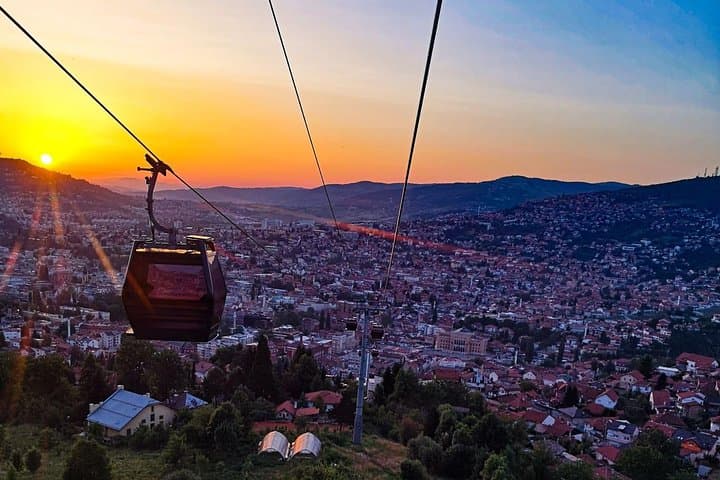
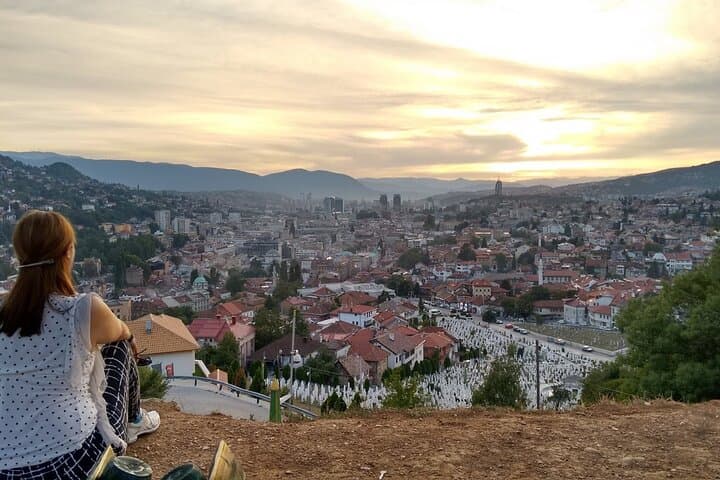
You step off the minivan onto a ridge above the city and Sarajevo unfolds below — a patchwork of orange roofs, river bends and scars from a conflict that lasted four years. The guide gestures toward a ruined hotel, points to the dark line where snipers once watched the valley, and the stones themselves seem to hold an account.
You step off the minivan onto a ridge above the city and Sarajevo unfolds below — a patchwork of orange roofs, river bends and scars from a conflict that lasted four years. The guide gestures toward a ruined hotel, points to the dark line where snipers once watched the valley, and the stones themselves seem to hold an account.
This half-day tour threads history and present-day life through the city's wartime geography: Sniper Alley, the hotels and command positions on the front line, and the panoramic vantage at the fortress overlooking defenders' graves. The route climbs toward Trebević, crossing administrative oddities that mark a country divided during the war, then finishes with a focused visit to the War Tunnel museum — an underground lifeline that kept Sarajevo supplied.
Geology and urban form matter here: steep karst slopes framed Sarajevo’s siege lines and made civilian movement hazardous. Cultural context is direct — guides frequently mix personal testimony with archival facts, making the past immediate and the city’s recovery visible in everyday markets and cafés.
Practicalities: the tour runs about 3–4 hours, typically in an air-conditioned vehicle with short on-foot stops; bring comfortable walking shoes, a jacket for hilltop winds and water (bottled water is provided). The content is emotionally intense; plan time after the tour to process what you hear. Morning departures give softer light for views and photography, while afternoon tours can be busier. Be respectful at memorial sites and follow your guide’s safety notes when viewing ruins and slopes.