THE ADVENTURE COLLECTIVE® · Independent discovery and booking for outdoor travel

A full-day transfer from Sarajevo to Split that doubles as a condensed tour of Herzegovina: Mostar’s UNESCO bridge, the Dervish monastery at Blagaj, fortified Počitelj, and the pools of Kravice Falls. Expect 10–12 hours of scenery, short walks, and cultural stops.
A full-day transfer from Sarajevo to Split that doubles as a condensed tour of Herzegovina: Mostar’s UNESCO bridge, the Dervish monastery at Blagaj, fortified Počitelj, and the pools of Kravice Falls. Expect 10–12 hours of scenery, short walks, and cultural stops.
Morning light breaks on Sarajevo's rooftops as a van pulls out toward the Neretva valley — a day that moves like a compact anthology of Herzegovina. Roads slice through limestone gorges, the Neretva daring you to look over the rail; villages of stone appear and vanish as the driver guides you toward Mostar's famous arch and Blagaj's river spring.
Verified experiences and guided adventures in the surrounding area.
Operated by Meet Bosnia Travel · Sarajevo, Federation of Bosnia and Herzegovina
Morning light breaks on Sarajevo's rooftops as a van pulls out toward the Neretva valley — a day that moves like a compact anthology of Herzegovina. Roads slice through limestone gorges, the Neretva daring you to look over the rail; villages of stone appear and vanish as the driver guides you toward Mostar's famous arch and Blagaj's river spring.
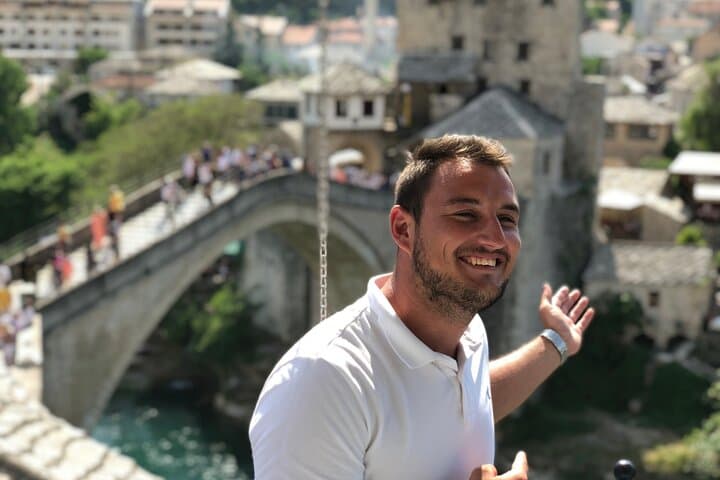
This route threads Ottoman, Austro-Hungarian and medieval influences: Mostar's 16th-century Old Bridge rebuilt into a UNESCO emblem, Blagaj Tekke beside the Buna spring where Dervish rituals shaped local spiritual life, and Počitelj's stepped fortress village perched against karst cliffs shaped by millennia of river erosion. Kravice's cascades fall over tufa terraces — a 25m curtain of water that carved a natural amphitheater and created pockets of lively pools.
Culturally, expect stone bazaars, mosque minarets punctuating the skyline, and riverside cafés where slow coffee anchors the pace. Guides add context: war-era history, restoration work on bridges, and the role of rivers in local livelihoods.
Practical guidance: the full transfer and touring day is long — plan for 10–12 hours, wear sturdy walking shoes for cobbles and wet rocks, and carry swimwear if you want to dip at Kravice. Bring a small daypack, refillable water, and travel documents for border procedures if your journey crosses into Croatia. Timed stops let you walk, photograph, and eat; keep expectations realistic about crowding at UNESCO sites in high season. This itinerary is a concentrated primer on Herzegovina’s landscapes and history — efficient, scenic, and best tackled with sensible pacing.
moderate.
10–12 hours.
Suitable for travelers with moderate fitness who can manage walking on uneven surfaces and short climbs.
Yes — you should carry a passport for border controls if your itinerary crosses into Croatia; check visa requirements before travel.
Yes in summer there’s usually a window to swim; bring a towel and expect limited changing facilities.
Short walks and stairs at each stop (20–60 minute visits); participants should be comfortable with uneven cobbles and some uphill steps.
Private tours are available on request; contact the operator in advance to arrange and confirm pricing.
The route stitches Ottoman-era architecture, Austro-Hungarian influence and wartime reconstruction into a compact cultural timeline, most visibly embodied by Mostar’s rebuilt 16th-century bridge.
Kravice and parts of the Buna spring are protected natural areas; stick to marked paths, avoid littering, and use local services to support community conservation efforts.
Meet Bosnia Travel operates guided outdoor trips and adventures with an emphasis on safety, stewardship, and memorable experiences.
Morning light breaks on Sarajevo's rooftops as a van pulls out toward the Neretva valley — a day that moves like a compact anthology of Herzegovina. Roads slice through limestone gorges, the Neretva daring you to look over the rail; villages of stone appear and vanish as the driver guides you toward Mostar's famous arch and Blagaj's river spring.
Morning light breaks on Sarajevo's rooftops as a van pulls out toward the Neretva valley — a day that moves like a compact anthology of Herzegovina. Roads slice through limestone gorges, the Neretva daring you to look over the rail; villages of stone appear and vanish as the driver guides you toward Mostar's famous arch and Blagaj's river spring.
This route threads Ottoman, Austro-Hungarian and medieval influences: Mostar's 16th-century Old Bridge rebuilt into a UNESCO emblem, Blagaj Tekke beside the Buna spring where Dervish rituals shaped local spiritual life, and Počitelj's stepped fortress village perched against karst cliffs shaped by millennia of river erosion. Kravice's cascades fall over tufa terraces — a 25m curtain of water that carved a natural amphitheater and created pockets of lively pools.
Culturally, expect stone bazaars, mosque minarets punctuating the skyline, and riverside cafés where slow coffee anchors the pace. Guides add context: war-era history, restoration work on bridges, and the role of rivers in local livelihoods.
Practical guidance: the full transfer and touring day is long — plan for 10–12 hours, wear sturdy walking shoes for cobbles and wet rocks, and carry swimwear if you want to dip at Kravice. Bring a small daypack, refillable water, and travel documents for border procedures if your journey crosses into Croatia. Timed stops let you walk, photograph, and eat; keep expectations realistic about crowding at UNESCO sites in high season. This itinerary is a concentrated primer on Herzegovina’s landscapes and history — efficient, scenic, and best tackled with sensible pacing.