THE ADVENTURE COLLECTIVE® · Independent discovery and booking for outdoor travel

A single-day guided loop from Sarajevo visits Konjic, Blagaj’s river-source tekija, the medieval village of Počitelj, Kravice waterfall and Mostar’s UNESCO Old Bridge. Expect a mix of karst scenery, Ottoman architecture, and an optional summer swim beneath a 25‑metre cascade.
A single-day guided loop from Sarajevo visits Konjic, Blagaj’s river-source tekija, the medieval village of Počitelj, Kravice waterfall and Mostar’s UNESCO Old Bridge. Expect a mix of karst scenery, Ottoman architecture, and an optional summer swim beneath a 25‑metre cascade.
Morning light breaks over Sarajevo as a small coach slips through the valley toward Herzegovina—the city’s stone roofs shrinking behind you while rivers and karst cliffs grow louder. By mid-morning the guide points out Konjic’s Ottoman bridge; later the Buna river will appear like a bright thread at Blagaj, gushing from a cliff and pushing the air with coolness.
Verified experiences and guided adventures in the surrounding area.
Operated by Meet Bosnia Travel · Sarajevo, Federation of Bosnia and Herzegovina
Morning light breaks over Sarajevo as a small coach slips through the valley toward Herzegovina—the city’s stone roofs shrinking behind you while rivers and karst cliffs grow louder. By mid-morning the guide points out Konjic’s Ottoman bridge; later the Buna river will appear like a bright thread at Blagaj, gushing from a cliff and pushing the air with coolness.
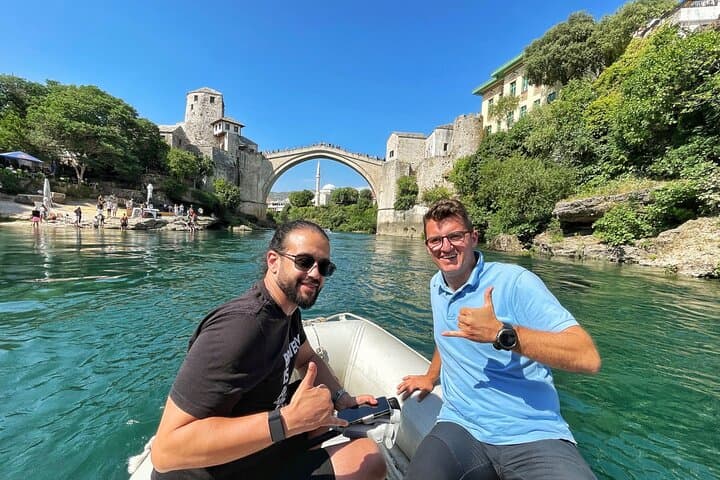
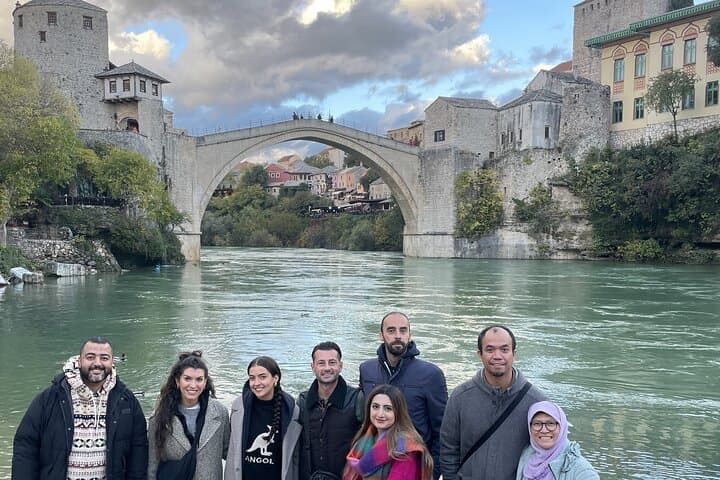
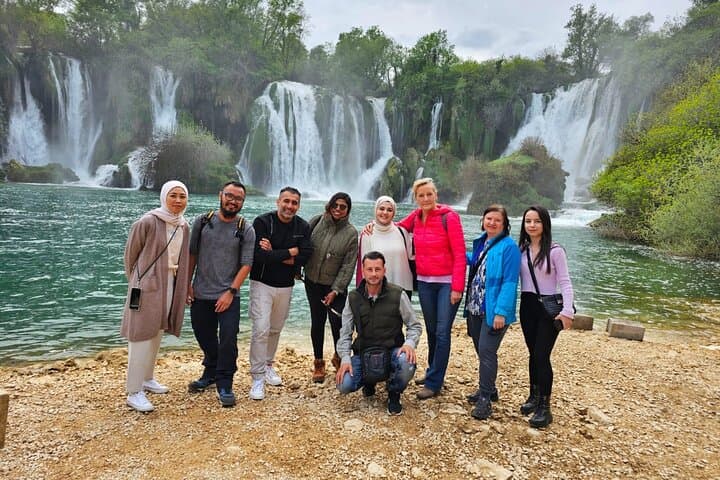
This full-day circuit stitches together five distinct sites: Konjic’s timbered old bridge and woodcraft tradition, the 600-year-old Blagaj Tekija built at the Buna spring, Počitelj’s medieval stone walls clinging to karst slopes, the thundering 25‑metre tufa cascade of Kravice with its 120‑metre lake rim, and Mostar’s restored 16th‑century Stari Most arch bridge—rebuilt after wartime destruction and now a UNESCO site.
Geology is visible in the limestone benches and karst springs that feed the Buna and Trebižat rivers; culture is audible in mosque calls, dervish history at Blagaj, and bazaar traders in Mostar’s Kujundžiluk. Expect short guided walks, photo stops, and an hour to swim at Kravice in summer if chosen.
Practical notes: the tour is about 12 hours with multiple 20–120 minute stops and vehicle transfers; terrain is mostly paved or easy stone paths but includes steps and uneven surfaces in historic sites. Bring layered clothing for river breezes, sturdy shoes for cobbled streets, sun protection, and a small towel if you plan to swim. Plan for crowds at the Old Bridge midday—arrive prepared to walk short distances from parking and to follow local etiquette at religious sites.
easy.
12 hours.
Suitable for most fitness levels; requires ability to walk short distances and climb steps.
The tour is approximately 12 hours and typically starts at 08:00 from the agency in Sarajevo; pickup can be arranged on request.
Yes, swimming is allowed in summer and is optional; bring swimwear and be prepared for cool karst water.
Entrance fees for Kravice and Blagaj monastery may be included depending on payment options—confirm at booking or with the guide on the day.
The tour is family-friendly but involves walking on uneven surfaces and steps; it is not wheelchair accessible and requires some mobility for historic sites.
The route highlights Ottoman-era architecture and the turbulent 20th-century history that led to the 2004 reconstruction of Mostar’s Stari Most.
Karst springs and waterfalls are sensitive to pollution and seasonal flow changes; travel operators encourage leaving no trace and avoiding single-use plastics near water sources.
Meet Bosnia Travel operates guided outdoor trips and adventures with an emphasis on safety, stewardship, and memorable experiences.
Morning light breaks over Sarajevo as a small coach slips through the valley toward Herzegovina—the city’s stone roofs shrinking behind you while rivers and karst cliffs grow louder. By mid-morning the guide points out Konjic’s Ottoman bridge; later the Buna river will appear like a bright thread at Blagaj, gushing from a cliff and pushing the air with coolness.
Morning light breaks over Sarajevo as a small coach slips through the valley toward Herzegovina—the city’s stone roofs shrinking behind you while rivers and karst cliffs grow louder. By mid-morning the guide points out Konjic’s Ottoman bridge; later the Buna river will appear like a bright thread at Blagaj, gushing from a cliff and pushing the air with coolness.
This full-day circuit stitches together five distinct sites: Konjic’s timbered old bridge and woodcraft tradition, the 600-year-old Blagaj Tekija built at the Buna spring, Počitelj’s medieval stone walls clinging to karst slopes, the thundering 25‑metre tufa cascade of Kravice with its 120‑metre lake rim, and Mostar’s restored 16th‑century Stari Most arch bridge—rebuilt after wartime destruction and now a UNESCO site.
Geology is visible in the limestone benches and karst springs that feed the Buna and Trebižat rivers; culture is audible in mosque calls, dervish history at Blagaj, and bazaar traders in Mostar’s Kujundžiluk. Expect short guided walks, photo stops, and an hour to swim at Kravice in summer if chosen.
Practical notes: the tour is about 12 hours with multiple 20–120 minute stops and vehicle transfers; terrain is mostly paved or easy stone paths but includes steps and uneven surfaces in historic sites. Bring layered clothing for river breezes, sturdy shoes for cobbled streets, sun protection, and a small towel if you plan to swim. Plan for crowds at the Old Bridge midday—arrive prepared to walk short distances from parking and to follow local etiquette at religious sites.