THE ADVENTURE COLLECTIVE® · Independent discovery and booking for outdoor travel

Drive a route of sharp contrasts between Sarajevo and Dubrovnik: Ottoman villages, emerald rivers, and an expansive waterfall amphitheater at Kravica. This full‑day transfer packs history, geology and short exploratory walks into an 11‑hour connection you can actually enjoy.
Drive a route of sharp contrasts between Sarajevo and Dubrovnik: Ottoman villages, emerald rivers, and an expansive waterfall amphitheater at Kravica. This full‑day transfer packs history, geology and short exploratory walks into an 11‑hour connection you can actually enjoy.
A pre-dawn highway leaves Sarajevo behind and the car climbs toward the high karst ridges; by midmorning the Neretva River is a green ribbon daring you to follow it downstream. This is a day of dramatic contrasts — wartime scars and Ottoman stonework, cool river springs and a theatrical waterfall amphitheater — all stitched together over an eleven‑hour road journey between capitals of culture.
Verified experiences and guided adventures in the surrounding area.
Operated by Funky Tours · Mostar, Herzegovina-Neretva Canton
A pre-dawn highway leaves Sarajevo behind and the car climbs toward the high karst ridges; by midmorning the Neretva River is a green ribbon daring you to follow it downstream. This is a day of dramatic contrasts — wartime scars and Ottoman stonework, cool river springs and a theatrical waterfall amphitheater — all stitched together over an eleven‑hour road journey between capitals of culture.
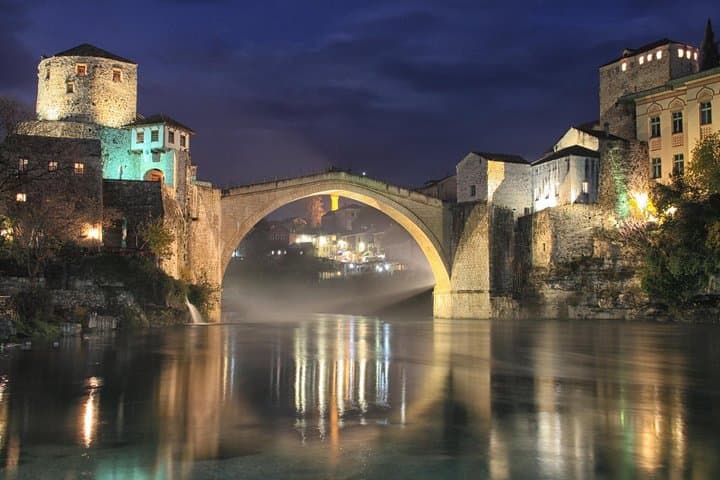
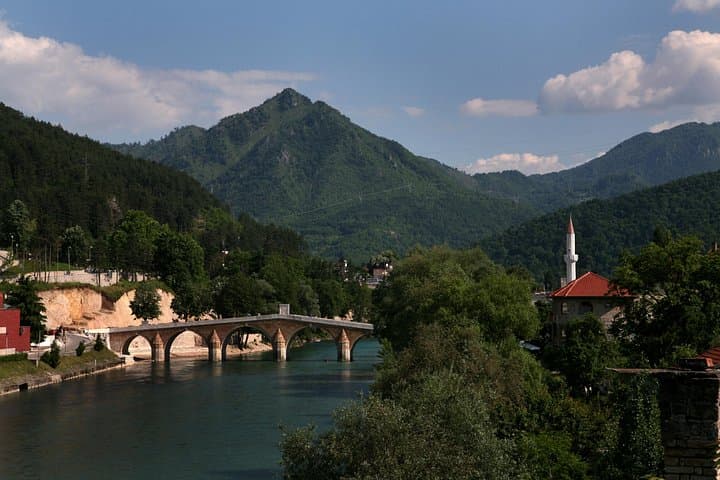
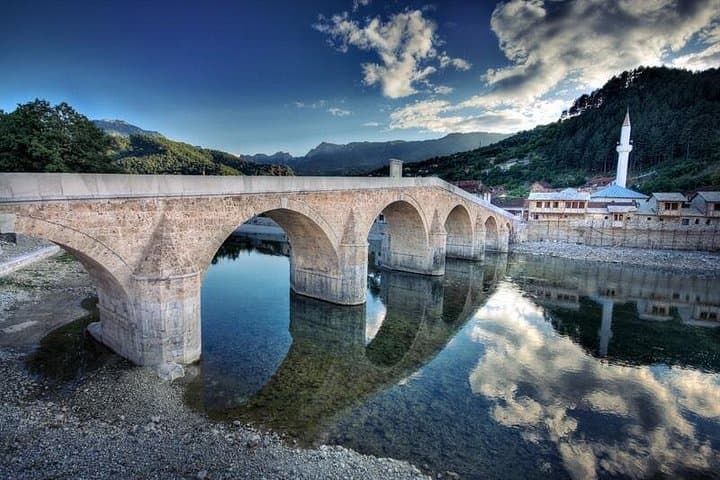
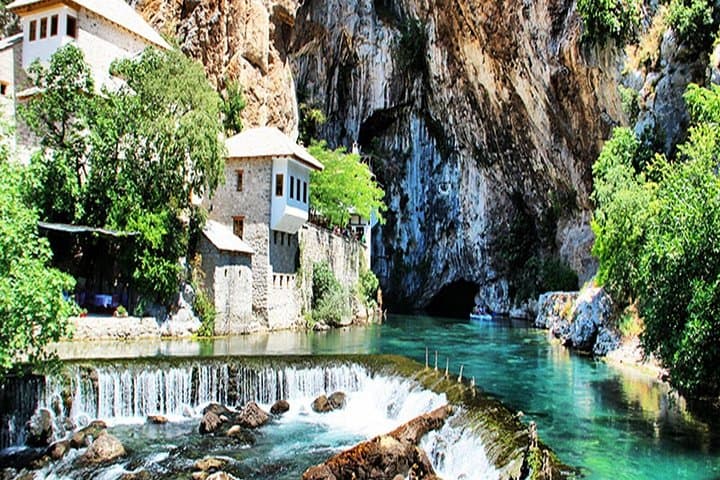
History lines the route: Konjic’s old bridge and wartime exhibits; Počitelj, an Ottoman-era fortified village clinging above the Neretva for six centuries; and Mostar’s Stari Most, a 16th-century bridge rebuilt after the 1990s conflict that remains the city’s emotional core. Geology shapes the show: travertine terraces at Kravica and the Buna spring at Blagaj form from mineral-rich water depositing calcium carbonate, creating sculpted cascades and jade pools.
You’ll spend short walking windows in compact towns and longer stops at Blagaj Dervish House and Kravica waterfalls — bring a camera and a readiness for quick, steep stretches like Počitelj’s uphill lane.
Practical edge: this is a long, single-day transfer so expect several hours in an air‑conditioned vehicle and brief hikes on uneven stone. Carry water, layered clothing for coastal-to-mountain temperature swings, and your passport for the international crossing. Wear grippy shoes for travertine and cobbles, and leave time for local wines and gözleme in Mostar. Respect protected areas: stick to marked paths at Kravica and avoid disturbing travertine formations; your choices keep this landscape alive for the next visitor.
moderate.
11 hours.
Suitable for anyone who can sit for long drives and handle short uphill walks on uneven surfaces
Yes—the tour includes an air‑conditioned vehicle, professional English‑speaking guide/driver and listed admissions (Blagaj and Kravice admissions shown in the itinerary).
According to the itinerary, Kravica waterfall admission (10 EUR) and Blagaj Tekke admission (5 EUR) are included in this product’s price.
Hotel pickup is typical and usually arranged in advance; confirm your pickup point when booking since start times vary by location.
The itinerary notes infants can ride in strollers and must sit on laps—short walks are family‑friendly but the day is long for very young children.
Počitelj dates back centuries as an Ottoman fortified town; Mostar’s Stari Most was built in the 16th century and reconstructed after wartime destruction in the 1990s.
Travertine and river habitats are delicate—stick to marked paths, avoid removing stones or disturbing vegetation, and follow local signage to minimize impact.
Funky Tours operates guided outdoor trips and adventures with an emphasis on safety, stewardship, and memorable experiences.
A pre-dawn highway leaves Sarajevo behind and the car climbs toward the high karst ridges; by midmorning the Neretva River is a green ribbon daring you to follow it downstream. This is a day of dramatic contrasts — wartime scars and Ottoman stonework, cool river springs and a theatrical waterfall amphitheater — all stitched together over an eleven‑hour road journey between capitals of culture.
A pre-dawn highway leaves Sarajevo behind and the car climbs toward the high karst ridges; by midmorning the Neretva River is a green ribbon daring you to follow it downstream. This is a day of dramatic contrasts — wartime scars and Ottoman stonework, cool river springs and a theatrical waterfall amphitheater — all stitched together over an eleven‑hour road journey between capitals of culture.
History lines the route: Konjic’s old bridge and wartime exhibits; Počitelj, an Ottoman-era fortified village clinging above the Neretva for six centuries; and Mostar’s Stari Most, a 16th-century bridge rebuilt after the 1990s conflict that remains the city’s emotional core. Geology shapes the show: travertine terraces at Kravica and the Buna spring at Blagaj form from mineral-rich water depositing calcium carbonate, creating sculpted cascades and jade pools.
You’ll spend short walking windows in compact towns and longer stops at Blagaj Dervish House and Kravica waterfalls — bring a camera and a readiness for quick, steep stretches like Počitelj’s uphill lane.
Practical edge: this is a long, single-day transfer so expect several hours in an air‑conditioned vehicle and brief hikes on uneven stone. Carry water, layered clothing for coastal-to-mountain temperature swings, and your passport for the international crossing. Wear grippy shoes for travertine and cobbles, and leave time for local wines and gözleme in Mostar. Respect protected areas: stick to marked paths at Kravica and avoid disturbing travertine formations; your choices keep this landscape alive for the next visitor.