THE ADVENTURE COLLECTIVE® · Independent discovery and booking for outdoor travel

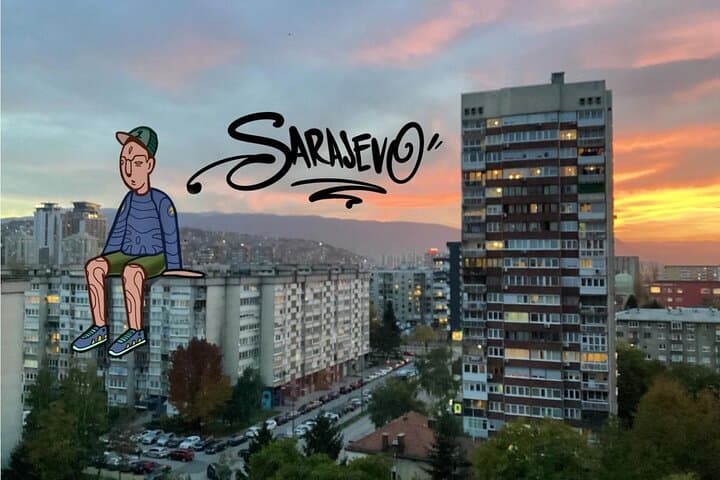
Walk Sarajevo’s painted streets with local artist-guides who map history and memory in murals, stickers and stencils. This 2–3 hour sARTajevo! tour mixes craft, context and compact urban exploration.
Walk Sarajevo’s painted streets with local artist-guides who map history and memory in murals, stickers and stencils. This 2–3 hour sARTajevo! tour mixes craft, context and compact urban exploration.
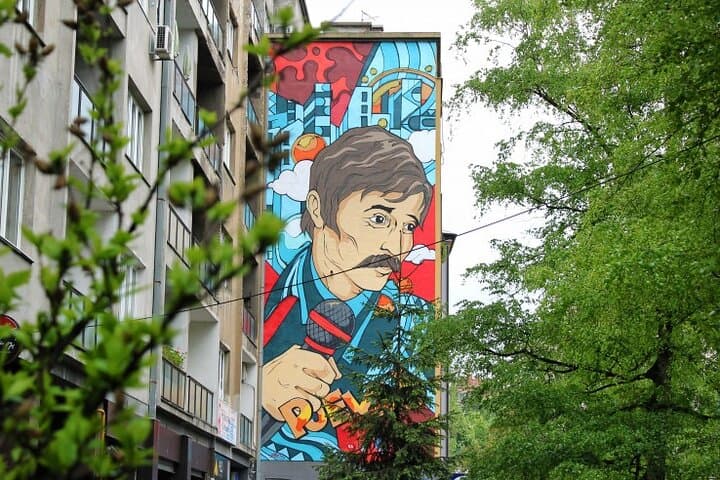
A cool wind off the Miljacka brushes past painted facades while a mural larger than a building seems to watch the pedestrian flow on Ferhadija. The sARTajevo! walking tour threads through these streets, where paint, concrete and memory collide — you move from alleyway stickers to large-scale commemorative pieces with a local artist-guide narrating each stroke.
Verified experiences and guided adventures in the surrounding area.
Operated by Art and Tours Sarajevo · Sarajevo, Federation of Bosnia and Herzegovina
A cool wind off the Miljacka brushes past painted facades while a mural larger than a building seems to watch the pedestrian flow on Ferhadija. The sARTajevo! walking tour threads through these streets, where paint, concrete and memory collide — you move from alleyway stickers to large-scale commemorative pieces with a local artist-guide narrating each stroke.
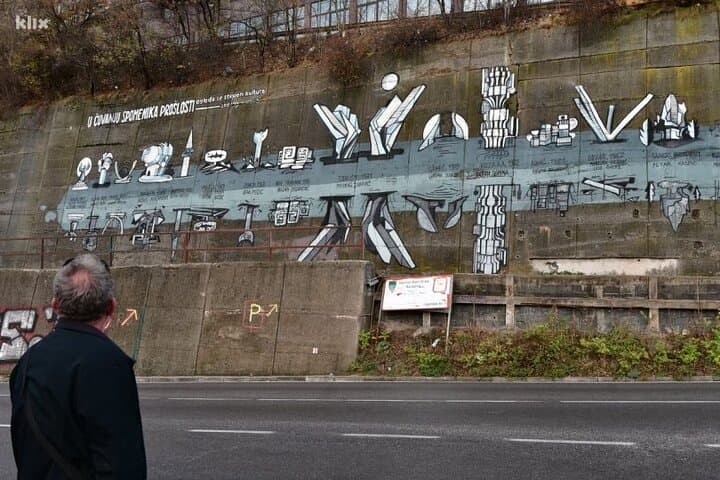
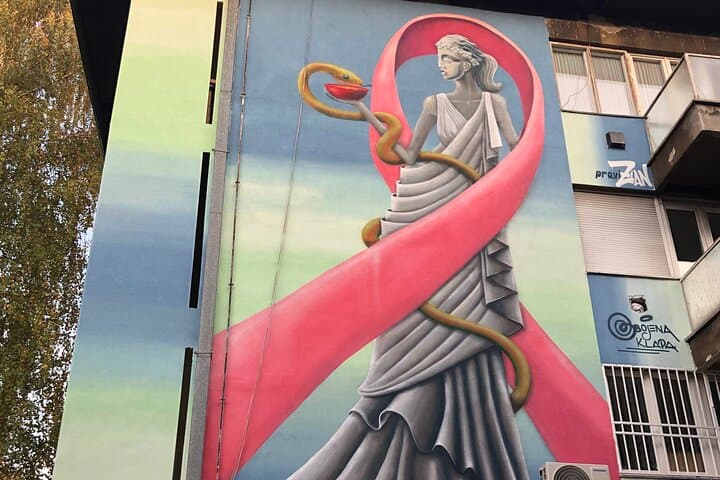
Sarajevo’s streets show layers of history: Ottoman bazaars and Austro-Hungarian boulevards, the scars of the 1992–1995 siege, and a post-war color renaissance led by street artists. Geologically, the city sits in a narrow Dinaric valley, its hills offering vantage points used by both painters and poets. The tour visits Bentbaša murals, the Papagajka building where the first street-art festival took root, Gallery Boris Smoje, and the Srebrenica 1992/1995 memorial wall behind Ferhadija, illustrating how contemporary graffiti documents social memory.
Expect 2–3 hours of mostly flat walking with frequent stops; insights cover technique, community meaning and where sticker art meets stencil politics. Bring comfortable shoes, a charged camera and questions — local guides are artists and certified interpreters who explain both context and craft. The route is compact and wheelchair-accessible in many places, but narrow alleys can be uneven.
Practical tips: mid-morning or late afternoon avoids peak sun and gives softer light for photos. Respect private property and memorials — many pieces are community-approved, not blank canvases. Whether you’re a street-art fan or a curious traveler, the sARTajevo! tour is a concise, thoughtful introduction to Sarajevo’s living walls.
easy.
2–3 hours.
Suitable for casual walkers and most fitness levels; expect frequent standing and short walks between stops.
Many sections of the route and several mural stops are wheelchair accessible; narrow alleys may be tight — contact the operator in advance to confirm specific needs.
Guides are typically local and can speak English; check booking details for other language availability or request in advance.
Yes — photography is encouraged for most works, but be respectful at memorial or private-property pieces and avoid flash in sensitive areas.
Full refund if cancelled at least 24 hours before departure; bookings may be cancelled if minimum participants aren’t met.
Post-1995 Sarajevo saw street art fill damaged urban fabric; murals became public conversations about identity, memory and recovery.
Many works are community-curated or memorials; visitors should avoid defacing art, and support local artists by asking guides where to buy prints or contact creators.
Art and Tours Sarajevo operates guided outdoor trips and adventures with an emphasis on safety, stewardship, and memorable experiences.
A cool wind off the Miljacka brushes past painted facades while a mural larger than a building seems to watch the pedestrian flow on Ferhadija. The sARTajevo! walking tour threads through these streets, where paint, concrete and memory collide — you move from alleyway stickers to large-scale commemorative pieces with a local artist-guide narrating each stroke.
A cool wind off the Miljacka brushes past painted facades while a mural larger than a building seems to watch the pedestrian flow on Ferhadija. The sARTajevo! walking tour threads through these streets, where paint, concrete and memory collide — you move from alleyway stickers to large-scale commemorative pieces with a local artist-guide narrating each stroke.
Sarajevo’s streets show layers of history: Ottoman bazaars and Austro-Hungarian boulevards, the scars of the 1992–1995 siege, and a post-war color renaissance led by street artists. Geologically, the city sits in a narrow Dinaric valley, its hills offering vantage points used by both painters and poets. The tour visits Bentbaša murals, the Papagajka building where the first street-art festival took root, Gallery Boris Smoje, and the Srebrenica 1992/1995 memorial wall behind Ferhadija, illustrating how contemporary graffiti documents social memory.
Expect 2–3 hours of mostly flat walking with frequent stops; insights cover technique, community meaning and where sticker art meets stencil politics. Bring comfortable shoes, a charged camera and questions — local guides are artists and certified interpreters who explain both context and craft. The route is compact and wheelchair-accessible in many places, but narrow alleys can be uneven.
Practical tips: mid-morning or late afternoon avoids peak sun and gives softer light for photos. Respect private property and memorials — many pieces are community-approved, not blank canvases. Whether you’re a street-art fan or a curious traveler, the sARTajevo! tour is a concise, thoughtful introduction to Sarajevo’s living walls.