THE ADVENTURE COLLECTIVE® · Independent discovery and booking for outdoor travel

Walk Sarajevo’s frontlines with local guides: from Sniper Alley to the Tunnel of Hope and Trebević views. This four-hour tour combines firsthand history, accessible walking, and panoramic city perspectives.
Walk Sarajevo’s frontlines with local guides: from Sniper Alley to the Tunnel of Hope and Trebević views. This four-hour tour combines firsthand history, accessible walking, and panoramic city perspectives.
You step out of an air-conditioned minivan into a city where hills hold memory like weather. Ragged façades face glass storefronts; cables cling to buildings and the wind from Trebević carries the hollow echo of shells and children’s laughter alike. A local guide points uphill toward Yellow Fortress — the first panoramic frame of Sarajevo and a place where you can feel the siege’s geometry: lines of sniper positions, routes of relief, and the narrow corridor the city once needed to breathe.
Verified experiences and guided adventures in the surrounding area.
Operated by Meet Bosnia Travel · Sarajevo, Federation of Bosnia and Herzegovina
You step out of an air-conditioned minivan into a city where hills hold memory like weather. Ragged façades face glass storefronts; cables cling to buildings and the wind from Trebević carries the hollow echo of shells and children’s laughter alike. A local guide points uphill toward Yellow Fortress — the first panoramic frame of Sarajevo and a place where you can feel the siege’s geometry: lines of sniper positions, routes of relief, and the narrow corridor the city once needed to breathe.
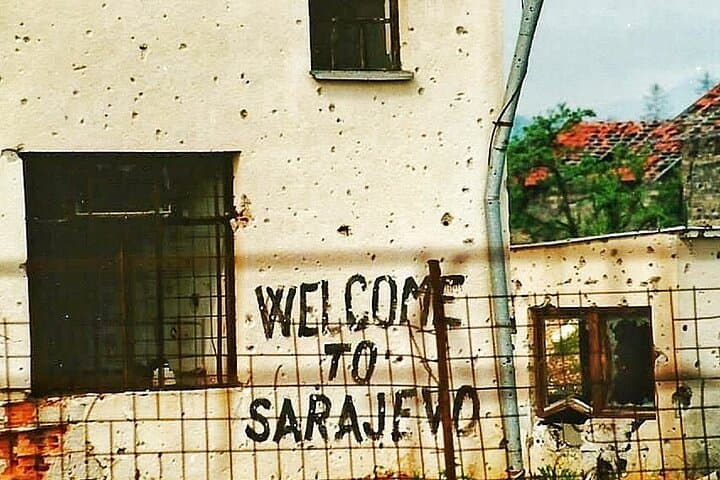
The tour threads recent history into the urban fabric: the assassination that sparked World War I, the socialist-era architecture of the Olympic Kosevo complex, and the four-year Siege of Sarajevo (1992–1996) that left physical scars still visible along Sniper Alley. Geologically, Sarajevo sits in a river valley ringed by Dinaric limestone ridges; the surrounding slopes — Trebević among them — were strategic high ground during the conflict. Culture here is resilient and layered: coffeehouses hum with conversation, and museums present testimony with local voices.
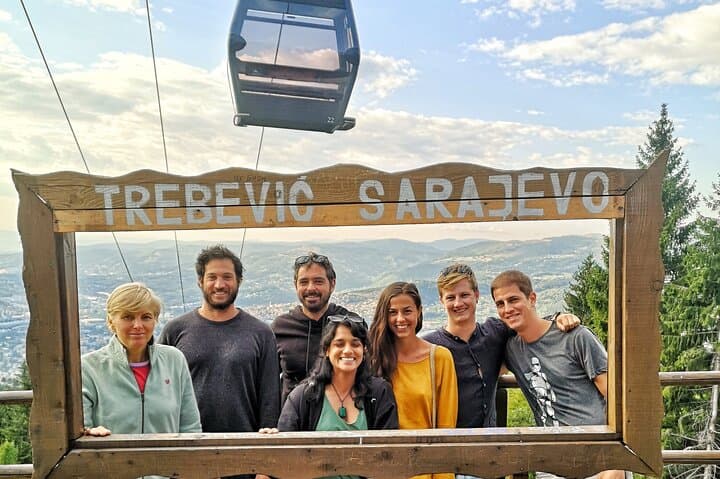
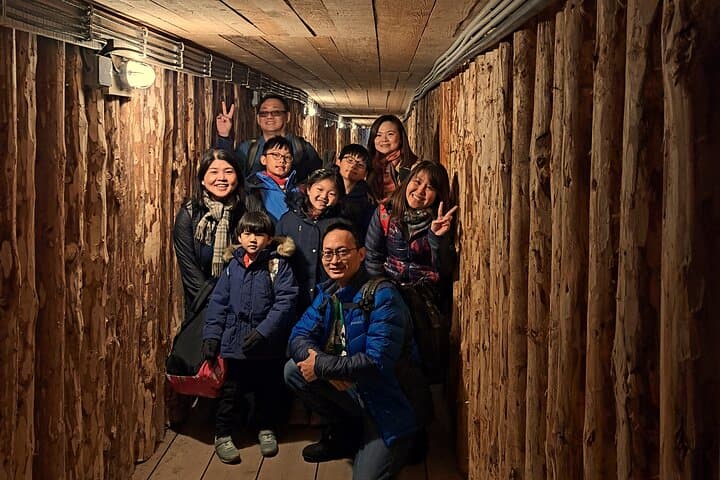
You’ll visit the Tunnel of Hope museum, the Defenders’ Cemetery viewpoint, the Olympic bobsleigh track, and key frontlines, usually by vehicle with short, accessible walks. Practical notes: allow four hours, carry water and a light jacket for mountain breezes, and wear comfortable shoes for uneven pavement and tunnel steps. Photography is welcome, but be respectful at memorials and when listening to survivors’ accounts. This tour is a compact, guided primer on Sarajevo’s difficult 20th century — clear-eyed, local-led, and unflinching.
easy.
4 hours.
Suitable for most fitness levels; involves short walks, some stairs, and getting in/out of a vehicle
The itinerary includes a stop at the Tunnel of Hope museum, but admission may not be included—confirm with the operator before arrival.
Yes—hotel pickup is listed among inclusions; confirm pickup point and time when booking.
The tour notes stroller accessibility and infant seats are available, but some stops have stairs and uneven ground—check with the operator for specific needs.
The tour operates in most conditions; cancellation policy requires at least 24 hours for a refund, and operators rarely cancel for light rain.
Sarajevo hosted the 1984 Winter Olympics and then endured the 1992–1996 siege; both events shaped the city’s built landscape and collective memory.
Many sites preserve war damage as historical testimony—practice leave-no-trace, avoid removing artifacts, and support local museums that maintain these spaces.
Meet Bosnia Travel operates guided outdoor trips and adventures with an emphasis on safety, stewardship, and memorable experiences.
You step out of an air-conditioned minivan into a city where hills hold memory like weather. Ragged façades face glass storefronts; cables cling to buildings and the wind from Trebević carries the hollow echo of shells and children’s laughter alike. A local guide points uphill toward Yellow Fortress — the first panoramic frame of Sarajevo and a place where you can feel the siege’s geometry: lines of sniper positions, routes of relief, and the narrow corridor the city once needed to breathe.
You step out of an air-conditioned minivan into a city where hills hold memory like weather. Ragged façades face glass storefronts; cables cling to buildings and the wind from Trebević carries the hollow echo of shells and children’s laughter alike. A local guide points uphill toward Yellow Fortress — the first panoramic frame of Sarajevo and a place where you can feel the siege’s geometry: lines of sniper positions, routes of relief, and the narrow corridor the city once needed to breathe.
The tour threads recent history into the urban fabric: the assassination that sparked World War I, the socialist-era architecture of the Olympic Kosevo complex, and the four-year Siege of Sarajevo (1992–1996) that left physical scars still visible along Sniper Alley. Geologically, Sarajevo sits in a river valley ringed by Dinaric limestone ridges; the surrounding slopes — Trebević among them — were strategic high ground during the conflict. Culture here is resilient and layered: coffeehouses hum with conversation, and museums present testimony with local voices.
You’ll visit the Tunnel of Hope museum, the Defenders’ Cemetery viewpoint, the Olympic bobsleigh track, and key frontlines, usually by vehicle with short, accessible walks. Practical notes: allow four hours, carry water and a light jacket for mountain breezes, and wear comfortable shoes for uneven pavement and tunnel steps. Photography is welcome, but be respectful at memorials and when listening to survivors’ accounts. This tour is a compact, guided primer on Sarajevo’s difficult 20th century — clear-eyed, local-led, and unflinching.