THE ADVENTURE COLLECTIVE® · Independent discovery and booking for outdoor travel

Walk Baščaršija with an English-speaking guide and move through Ottoman bazaars, Austro-Hungarian squares and the Latin Bridge site in a compact 2–3 hour tour. Expect paved cobbles, close-up history and practical stops for coffee and crafts.
Walk Baščaršija with an English-speaking guide and move through Ottoman bazaars, Austro-Hungarian squares and the Latin Bridge site in a compact 2–3 hour tour. Expect paved cobbles, close-up history and practical stops for coffee and crafts.
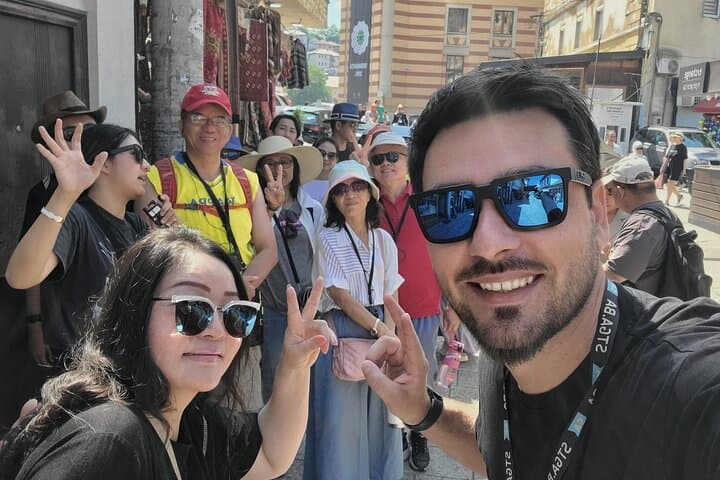
You step off a tram and into a patchwork of cobblestones opposite the ornate City Hall; vendors call out over the hiss of kettles and a mosque's azaan threads through the air. This walk moves through Baščaršija—the living heart of Sarajevo—where Ottoman woodwork meets Austro-Hungarian stone in streets worn smooth by traders, pilgrims and centuries of traffic.
Verified experiences and guided adventures in the surrounding area.
Operated by Tour Mage · Sarajevo, Sarajevo Canton
You step off a tram and into a patchwork of cobblestones opposite the ornate City Hall; vendors call out over the hiss of kettles and a mosque's azaan threads through the air. This walk moves through Baščaršija—the living heart of Sarajevo—where Ottoman woodwork meets Austro-Hungarian stone in streets worn smooth by traders, pilgrims and centuries of traffic.
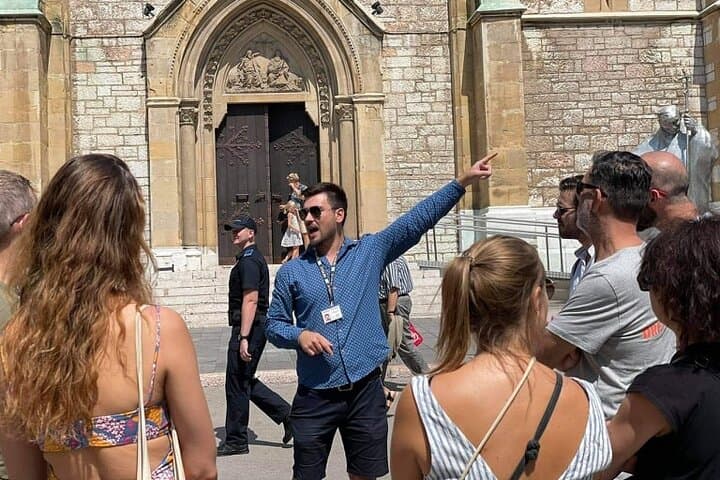
The route traces layers of history: an Ottoman bazaar and 16th-century Gazi Husrev-bey endowments, a compact Austro-Hungarian cathedral square, and the Latin Bridge area where an assassination changed the world in 1914. Geologically the city sits in a narrow river valley hemmed by the Dinaric Alps; expect short climbs and tight lanes rather than long ascents. Culture here is public and intertwined—craftspeople on Coppersmith Street, Jewish and Orthodox heritage sites within a few minutes' walk, and open markets that still echo wartime memory and postwar revival.
Practical guide: the tour runs roughly 2–3 hours (itinerary lists 150 minutes) and begins at the square opposite City Hall. Paths are paved and largely wheelchair accessible, but cobbles can be uneven. Wear sturdy walking shoes, carry water and small change for shops, and pick a morning or late-afternoon slot to avoid peak heat and crowds. Guides will pause at key monuments—Sebilj fountain, Gazi Husrev-bey complex, Latin Bridge—and share context on architecture, religion and Sarajevo's complex 20th-century history.
This is an urban, low-impact outdoor experience: light walking, close-up cultural encounters, and frequent opportunities to sit, photograph and sample local flavors between narrated stops.
easy.
2–3 hours.
Suitable for most fitness levels; involves light walking with short periods standing.
Yes—most streets on the route are paved and accessible; guides note the itinerary as wheelchair-friendly but cobbles can be uneven in places.
This listing includes an English-speaking guide; check the operator for other language options before booking.
The meeting point is the square opposite Sarajevo City Hall (Vijećnica); confirm exact pickup instructions on your ticket.
Yes—this is family-friendly and suitable for infants and children in strollers, though some short walks and steps are involved.
Sarajevo's Old Town grew under Ottoman rule in the 15th–16th centuries and later acquired Austro-Hungarian civic spaces; the Latin Bridge area is famously connected to the 1914 assassination that precipitated World War I.
Tours support local craft economies; visitors should stick to marked paths, avoid touching fragile historical features and consider buying from local artisans to sustain conservation efforts.
Tour Mage operates guided outdoor trips and adventures with an emphasis on safety, stewardship, and memorable experiences.
You step off a tram and into a patchwork of cobblestones opposite the ornate City Hall; vendors call out over the hiss of kettles and a mosque's azaan threads through the air. This walk moves through Baščaršija—the living heart of Sarajevo—where Ottoman woodwork meets Austro-Hungarian stone in streets worn smooth by traders, pilgrims and centuries of traffic.
You step off a tram and into a patchwork of cobblestones opposite the ornate City Hall; vendors call out over the hiss of kettles and a mosque's azaan threads through the air. This walk moves through Baščaršija—the living heart of Sarajevo—where Ottoman woodwork meets Austro-Hungarian stone in streets worn smooth by traders, pilgrims and centuries of traffic.
The route traces layers of history: an Ottoman bazaar and 16th-century Gazi Husrev-bey endowments, a compact Austro-Hungarian cathedral square, and the Latin Bridge area where an assassination changed the world in 1914. Geologically the city sits in a narrow river valley hemmed by the Dinaric Alps; expect short climbs and tight lanes rather than long ascents. Culture here is public and intertwined—craftspeople on Coppersmith Street, Jewish and Orthodox heritage sites within a few minutes' walk, and open markets that still echo wartime memory and postwar revival.
Practical guide: the tour runs roughly 2–3 hours (itinerary lists 150 minutes) and begins at the square opposite City Hall. Paths are paved and largely wheelchair accessible, but cobbles can be uneven. Wear sturdy walking shoes, carry water and small change for shops, and pick a morning or late-afternoon slot to avoid peak heat and crowds. Guides will pause at key monuments—Sebilj fountain, Gazi Husrev-bey complex, Latin Bridge—and share context on architecture, religion and Sarajevo's complex 20th-century history.
This is an urban, low-impact outdoor experience: light walking, close-up cultural encounters, and frequent opportunities to sit, photograph and sample local flavors between narrated stops.