THE ADVENTURE COLLECTIVE® · Independent discovery and booking for outdoor travel

Explore Sarajevo’s compact historic core on a private 2-hour walking tour that moves from Ottoman bazaars to Austro-Hungarian landmarks. Ideal for first-time visitors who want curated context, panoramic views and access to lesser-known courtyards.
Explore Sarajevo’s compact historic core on a private 2-hour walking tour that moves from Ottoman bazaars to Austro-Hungarian landmarks. Ideal for first-time visitors who want curated context, panoramic views and access to lesser-known courtyards.
You step out from Hotel Europe into a street where stone curbs still hold the prints of imperial eras and the river below seems to whisper of crossroads. The guide leads you through narrow Ottoman lanes, past wooden fountains and the low hum of market banter, each turn opening onto a church, mosque or an austere Austro-Hungarian façade that refuses to be disposable.
Verified experiences and guided adventures in the surrounding area.
Operated by Guydeez · Sarajevo, Federation of Bosnia and Herzegovina
You step out from Hotel Europe into a street where stone curbs still hold the prints of imperial eras and the river below seems to whisper of crossroads. The guide leads you through narrow Ottoman lanes, past wooden fountains and the low hum of market banter, each turn opening onto a church, mosque or an austere Austro-Hungarian façade that refuses to be disposable.
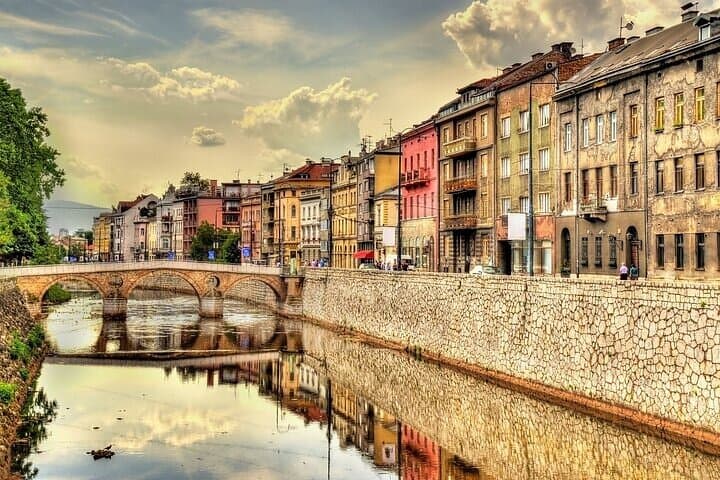
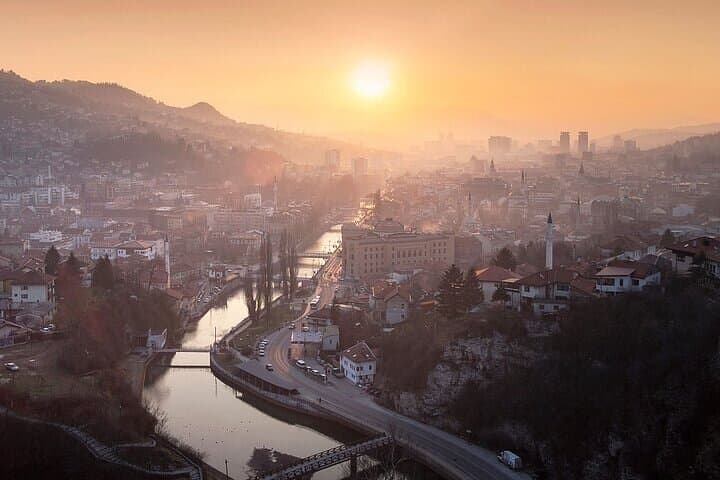
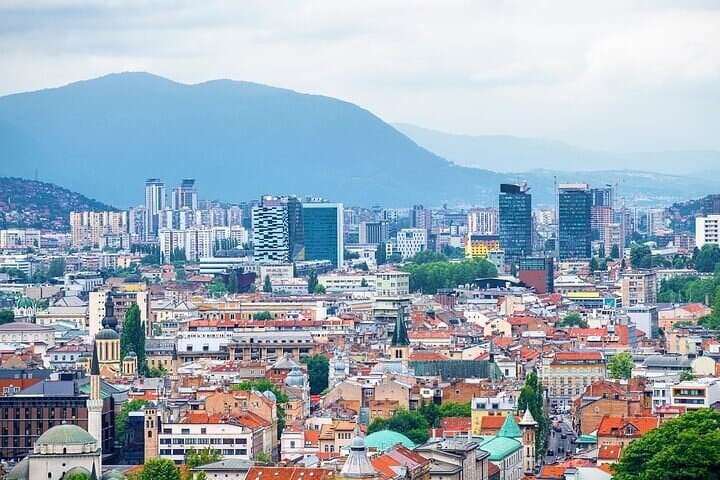
Sarajevo grew where empires met: Ottoman bazaars, Austro-Hungarian civic buildings and Orthodox, Catholic and Jewish sites lie within a compact core. Medieval trade routes shaped the bazaar (Bezistan), while 19th–20th century modernism left Sarajevo City Hall (Vijećnica) as an ornate reminder of cultural ambitions interrupted by war. The nearby Latin Bridge marks the spark of World War I; the Yellow Fortress offers a vantage point that reads the city’s layered topography—river valleys, surrounding karst hills and pine-clad slopes rising to Trebević.
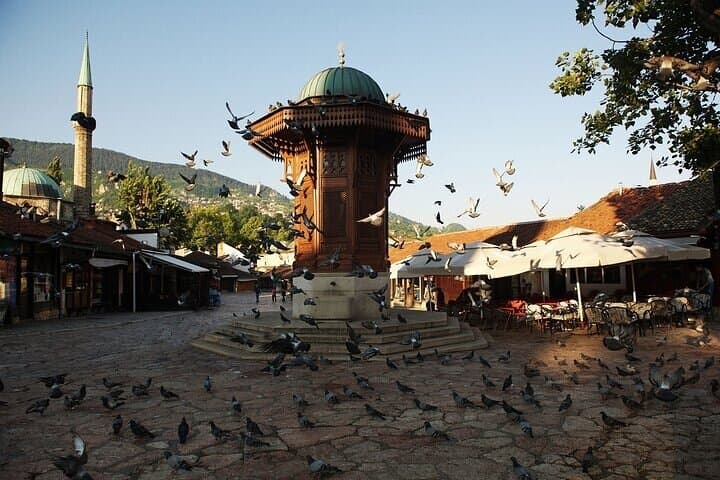
Expect a measured two-hour stroll with frequent stops for context and photos: Sacred Heart Cathedral, Gazi Husrev-beg Mosque, Sebilj fountain and the Jewish Museum. The tour balances municipal history, religious architecture and everyday life—market stalls, cafés and the tactile details of bazaars.
Practical notes: wear grippy walking shoes for cobbles and occasional steps, bring a small bottle of water and a light layer for sudden mountain-cooled breezes. Morning or late-afternoon slots give softer light and thinner crowds. As a private experience the pace is flexible—ask to extend time at a site or detour to a local café for Bosnian coffee.
easy.
2 hours.
Suitable for most fitness levels; requires standing and walking for up to two hours with short, gentle climbs.
The typical meeting point is Hotel Europe in central Sarajevo and the tour concludes near the Jewish Museum in Baščaršija, though start/end points can be adjusted when booked privately.
Most streets and many sites on this route are accessible, but some cobbled areas and steps (e.g., access to certain viewpoints) may present challenges—notify the operator when booking.
The listing specifies an English-speaking guide; other languages may be available on request—confirm at booking and allow time for arrangements.
The tour is generally available in light rain; for severe weather check the cancellation policy which allows a full refund if canceled at least 24 hours in advance.
Sarajevo’s streets reflect Ottoman commercial patterns and Austro-Hungarian civic planning; the assassination near the Latin Bridge in 1914 linked the city to world history.
High foot traffic and preservation needs mean visitors should stick to marked routes, avoid touching fragile masonry and support local vendors to keep heritage sites economically sustainable.
Guydeez operates guided outdoor trips and adventures with an emphasis on safety, stewardship, and memorable experiences.
You step out from Hotel Europe into a street where stone curbs still hold the prints of imperial eras and the river below seems to whisper of crossroads. The guide leads you through narrow Ottoman lanes, past wooden fountains and the low hum of market banter, each turn opening onto a church, mosque or an austere Austro-Hungarian façade that refuses to be disposable.
You step out from Hotel Europe into a street where stone curbs still hold the prints of imperial eras and the river below seems to whisper of crossroads. The guide leads you through narrow Ottoman lanes, past wooden fountains and the low hum of market banter, each turn opening onto a church, mosque or an austere Austro-Hungarian façade that refuses to be disposable.
Sarajevo grew where empires met: Ottoman bazaars, Austro-Hungarian civic buildings and Orthodox, Catholic and Jewish sites lie within a compact core. Medieval trade routes shaped the bazaar (Bezistan), while 19th–20th century modernism left Sarajevo City Hall (Vijećnica) as an ornate reminder of cultural ambitions interrupted by war. The nearby Latin Bridge marks the spark of World War I; the Yellow Fortress offers a vantage point that reads the city’s layered topography—river valleys, surrounding karst hills and pine-clad slopes rising to Trebević.
Expect a measured two-hour stroll with frequent stops for context and photos: Sacred Heart Cathedral, Gazi Husrev-beg Mosque, Sebilj fountain and the Jewish Museum. The tour balances municipal history, religious architecture and everyday life—market stalls, cafés and the tactile details of bazaars.
Practical notes: wear grippy walking shoes for cobbles and occasional steps, bring a small bottle of water and a light layer for sudden mountain-cooled breezes. Morning or late-afternoon slots give softer light and thinner crowds. As a private experience the pace is flexible—ask to extend time at a site or detour to a local café for Bosnian coffee.