THE ADVENTURE COLLECTIVE® · Independent discovery and booking for outdoor travel

Walk the streets that changed history: a focused two-hour guided tour through Sarajevo’s Austro-Hungarian landmarks and the Latin Bridge where Archduke Franz Ferdinand was assassinated. Expect paved routes, museum context, and knowledgeable local guides.
Walk the streets that changed history: a focused two-hour guided tour through Sarajevo’s Austro-Hungarian landmarks and the Latin Bridge where Archduke Franz Ferdinand was assassinated. Expect paved routes, museum context, and knowledgeable local guides.
You step off the pavement into a Sarajevo morning where the Miljacka River threads the city like a silver seam and the stones of the Latin Bridge keep the memory of one instant on quiet, weathered display.
Verified experiences and guided adventures in the surrounding area.
Operated by Insider Ltd · Sarajevo, Sarajevo Canton
You step off the pavement into a Sarajevo morning where the Miljacka River threads the city like a silver seam and the stones of the Latin Bridge keep the memory of one instant on quiet, weathered display.
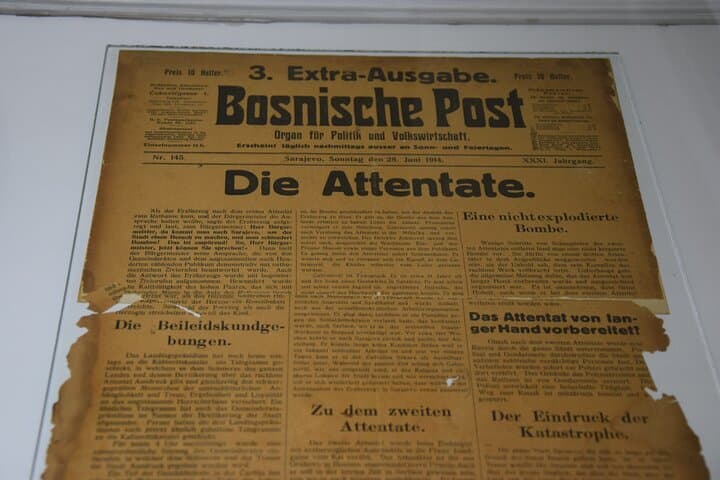
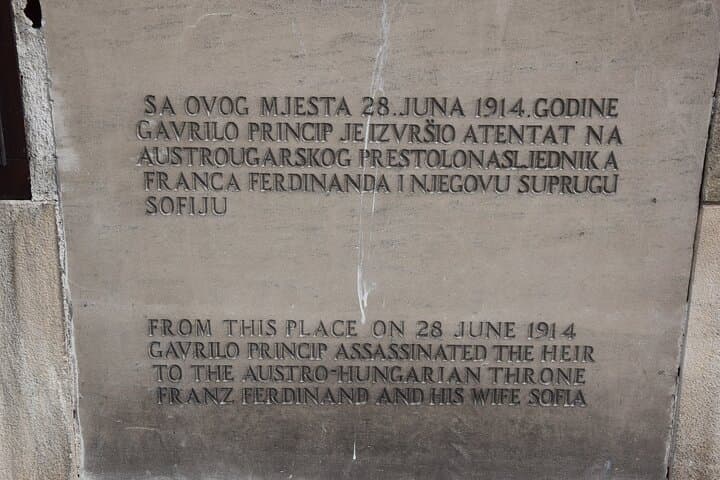
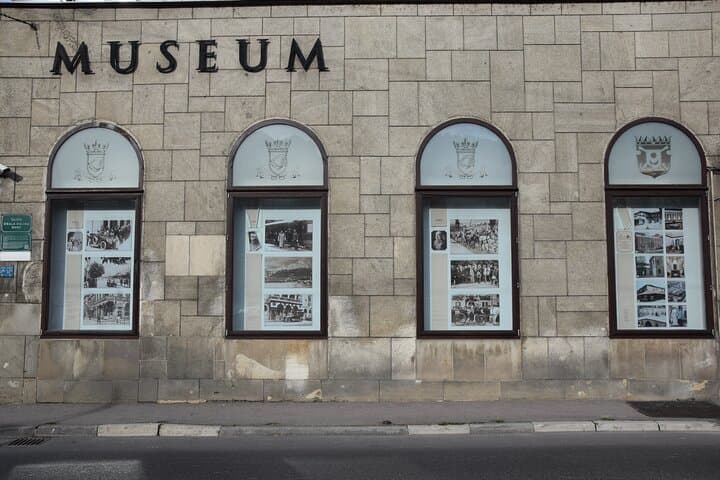
This two-hour guided walk traces the route of Archduke Franz Ferdinand’s 1914 motorcade, stops at the Latin Bridge where Gavrilo Princip fired the shots, and moves through Austro-Hungarian architecture that shaped the city’s urban face. The tour combines street-level storytelling with museum context: city hall (Vijećnica), the Austro-Hungarian administrative buildings, and small museums that reconstruct the tense political climate of prewar Europe.
Geology here is modest—river terraces and limestone bedrock beneath narrow streets—but the cultural layers are dense: Ottoman bazaars running into imperial boulevards, Orthodox and Catholic churches near mosques, and marketplaces that witnessed ordinary life upended. Guides typically interpret how Young Bosnia’s motives intersected with empire politics and the broader nationalist currents that followed.
Practically, expect mostly paved walking with short stops; the pace is conversational and accessible for most travelers. Bring a light rain shell in shoulder seasons, comfortable walking shoes, and allow time afterward to browse Baščaršija cafés and the small exhibits near the Latin Bridge. Photography is welcome, but treat memorials and graves with restraint. The tour is compact yet rich—ideal for history-minded visitors who want to feel the city’s present standing on the same stones that altered the 20th century.
easy.
2 hours.
Suitable for most travelers who can walk about 1–2 miles with short stops; minimal elevation change.
The tour lasts about two hours and covers roughly 1–2 miles on mostly paved, flat streets with several short stops.
The route is rated easy and accessible to most ages; however, some historic pavements can be uneven—notify the operator of mobility needs when booking.
Most stops are outdoor or observational; admission to specific museums may not be included—check the itinerary or ask the guide on day-of departure.
Yes, photography is generally allowed, but be respectful at memorials, graves, and private properties nearby.
Sarajevo’s 1914 assassination of Archduke Franz Ferdinand was carried out by Young Bosnia and triggered the diplomatic chain that led to World War I; the city’s urban fabric reflects Ottoman, Austro-Hungarian and Yugoslav layers.
Stick to paved routes and memorial guidelines, support licensed local guides, and avoid disturbing historical markers to help preserve fragile urban heritage.
Insider Ltd operates guided outdoor trips and adventures with an emphasis on safety, stewardship, and memorable experiences.
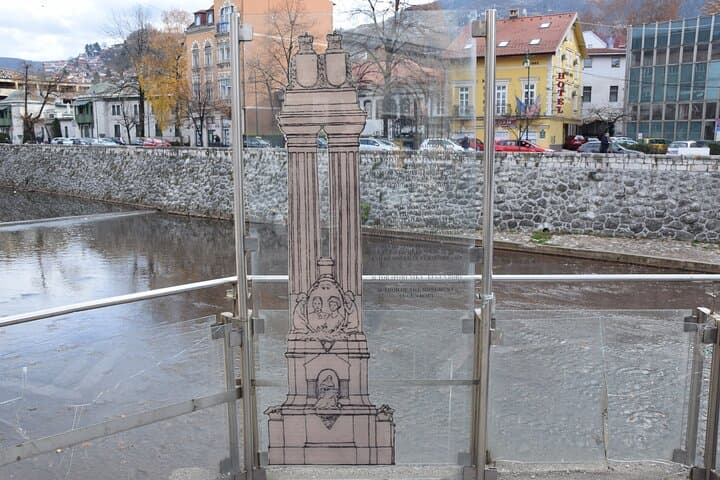
You step off the pavement into a Sarajevo morning where the Miljacka River threads the city like a silver seam and the stones of the Latin Bridge keep the memory of one instant on quiet, weathered display.
You step off the pavement into a Sarajevo morning where the Miljacka River threads the city like a silver seam and the stones of the Latin Bridge keep the memory of one instant on quiet, weathered display.
This two-hour guided walk traces the route of Archduke Franz Ferdinand’s 1914 motorcade, stops at the Latin Bridge where Gavrilo Princip fired the shots, and moves through Austro-Hungarian architecture that shaped the city’s urban face. The tour combines street-level storytelling with museum context: city hall (Vijećnica), the Austro-Hungarian administrative buildings, and small museums that reconstruct the tense political climate of prewar Europe.
Geology here is modest—river terraces and limestone bedrock beneath narrow streets—but the cultural layers are dense: Ottoman bazaars running into imperial boulevards, Orthodox and Catholic churches near mosques, and marketplaces that witnessed ordinary life upended. Guides typically interpret how Young Bosnia’s motives intersected with empire politics and the broader nationalist currents that followed.
Practically, expect mostly paved walking with short stops; the pace is conversational and accessible for most travelers. Bring a light rain shell in shoulder seasons, comfortable walking shoes, and allow time afterward to browse Baščaršija cafés and the small exhibits near the Latin Bridge. Photography is welcome, but treat memorials and graves with restraint. The tour is compact yet rich—ideal for history-minded visitors who want to feel the city’s present standing on the same stones that altered the 20th century.