THE ADVENTURE COLLECTIVE® · Independent discovery and booking for outdoor travel

A full-day circuit from Saqqara through Memphis to Dahshur that traces the rise of early Egyptian monumental architecture. Expect close-up views of the Step Pyramid, colossal statuary, and Sneferu's experimental pyramids with practical tips for timing and comfort.
A full-day circuit from Saqqara through Memphis to Dahshur that traces the rise of early Egyptian monumental architecture. Expect close-up views of the Step Pyramid, colossal statuary, and Sneferu's experimental pyramids with practical tips for timing and comfort.
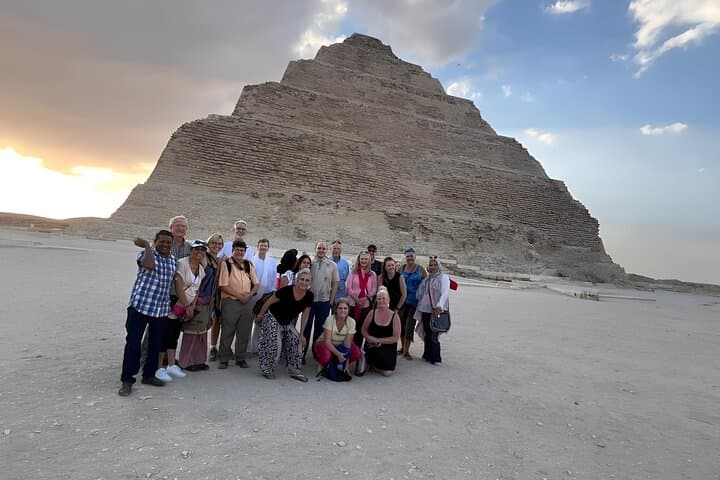
You step from the air‑conditioned vehicle into a flat, sun-bleached plain where stone and sand argue over the horizon. Sunlight throws sharp edges across the Step Pyramid at Saqqara, and the quiet here feels deliberate — as if the desert is holding its breath to let the stones tell their story.
Verified experiences and guided adventures in the surrounding area.
Operated by ROZA TOUR · Saqqara, Giza Governorate
You step from the air‑conditioned vehicle into a flat, sun-bleached plain where stone and sand argue over the horizon. Sunlight throws sharp edges across the Step Pyramid at Saqqara, and the quiet here feels deliberate — as if the desert is holding its breath to let the stones tell their story.
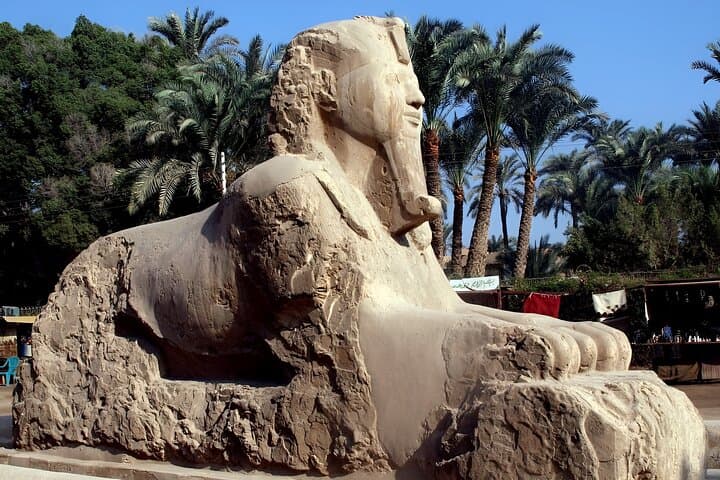
This circuit links three distinct chapters of early Egyptian statecraft. Saqqara hosts Djoser’s Step Pyramid, the first large-scale stone building and a milestone in masonry; the Tombs of the Nobles nearby preserve painted scenes of daily life and funerary ritual. Memphis, once the kingdom’s administrative heart, offers colossal statuary — including a seated Ramses II — that illustrates ancient royal power. Dahshur presents archaeological evolution: Sneferu experimented here, producing the Bent Pyramid with its changing angles and the Red Pyramid, an early smooth-sided prototype.
Geologically the plateau is limestone and desert silt; limited vegetation and hard-packed sand influence site preservation and visitor routes. Locally, artisans continue Cairo’s long craft traditions — a carpet school visit highlights contemporary skills tied to regional trade.
Practical guidance: plan a full day (about seven hours) starting early to avoid peak sun; bring at least 2 liters of water and sun protection, and wear sturdy closed shoes for uneven limestone surfaces. Expect short walks between monuments, intermittent shade, and opportunities to step into small museum spaces. Respect posted barriers and ask guides about photography rules and ticket inclusions to avoid surprises.
This itinerary offers a compact, readable sequence of Egypt’s architectural experiments — an accessible, deeply visual day for history-minded travelers.
easy.
6–8 hours.
Suitable for most fitness levels; involves several short walks on uneven ground and standing periods.
Some itineraries include specific admissions, but many local ticket fees are paid on site; confirm with your operator before departure.
Saqqara and Memphis lie roughly 30–45 minutes from central Giza/Cairo by car, while Dahshur is another 20–30 minutes beyond Saqqara depending on traffic.
Yes—walking is moderate and paced, but prepare for sun exposure and bring seating options for those who need frequent rests.
Access to pyramid interiors is limited and subject to site regulations; interiors like Saqqara's Step Pyramid have restricted entry and may require separate tickets.
Saqqara, Memphis and Dahshur record rapid innovation during Egypt’s Old and Early Dynastic periods, from Djoser’s stepped form to Sneferu’s experiments that led to true smooth-sided pyramids.
Archaeological conservation focuses on limiting foot traffic near fragile reliefs and preserving original casing stones; visitors are asked not to touch surfaces and to follow stay-on-path guidance.
ROZA TOUR operates guided outdoor trips and adventures with an emphasis on safety, stewardship, and memorable experiences.
You step from the air‑conditioned vehicle into a flat, sun-bleached plain where stone and sand argue over the horizon. Sunlight throws sharp edges across the Step Pyramid at Saqqara, and the quiet here feels deliberate — as if the desert is holding its breath to let the stones tell their story.
You step from the air‑conditioned vehicle into a flat, sun-bleached plain where stone and sand argue over the horizon. Sunlight throws sharp edges across the Step Pyramid at Saqqara, and the quiet here feels deliberate — as if the desert is holding its breath to let the stones tell their story.
This circuit links three distinct chapters of early Egyptian statecraft. Saqqara hosts Djoser’s Step Pyramid, the first large-scale stone building and a milestone in masonry; the Tombs of the Nobles nearby preserve painted scenes of daily life and funerary ritual. Memphis, once the kingdom’s administrative heart, offers colossal statuary — including a seated Ramses II — that illustrates ancient royal power. Dahshur presents archaeological evolution: Sneferu experimented here, producing the Bent Pyramid with its changing angles and the Red Pyramid, an early smooth-sided prototype.
Geologically the plateau is limestone and desert silt; limited vegetation and hard-packed sand influence site preservation and visitor routes. Locally, artisans continue Cairo’s long craft traditions — a carpet school visit highlights contemporary skills tied to regional trade.
Practical guidance: plan a full day (about seven hours) starting early to avoid peak sun; bring at least 2 liters of water and sun protection, and wear sturdy closed shoes for uneven limestone surfaces. Expect short walks between monuments, intermittent shade, and opportunities to step into small museum spaces. Respect posted barriers and ask guides about photography rules and ticket inclusions to avoid surprises.
This itinerary offers a compact, readable sequence of Egypt’s architectural experiments — an accessible, deeply visual day for history-minded travelers.