THE ADVENTURE COLLECTIVE® · Independent discovery and booking for outdoor travel

Explore the cradle of pyramid design on a private 6–8 hour tour: Saqqara’s Step Pyramid, Dahshur’s Bent and Red Pyramids, and a calming felucca sail on the Nile. Learn the engineering and rituals that shaped ancient Egypt, then finish with river light and soft drinks.
Explore the cradle of pyramid design on a private 6–8 hour tour: Saqqara’s Step Pyramid, Dahshur’s Bent and Red Pyramids, and a calming felucca sail on the Nile. Learn the engineering and rituals that shaped ancient Egypt, then finish with river light and soft drinks.
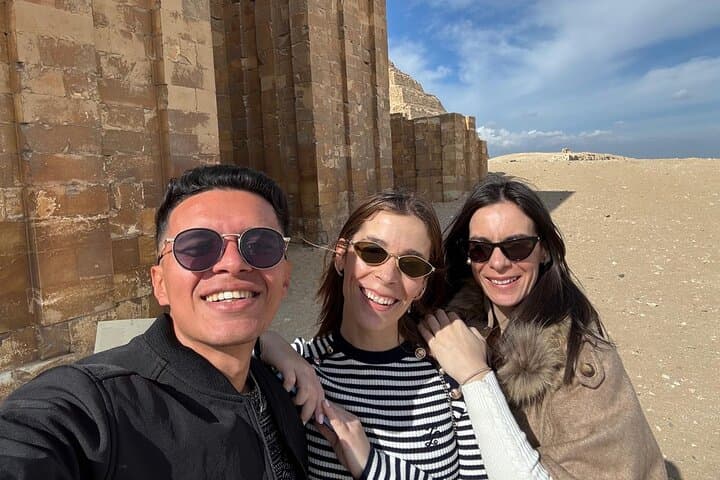
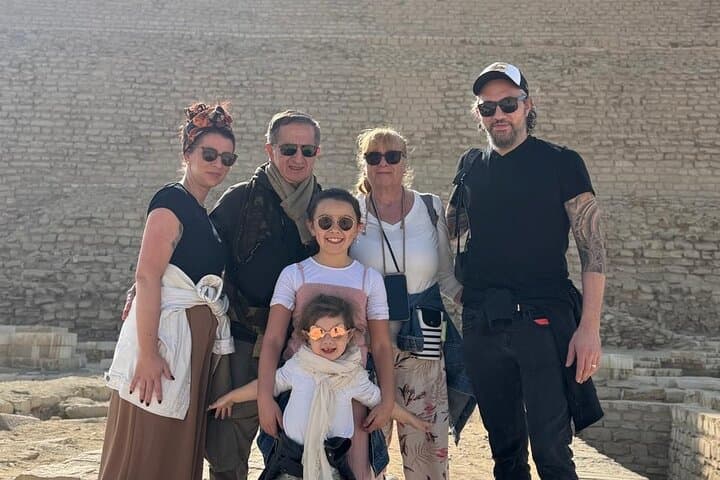
You leave Cairo’s bustle and drive onto an open plain where the past rises out of the dust. At Saqqara the Step Pyramid’s stacked profile cuts a clean line against the sky; you can feel the scale of an idea that changed funerary architecture forever. Later, at Dahshur the Bent Pyramid still wears the awkward angle of experimentation while the Red Pyramid shows the calm result of lessons learned. The landscape is not silent — wind pulls dust across low scrub, and the Nile, waiting at the day’s end, dares you to slow your pace.
Verified experiences and guided adventures in the surrounding area.
Operated by Egypt Gold · Cairo, Cairo Governorate
You leave Cairo’s bustle and drive onto an open plain where the past rises out of the dust. At Saqqara the Step Pyramid’s stacked profile cuts a clean line against the sky; you can feel the scale of an idea that changed funerary architecture forever. Later, at Dahshur the Bent Pyramid still wears the awkward angle of experimentation while the Red Pyramid shows the calm result of lessons learned. The landscape is not silent — wind pulls dust across low scrub, and the Nile, waiting at the day’s end, dares you to slow your pace.
These sites map a clear arc of early Old Kingdom ingenuity: Djoser’s complex at Saqqara, the funerary texts inside Unas’s burial chambers, the finely carved reliefs of the Mastaba of Ti, and Dahshur’s transitional architecture that led to the great pyramids at Giza. Geologically, the red limestone of Dahshur contrasts with the Tura casing that once clad many pyramids; local communities still farm and fish along the river, carrying on rhythms that have shaped the Nile valley for millennia.
Practical guidance: expect 6–8 hours total with hotel pickup in Cairo/Giza, several short walks on uneven stone and sand, and a relaxed one-hour felucca sail at sunset with light refreshments. Bring sun protection, comfortable walking shoes with good traction, and a refillable water bottle; temperature swings can be sharp between midday heat and river breezes. Many areas are accessible, but some tomb interiors have low passages and uneven steps. Book guided or private options to streamline entry and deepen historical context.
moderate.
6–8 hours.
Average fitness for several short walks, standing during explanations, and climbing a handful of stone steps.
The private tour runs about 6–8 hours with hotel pickup/drop-off, site visits at Saqqara and Dahshur, a one-hour felucca sail, and optional guide and entrance fees if selected.
Entry/admission is included only if you selected that option at booking; clarify with your operator before departure.
Many transfer vehicles and some surfaces are wheelchair accessible, but specific tomb interiors can be tight or stepped; notify the operator of accessibility needs in advance.
No — the felucca segment is for sightseeing and relaxation; swimming in the Nile is not recommended during this short sunset sail.
Saqqara was the necropolis for Memphis and contains Djoser’s Step Pyramid, the earliest large-scale stone construction; Dahshur records the development from stepped to smooth-sided pyramids.
These archaeological landscapes are vulnerable to erosion, urban encroachment, and tourism wear; stick to marked paths, avoid touching reliefs, and use refillable water to minimize plastic.
Egypt Gold operates guided outdoor trips and adventures with an emphasis on safety, stewardship, and memorable experiences.
You leave Cairo’s bustle and drive onto an open plain where the past rises out of the dust. At Saqqara the Step Pyramid’s stacked profile cuts a clean line against the sky; you can feel the scale of an idea that changed funerary architecture forever. Later, at Dahshur the Bent Pyramid still wears the awkward angle of experimentation while the Red Pyramid shows the calm result of lessons learned. The landscape is not silent — wind pulls dust across low scrub, and the Nile, waiting at the day’s end, dares you to slow your pace.
You leave Cairo’s bustle and drive onto an open plain where the past rises out of the dust. At Saqqara the Step Pyramid’s stacked profile cuts a clean line against the sky; you can feel the scale of an idea that changed funerary architecture forever. Later, at Dahshur the Bent Pyramid still wears the awkward angle of experimentation while the Red Pyramid shows the calm result of lessons learned. The landscape is not silent — wind pulls dust across low scrub, and the Nile, waiting at the day’s end, dares you to slow your pace.
These sites map a clear arc of early Old Kingdom ingenuity: Djoser’s complex at Saqqara, the funerary texts inside Unas’s burial chambers, the finely carved reliefs of the Mastaba of Ti, and Dahshur’s transitional architecture that led to the great pyramids at Giza. Geologically, the red limestone of Dahshur contrasts with the Tura casing that once clad many pyramids; local communities still farm and fish along the river, carrying on rhythms that have shaped the Nile valley for millennia.
Practical guidance: expect 6–8 hours total with hotel pickup in Cairo/Giza, several short walks on uneven stone and sand, and a relaxed one-hour felucca sail at sunset with light refreshments. Bring sun protection, comfortable walking shoes with good traction, and a refillable water bottle; temperature swings can be sharp between midday heat and river breezes. Many areas are accessible, but some tomb interiors have low passages and uneven steps. Book guided or private options to streamline entry and deepen historical context.