THE ADVENTURE COLLECTIVE® · Independent discovery and booking for outdoor travel

Walk where pharaohs planned eternity: this four-hour private tour pairs Saqqara’s Step Pyramid with the iconic Giza complex, including multiple viewpoints, a stop at the Sphinx, and optional camel or quad rides. Practical tips on timing, gear, and what to expect on the plateau.
Walk where pharaohs planned eternity: this four-hour private tour pairs Saqqara’s Step Pyramid with the iconic Giza complex, including multiple viewpoints, a stop at the Sphinx, and optional camel or quad rides. Practical tips on timing, gear, and what to expect on the plateau.
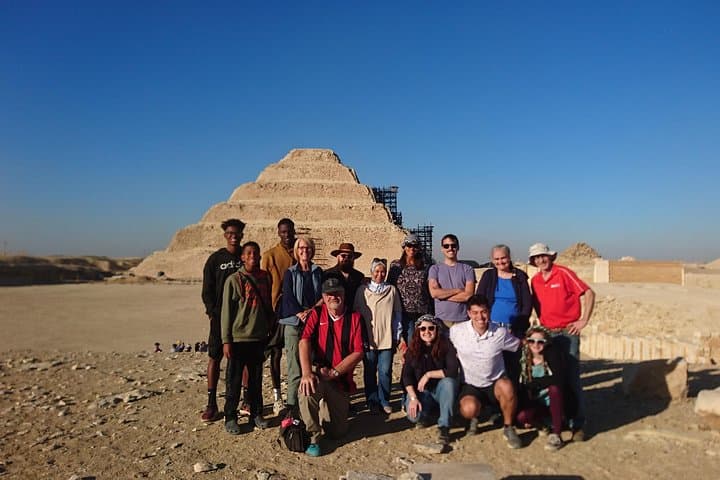
You step out of the air-conditioned car into a wide, pale world where wind and stone set the pace. Sand whispers across the plateau as the Step Pyramid of Djoser rises in deliberate, angular tiers—older than most civilizations—and a few kilometers west the great faces of Giza puncture the horizon. The air smells faintly of dust and diesel from the service roads, and the Sphinx watches traffic and tourists with equal indifference.
Verified experiences and guided adventures in the surrounding area.
Operated by nonaegypt · Giza, Giza Governorate
You step out of the air-conditioned car into a wide, pale world where wind and stone set the pace. Sand whispers across the plateau as the Step Pyramid of Djoser rises in deliberate, angular tiers—older than most civilizations—and a few kilometers west the great faces of Giza puncture the horizon. The air smells faintly of dust and diesel from the service roads, and the Sphinx watches traffic and tourists with equal indifference.
This route stitches together millennia: Saqqara’s stepped stone—designed by Imhotep around 2650 BCE—marks a crucial moment in Egyptian funerary architecture. The Giza plateau records the Old Kingdom’s engineering ambitions, with the Great Pyramid aligning closely to true north and built from local limestone and granite quarried upriver. Local culture shows in the carpet school at Saqqara, where craftsmen still practice weaving techniques passed down through generations. The nearby desert geology is simple—wind-scoured limestone and sand—yet that simplicity frames a complex human story.
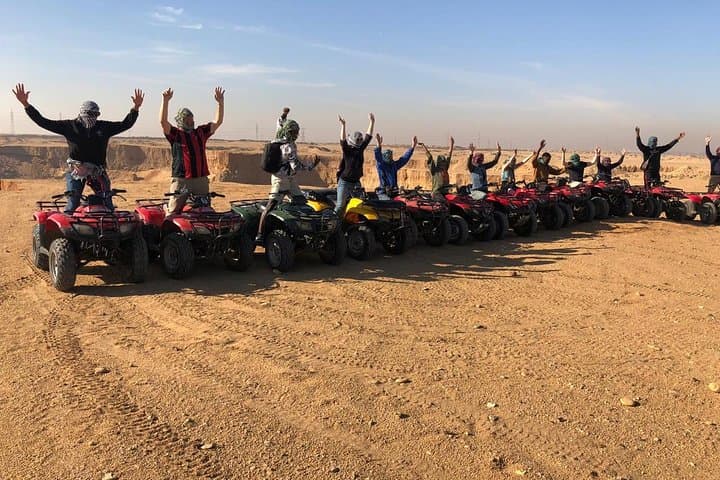
Practical guidance: the tour runs about four hours with private transport and hotel pickup in Cairo/Giza. Wear sturdy shoes for uneven limestone and sand, a hat and sunscreen; temperatures swing dramatically between shade and sun. Bring a passport copy for site entry; many stops allow external guides or audio. Optional extras like camel rides, quad-biking, or entering a small pyramid add time and cost. Expect short walks between viewpoints, photo stops, and crowded areas near the Sphinx.
Pacing your visit around morning or late-afternoon light improves photos and comfort. Carry water, move deliberately over uneven ground, and respect barriers—these are working archaeological landscapes as much as dramatic vistas.
easy.
4 hours.
Suitable for most fitness levels; involves short walks on uneven ground and some climbing of steps near viewing areas.
The itinerary runs about four hours including hotel pickup, multiple stops at Saqqara and Giza, and photo breaks.
This offering typically does not include archaeological site admission; check the booking details and bring cash or card for tickets.
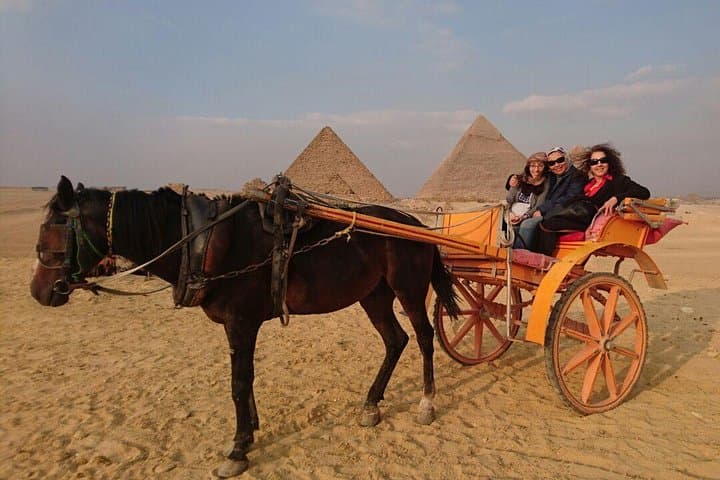
Camel/horse rides and entry into some small pyramids or tombs are optional extras available on-site or as add-ons—expect additional cost and brief queues.
Yes; the tour is rated easy. Infants must sit on laps during transit and caregivers should mind sun exposure and footing at sites.
Saqqara is home to Egypt’s oldest monumental stone building, Djoser’s Step Pyramid (c. 27th century BCE), while the Giza complex embodies Old Kingdom royal burial practices and precise astronomical alignment.
Visitor pressure and informal souvenir vendors challenge preservation; stick to marked paths, avoid touching masonry, and support local craftspeople responsibly.
nonaegypt operates guided outdoor trips and adventures with an emphasis on safety, stewardship, and memorable experiences.

You step out of the air-conditioned car into a wide, pale world where wind and stone set the pace. Sand whispers across the plateau as the Step Pyramid of Djoser rises in deliberate, angular tiers—older than most civilizations—and a few kilometers west the great faces of Giza puncture the horizon. The air smells faintly of dust and diesel from the service roads, and the Sphinx watches traffic and tourists with equal indifference.
You step out of the air-conditioned car into a wide, pale world where wind and stone set the pace. Sand whispers across the plateau as the Step Pyramid of Djoser rises in deliberate, angular tiers—older than most civilizations—and a few kilometers west the great faces of Giza puncture the horizon. The air smells faintly of dust and diesel from the service roads, and the Sphinx watches traffic and tourists with equal indifference.
This route stitches together millennia: Saqqara’s stepped stone—designed by Imhotep around 2650 BCE—marks a crucial moment in Egyptian funerary architecture. The Giza plateau records the Old Kingdom’s engineering ambitions, with the Great Pyramid aligning closely to true north and built from local limestone and granite quarried upriver. Local culture shows in the carpet school at Saqqara, where craftsmen still practice weaving techniques passed down through generations. The nearby desert geology is simple—wind-scoured limestone and sand—yet that simplicity frames a complex human story.
Practical guidance: the tour runs about four hours with private transport and hotel pickup in Cairo/Giza. Wear sturdy shoes for uneven limestone and sand, a hat and sunscreen; temperatures swing dramatically between shade and sun. Bring a passport copy for site entry; many stops allow external guides or audio. Optional extras like camel rides, quad-biking, or entering a small pyramid add time and cost. Expect short walks between viewpoints, photo stops, and crowded areas near the Sphinx.
Pacing your visit around morning or late-afternoon light improves photos and comfort. Carry water, move deliberately over uneven ground, and respect barriers—these are working archaeological landscapes as much as dramatic vistas.