THE ADVENTURE COLLECTIVE® · Independent discovery and booking for outdoor travel

Walk Susukino’s neon alleys with a local guide to taste home-style Obanzai, a nostalgic tempura counter, and a chosen finish—parfait, sake, craft beer or an izakaya. This four-hour evening tour pairs street-level history with practical tips for first-time visitors.
Walk Susukino’s neon alleys with a local guide to taste home-style Obanzai, a nostalgic tempura counter, and a chosen finish—parfait, sake, craft beer or an izakaya. This four-hour evening tour pairs street-level history with practical tips for first-time visitors.
The neon of Susukino cuts through the cold air and the street hums with shared laughter; you duck into a narrow doorway and the evening changes scale. Your guide leads you past the famous Nikka sign and down an alley where steam rises from a 60-year-old tempura counter. Each stop is compact, intimate and anchored to nightly rituals: a kanpai toast, the whisper of a chef battering shrimp, the bright clink of parfait spoons.
Verified experiences and guided adventures in the surrounding area.
Operated by Hokkaido Treasure Island Travel Inc. · Sapporo, Hokkaido
The neon of Susukino cuts through the cold air and the street hums with shared laughter; you duck into a narrow doorway and the evening changes scale. Your guide leads you past the famous Nikka sign and down an alley where steam rises from a 60-year-old tempura counter. Each stop is compact, intimate and anchored to nightly rituals: a kanpai toast, the whisper of a chef battering shrimp, the bright clink of parfait spoons.
Susukino grew with Sapporo’s modern era as an entertainment district in the late 19th and early 20th centuries, shaped by post-war revival and Hokkaido’s embrace of hearty, local produce. The area’s low-rise architecture and grid of shopping arcades like Tanukikoji reflect practical urban planning rather than tourist spectacle, and many of the best yakitori and izakaya remain deliberately small.
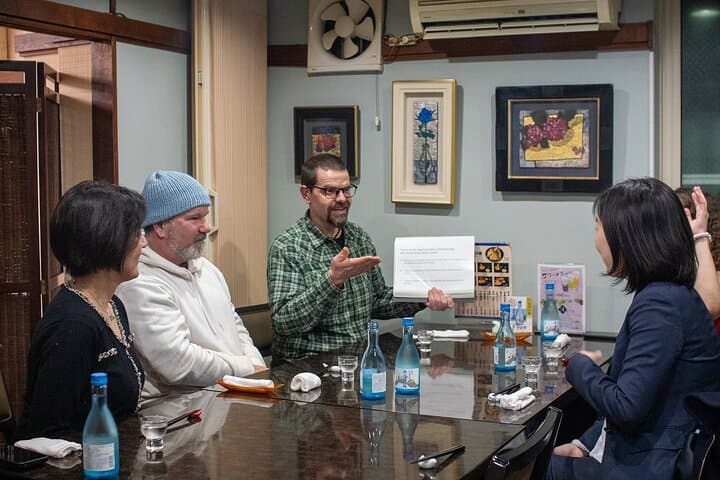
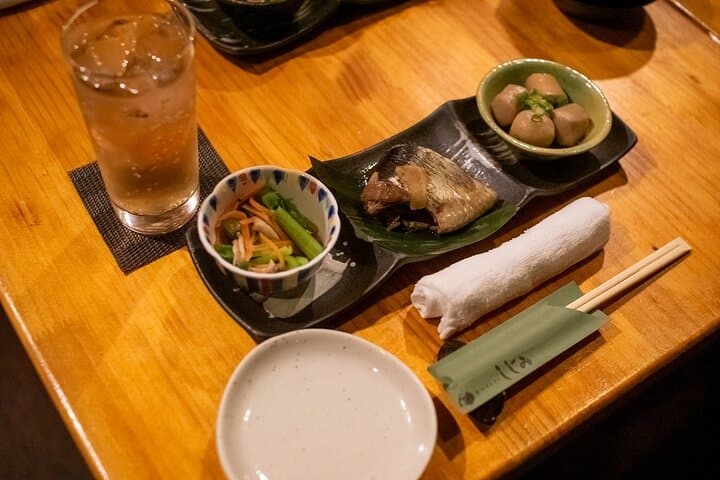
Expect a sensory crawl—umami-forward Obanzai plates, flash-fried tempura served at the bar, then a choice to finish with a shime parfait, quiet sake den, craft-beer stop, or bustling workers’ izakaya. The walking is short but standing space inside restaurants can be tight; the guide handles seating and local ordering.
Practicalities: bring cash and an IC card for transit, wear comfortable shoes for uneven sidewalks, and let your guide know dietary restrictions in advance. Toast slowly—kanpai is as much about company as it is about the drink—and save room for a late dessert: Sapporo’s parfait culture is surprisingly serious.
easy.
3–4 hours.
Suitable for most travelers who can stand and walk short distances over a few hours; no special fitness required
The tour visits three venues over approximately four hours, including time to walk between stops and linger at each location.
Yes—notify the operator when booking and again to your guide at meet-up so they can arrange alternatives where possible.
Tipping is not customary; excellent service is appreciated with polite thanks and business is typically paid as listed.
Meet-up is at Cocono Susukino; the tour ends at the final restaurant so you can continue exploring independently.
Susukino developed as Sapporo’s entertainment quarter from the late 19th century and expanded after WWII into a dense grid of eateries and nightlife.
Support local sustainability by avoiding single-use plastics where possible and patronizing long-standing family-run restaurants that practice low-waste prep.
Hokkaido Treasure Island Travel Inc. operates guided outdoor trips and adventures with an emphasis on safety, stewardship, and memorable experiences.
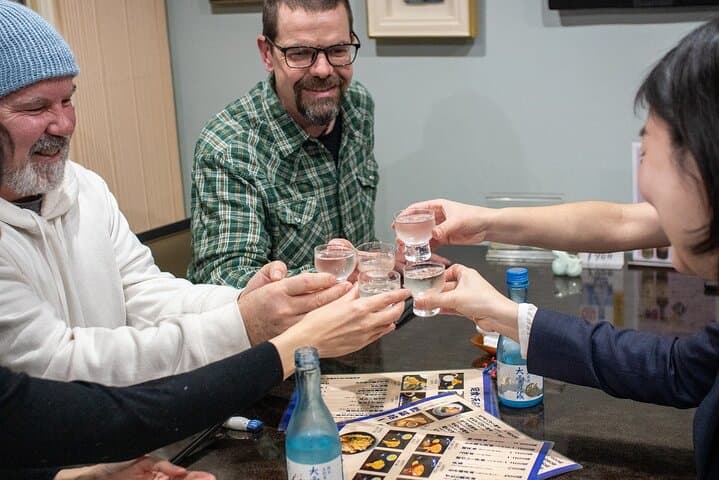
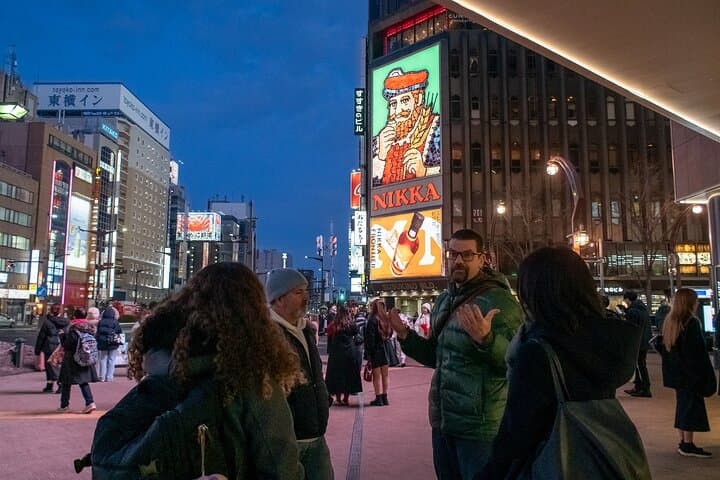
The neon of Susukino cuts through the cold air and the street hums with shared laughter; you duck into a narrow doorway and the evening changes scale. Your guide leads you past the famous Nikka sign and down an alley where steam rises from a 60-year-old tempura counter. Each stop is compact, intimate and anchored to nightly rituals: a kanpai toast, the whisper of a chef battering shrimp, the bright clink of parfait spoons.
The neon of Susukino cuts through the cold air and the street hums with shared laughter; you duck into a narrow doorway and the evening changes scale. Your guide leads you past the famous Nikka sign and down an alley where steam rises from a 60-year-old tempura counter. Each stop is compact, intimate and anchored to nightly rituals: a kanpai toast, the whisper of a chef battering shrimp, the bright clink of parfait spoons.
Susukino grew with Sapporo’s modern era as an entertainment district in the late 19th and early 20th centuries, shaped by post-war revival and Hokkaido’s embrace of hearty, local produce. The area’s low-rise architecture and grid of shopping arcades like Tanukikoji reflect practical urban planning rather than tourist spectacle, and many of the best yakitori and izakaya remain deliberately small.
Expect a sensory crawl—umami-forward Obanzai plates, flash-fried tempura served at the bar, then a choice to finish with a shime parfait, quiet sake den, craft-beer stop, or bustling workers’ izakaya. The walking is short but standing space inside restaurants can be tight; the guide handles seating and local ordering.
Practicalities: bring cash and an IC card for transit, wear comfortable shoes for uneven sidewalks, and let your guide know dietary restrictions in advance. Toast slowly—kanpai is as much about company as it is about the drink—and save room for a late dessert: Sapporo’s parfait culture is surprisingly serious.