THE ADVENTURE COLLECTIVE® · Independent discovery and booking for outdoor travel

Experience Sapporo as it lights up: a private evening walk from JR Sapporo Station to Mount Moiwa and Susukino, blending illuminated viewpoints with local late-night eats. Practical route choices and a local guide make this 4–5 hour tour ideal for first-time visitors wanting curated night scenes and authentic food stops.
Experience Sapporo as it lights up: a private evening walk from JR Sapporo Station to Mount Moiwa and Susukino, blending illuminated viewpoints with local late-night eats. Practical route choices and a local guide make this 4–5 hour tour ideal for first-time visitors wanting curated night scenes and authentic food stops.
A cold breeze off Ishikari Bay threads between neon, carrying the salt-and-soy tang of late-night ramen. You start at Sapporo Station as the city switches from day to electric night: streetlights sharpen, storefronts hum, and Mount Moiwa watches over the scene like a steady lantern on the skyline.
Verified experiences and guided adventures in the surrounding area.
Operated by OTOMO Travel Guide · Sapporo, Hokkaido
A cold breeze off Ishikari Bay threads between neon, carrying the salt-and-soy tang of late-night ramen. You start at Sapporo Station as the city switches from day to electric night: streetlights sharpen, storefronts hum, and Mount Moiwa watches over the scene like a steady lantern on the skyline.
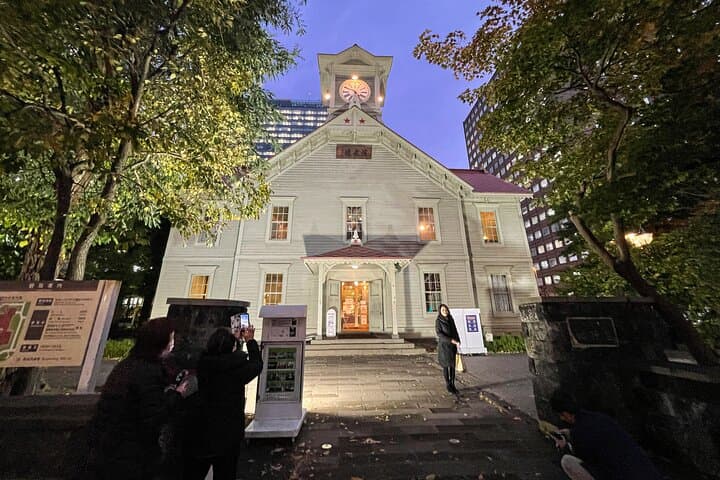
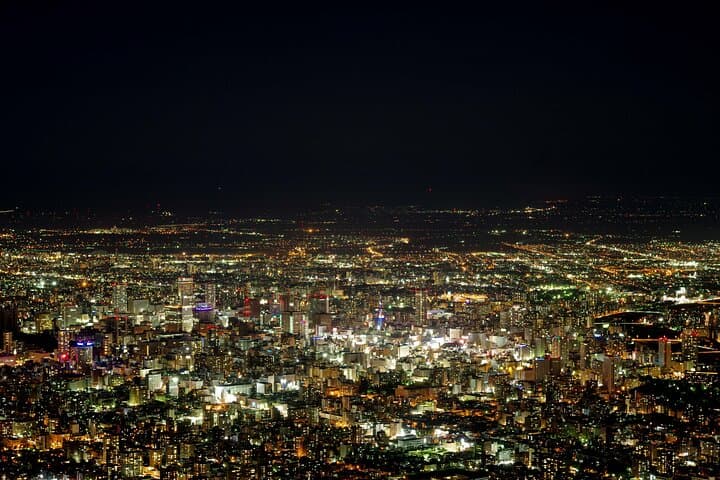
The route moves through Odori Park’s long spine where fountains and seasonal plantings give way to the lights of Sapporo TV Tower. The history here is practical — a Meiji-era grid planned to make winter travel easier — and the city’s relationship with illumination goes back to early twentieth-century light displays that made Sapporo famous for night viewing. Mount Moiwa, once a lookout used by the Ainu, now rewards visitors via ropeway with a 360-degree sweep: a sea of lights that seems to push the horizon outward.
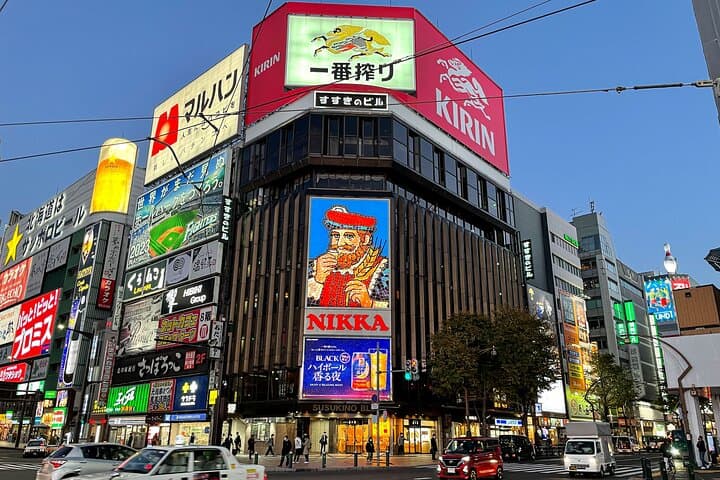
Culturally, the tour pairs architecture with appetite. Susukino’s neon dares you to eat: yakitori alleys, late-night izakaya, and the shime-parfait trend offer different rhythms of flavor. Tanuki‑koji arcade and small backstreets reveal local vendors and retro signs — moments that are as much about people-watching as they are about tasting.
Practically: expect 4–5 hours of mostly flat walking on city pavement, brief ropeway rides, and multiple short stops for food. Wear grippy shoes, carry local currency for small vendors, and time your visit to avoid the busiest weekend windows. A private guide will pace the night, point out historical notes, and steer you toward the best bites — leaving you with clear views and a full stomach.
easy.
4–5 hours.
Suitable for most fitness levels; requires steady mobility for several hours of urban walking.
The tour runs about 4–5 hours; start times vary but are scheduled to coincide with twilight and evening lighting for optimal views.
The guide arranges a ropeway/minicable ride to Mount Moiwa’s observation area; ropeway fees are typically paid by the guest unless stated otherwise in the booking.
Yes — because this is a private tour your guide can select stops that suit allergies or vegetarian preferences if you notify them in advance.
Much of the tour is on flat, paved streets and shopping arcades are accessible, but Mount Moiwa’s ropeway and some small alleyways may present access limitations; check with the operator for specifics.
Sapporo’s grid layout dates to the Meiji period when planners prioritized winter travel and public illumination; Mount Moiwa was used historically as an Ainu lookout point.
Nighttime tourism increases light pollution and waste; support small businesses, carry out trash, and favor low-waste dining options to lessen impact.
OTOMO Travel Guide operates guided outdoor trips and adventures with an emphasis on safety, stewardship, and memorable experiences.
A cold breeze off Ishikari Bay threads between neon, carrying the salt-and-soy tang of late-night ramen. You start at Sapporo Station as the city switches from day to electric night: streetlights sharpen, storefronts hum, and Mount Moiwa watches over the scene like a steady lantern on the skyline.
A cold breeze off Ishikari Bay threads between neon, carrying the salt-and-soy tang of late-night ramen. You start at Sapporo Station as the city switches from day to electric night: streetlights sharpen, storefronts hum, and Mount Moiwa watches over the scene like a steady lantern on the skyline.
The route moves through Odori Park’s long spine where fountains and seasonal plantings give way to the lights of Sapporo TV Tower. The history here is practical — a Meiji-era grid planned to make winter travel easier — and the city’s relationship with illumination goes back to early twentieth-century light displays that made Sapporo famous for night viewing. Mount Moiwa, once a lookout used by the Ainu, now rewards visitors via ropeway with a 360-degree sweep: a sea of lights that seems to push the horizon outward.
Culturally, the tour pairs architecture with appetite. Susukino’s neon dares you to eat: yakitori alleys, late-night izakaya, and the shime-parfait trend offer different rhythms of flavor. Tanuki‑koji arcade and small backstreets reveal local vendors and retro signs — moments that are as much about people-watching as they are about tasting.
Practically: expect 4–5 hours of mostly flat walking on city pavement, brief ropeway rides, and multiple short stops for food. Wear grippy shoes, carry local currency for small vendors, and time your visit to avoid the busiest weekend windows. A private guide will pace the night, point out historical notes, and steer you toward the best bites — leaving you with clear views and a full stomach.