THE ADVENTURE COLLECTIVE® · Independent discovery and booking for outdoor travel

Walk Sapporo’s central arteries with a local guide: historic Clock Tower, the Red Brick Office, Kitakaro sweets and an included ascent of Sapporo TV Tower. This compact two-hour morning tour blends city history, regional treats and practical local insights for first-time visitors.
Walk Sapporo’s central arteries with a local guide: historic Clock Tower, the Red Brick Office, Kitakaro sweets and an included ascent of Sapporo TV Tower. This compact two-hour morning tour blends city history, regional treats and practical local insights for first-time visitors.
The city yawns awake around Sapporo Station: tram bells blink, shop shutters lift and the TV Tower cuts a clean line into a pale sky. Beginning at the JR Sapporo Station South Exit inside “Myomu,” the two-hour route threads wide boulevards and compact alleyways, bringing you face-to-face with a working city that wears its history plainly—brick, timber and modern glass.
Verified experiences and guided adventures in the surrounding area.
Operated by H.I.S.Co., Ltd. · Sapporo, Hokkaido
The city yawns awake around Sapporo Station: tram bells blink, shop shutters lift and the TV Tower cuts a clean line into a pale sky. Beginning at the JR Sapporo Station South Exit inside “Myomu,” the two-hour route threads wide boulevards and compact alleyways, bringing you face-to-face with a working city that wears its history plainly—brick, timber and modern glass.
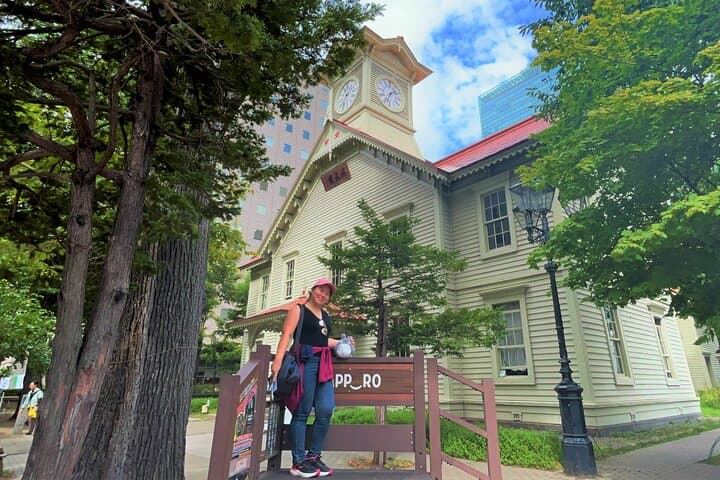
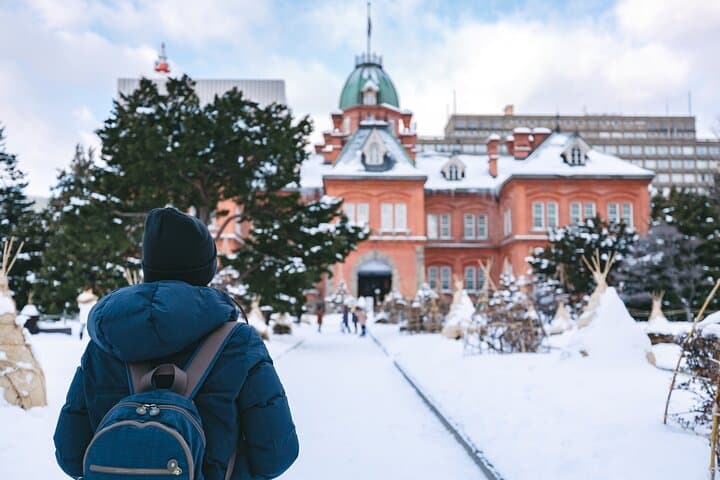
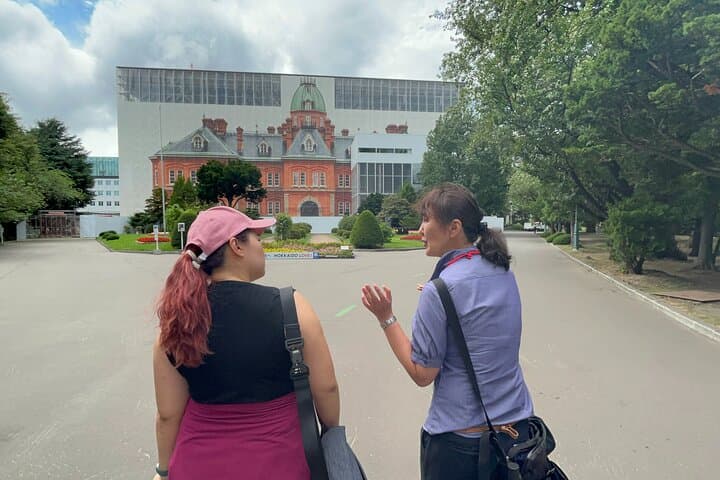
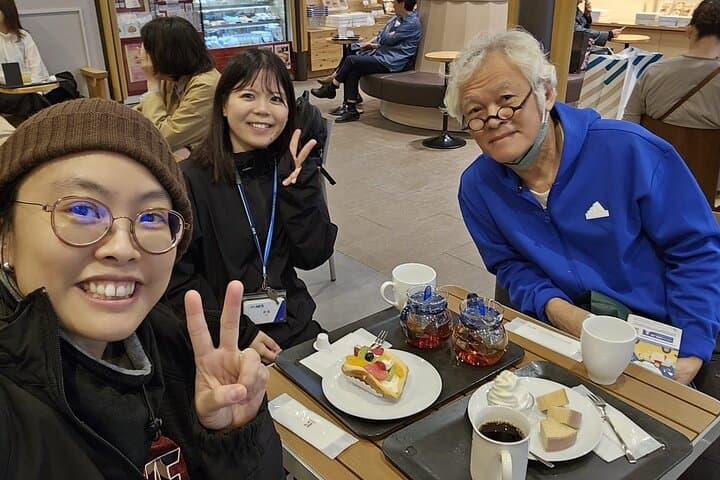
You’ll pass the Red Brick Office, a Meiji-era administrative holdover, then taste Hokkaido dairy in the Kitakaro sweets shop before standing beneath the Clock Tower’s wooden façade—a former drill hall dating to the 1870s—whose rhythm still marks Sapporo’s regimented grid. Geologically the city sits on the flat Ishikari Plain, shaped by coastal rivers and volcanic activity in Hokkaido’s broader landscape; the urban plains make for easy walking and wide sightlines from the TV Tower observation deck (entrance included).
Culturally, this is a place of workaday rituals: salarymen spilling onto sidewalks, shopkeepers polishing glass, and small sweets shops preserving regional dairy traditions. Local guides explain the city’s Meiji-era planning and how winter’s snow changes circulation—often pushing foot traffic underground.
Practical notes: the tour covers roughly 2–3 km on mostly flat pavement with multiple short stops; comfortable shoes and a light rain jacket are recommended. The meeting point is inside JR Sapporo Station; public transit options abound if you arrive early. In winter expect narrower sidewalks and possible routing through the Chikaho underground arcades; in summer, plan for humidity and sunscreen. Snacks, English-speaking staff, and the TV Tower admission are included—pack a charged phone for photos and quick transit between sites.
easy.
2 hours.
Suitable for all fitness levels; expect frequent short stops but continuous walking across city pavement.
Meet inside JR Sapporo Station at the South Exit in the space called “Myomu”; guides recommend arriving 10–15 minutes early.
Yes—entrance to the TV Tower observation deck is included in the tour price and lasts as part of the itinerary.
The route is mostly flat but includes city sidewalks and occasional stairs; the tour is labeled physically easy, but participants with significant mobility limitations should contact the operator ahead of time.
Tours operate in light rain but will be cancelled in severe weather; in heavy snow the guide may route portions through the Chikaho underground walkways for safety.
Sapporo’s modern grid was laid out during the Meiji era (late 1800s) as part of Hokkaido’s development; the Clock Tower began as a drill hall for the Sapporo Agricultural College in 1878.
Sapporo emphasizes street cleanliness and waste separation; visitors should carry out any trash and be mindful that public trash bins are limited, especially in winter when snow management affects roadside receptacles.
H.I.S.Co., Ltd. operates guided outdoor trips and adventures with an emphasis on safety, stewardship, and memorable experiences.
The city yawns awake around Sapporo Station: tram bells blink, shop shutters lift and the TV Tower cuts a clean line into a pale sky. Beginning at the JR Sapporo Station South Exit inside “Myomu,” the two-hour route threads wide boulevards and compact alleyways, bringing you face-to-face with a working city that wears its history plainly—brick, timber and modern glass.
The city yawns awake around Sapporo Station: tram bells blink, shop shutters lift and the TV Tower cuts a clean line into a pale sky. Beginning at the JR Sapporo Station South Exit inside “Myomu,” the two-hour route threads wide boulevards and compact alleyways, bringing you face-to-face with a working city that wears its history plainly—brick, timber and modern glass.
You’ll pass the Red Brick Office, a Meiji-era administrative holdover, then taste Hokkaido dairy in the Kitakaro sweets shop before standing beneath the Clock Tower’s wooden façade—a former drill hall dating to the 1870s—whose rhythm still marks Sapporo’s regimented grid. Geologically the city sits on the flat Ishikari Plain, shaped by coastal rivers and volcanic activity in Hokkaido’s broader landscape; the urban plains make for easy walking and wide sightlines from the TV Tower observation deck (entrance included).
Culturally, this is a place of workaday rituals: salarymen spilling onto sidewalks, shopkeepers polishing glass, and small sweets shops preserving regional dairy traditions. Local guides explain the city’s Meiji-era planning and how winter’s snow changes circulation—often pushing foot traffic underground.
Practical notes: the tour covers roughly 2–3 km on mostly flat pavement with multiple short stops; comfortable shoes and a light rain jacket are recommended. The meeting point is inside JR Sapporo Station; public transit options abound if you arrive early. In winter expect narrower sidewalks and possible routing through the Chikaho underground arcades; in summer, plan for humidity and sunscreen. Snacks, English-speaking staff, and the TV Tower admission are included—pack a charged phone for photos and quick transit between sites.