THE ADVENTURE COLLECTIVE® · Independent discovery and booking for outdoor travel

A half-day to full-day outing that pairs a forested ascent of Mt. Maruyama with a visit to the Okurayama Ski Jump and Olympic museum. Ideal for travelers who want an accessible outdoor escape and panoramic views over Sapporo.
A half-day to full-day outing that pairs a forested ascent of Mt. Maruyama with a visit to the Okurayama Ski Jump and Olympic museum. Ideal for travelers who want an accessible outdoor escape and panoramic views over Sapporo.
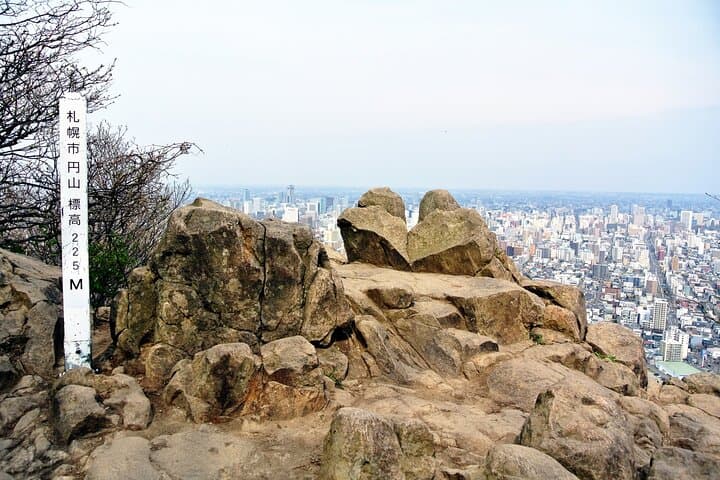
You step out of Sapporo Station into the cool city morning, meet your English-speaking guide by the round stone ‘Myomu’ and, within minutes, the city's edge gives way to cedar shade and the first incline of Mt. Maruyama. The trail climbs steadily—short switchbacks through mixed forest—opening onto terrace-like viewpoints where Sapporo's roofs and the distant Ishikari Plain tuck beneath the skyline.
Verified experiences and guided adventures in the surrounding area.
Operated by Snow Monkey Resorts Tours (Machinovate Japan Ltd.) · Sapporo, Hokkaido
You step out of Sapporo Station into the cool city morning, meet your English-speaking guide by the round stone ‘Myomu’ and, within minutes, the city's edge gives way to cedar shade and the first incline of Mt. Maruyama. The trail climbs steadily—short switchbacks through mixed forest—opening onto terrace-like viewpoints where Sapporo's roofs and the distant Ishikari Plain tuck beneath the skyline.
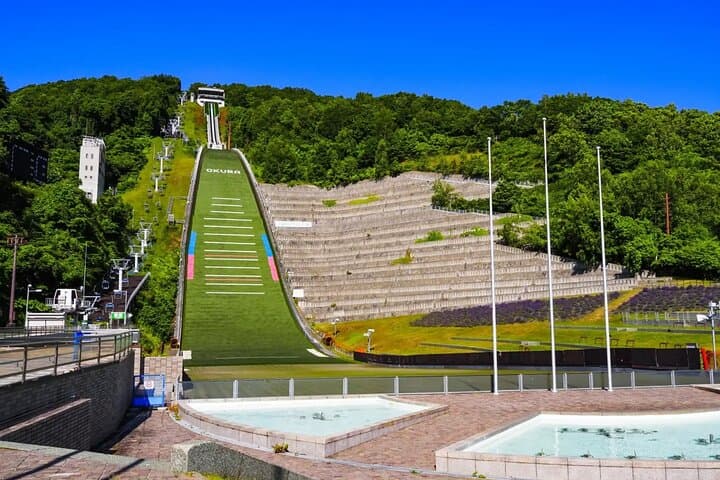
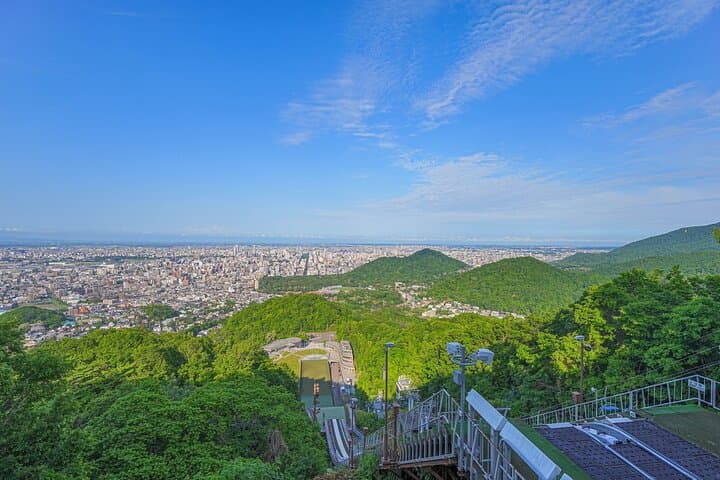
Mt. Maruyama's slopes have been walking routes for locals since the Meiji era and sit beside Hokkaido Shrine, a cultural anchor founded in 1869. Geologically the hill is part of the volcano-tectonic landscape of central Hokkaido; soil is volcanic and well drained, lending to cedar and birch stands and a scattering of volcanic stones along the path. After summit photos and a relaxed descent, the tour shifts to the modern drama of Okurayama: the 1972 Olympic ski jump. The museum and chairlift to the observation deck explain the site's winter sporting legacy while offering panoramic views over Sapporo.
Practical guidance: expect 225 meters (740 ft) of ascent on well-maintained trails, steady but not technical hiking, and roughly 6–10 hours door-to-door depending on timing and lunch. Wear grippy shoes for forest roots and occasional muddy patches, bring water and rain protection, and plan for varying temperatures between city and exposed observation deck. Public transport and included transfers simplify logistics—arrive comfortable and ready to walk. This one-day blend of urban access, approachable hiking, and Olympic-era spectacle makes for a compact Sapporo outing that balances scenery, history, and easy navigation.
moderate.
6–10 hours.
Suitable for travelers with basic fitness able to hike a few kilometers, handle stairs and short uphill sections.
The ascent is about 225 meters (740 ft) over a comfortable trail—steady but non-technical and appropriate for most walkers.
Yes, the tour includes transportation from Sapporo Station to listed destinations, plus admissions noted in the itinerary.
The chairlift and some viewing areas have steps; accessibility varies—contact the tour operator or site in advance for current accommodations.
There is time for lunch after the Maruyama descent; bring cash or a packed lunch as nearby options include casual cafes and convenience stores.
Mt. Maruyama sits beside Hokkaido Shrine, established in 1869; Okurayama gained international recognition hosting ski jumping in the 1972 Sapporo Winter Olympics.
Stay on marked trails to protect understory and prevent erosion; avoid feeding wildlife and carry out waste to preserve urban-adjacent habitat.
Snow Monkey Resorts Tours (Machinovate Japan Ltd.) operates guided outdoor trips and adventures with an emphasis on safety, stewardship, and memorable experiences.

You step out of Sapporo Station into the cool city morning, meet your English-speaking guide by the round stone ‘Myomu’ and, within minutes, the city's edge gives way to cedar shade and the first incline of Mt. Maruyama. The trail climbs steadily—short switchbacks through mixed forest—opening onto terrace-like viewpoints where Sapporo's roofs and the distant Ishikari Plain tuck beneath the skyline.
You step out of Sapporo Station into the cool city morning, meet your English-speaking guide by the round stone ‘Myomu’ and, within minutes, the city's edge gives way to cedar shade and the first incline of Mt. Maruyama. The trail climbs steadily—short switchbacks through mixed forest—opening onto terrace-like viewpoints where Sapporo's roofs and the distant Ishikari Plain tuck beneath the skyline.
Mt. Maruyama's slopes have been walking routes for locals since the Meiji era and sit beside Hokkaido Shrine, a cultural anchor founded in 1869. Geologically the hill is part of the volcano-tectonic landscape of central Hokkaido; soil is volcanic and well drained, lending to cedar and birch stands and a scattering of volcanic stones along the path. After summit photos and a relaxed descent, the tour shifts to the modern drama of Okurayama: the 1972 Olympic ski jump. The museum and chairlift to the observation deck explain the site's winter sporting legacy while offering panoramic views over Sapporo.
Practical guidance: expect 225 meters (740 ft) of ascent on well-maintained trails, steady but not technical hiking, and roughly 6–10 hours door-to-door depending on timing and lunch. Wear grippy shoes for forest roots and occasional muddy patches, bring water and rain protection, and plan for varying temperatures between city and exposed observation deck. Public transport and included transfers simplify logistics—arrive comfortable and ready to walk. This one-day blend of urban access, approachable hiking, and Olympic-era spectacle makes for a compact Sapporo outing that balances scenery, history, and easy navigation.