THE ADVENTURE COLLECTIVE® · Independent discovery and booking for outdoor travel

Experience Sapporo’s winter glow on a private two-hour walk from Odori Park through a European-style Christmas market to the White Illumination at Kita 3-jo Plaza. Learn local holiday customs, see landmark illuminations, and enjoy a warm seasonal drink while exploring accessible, easy terrain.
Experience Sapporo’s winter glow on a private two-hour walk from Odori Park through a European-style Christmas market to the White Illumination at Kita 3-jo Plaza. Learn local holiday customs, see landmark illuminations, and enjoy a warm seasonal drink while exploring accessible, easy terrain.
The hush of evening in Odori Park opens like a page: strings of bulbs stitch trees into lanes, steam rises from cups of heated cider, and the chatter around wooden stalls feels both intimate and continental. You step from the glow of the German-style market toward the taller silhouette of the Sapporo TV Tower, its lights cutting a clean line against the winter sky, and the city’s historic clock tower punctuates the walk with a softer, amber pulse.
Verified experiences and guided adventures in the surrounding area.
Operated by Opatrip.com Japan · Sapporo, Hokkaido
The hush of evening in Odori Park opens like a page: strings of bulbs stitch trees into lanes, steam rises from cups of heated cider, and the chatter around wooden stalls feels both intimate and continental. You step from the glow of the German-style market toward the taller silhouette of the Sapporo TV Tower, its lights cutting a clean line against the winter sky, and the city’s historic clock tower punctuates the walk with a softer, amber pulse.
Sapporo’s grid and parks date to the Meiji-era development of Hokkaido; Odori Park originally served as a central promenade and firebreak, now transformed each winter into a social hearth. The nearby plazas and stone façades show the area’s layered past—early city planning over volcanic plain soils that give the streets a flat, walkable ease.
Culturally, this is where local holiday traditions intersect with imported festive forms: German-style stalls sell crafted ornaments while Sapporo’s White Illumination ties Japanese minimalism to bright, extended light displays. Guides typically weave stories about seasonal food, winter festivals, and how illumination traditions changed after the city’s postwar growth.
Practical notes: tours are short (about two hours) and centered on easy walking across paved surfaces—snow and icy patches are common, so traction-friendly shoes are essential. Expect to sample one warm drink included; other treats are pay-as-you-go. Photography is excellent just after dusk when contrasts sharpen, but crowds peak early evening on weekends and holidays. The route is wheelchair- and stroller-accessible in most sections, though occasionally narrow at market stalls.
Timing your visit on a weekday or just after dusk will give you the most atmospheric light with fewer elbows at the stalls.
easy.
2 hours.
Light walking fitness; accessible to most travelers able to walk on paved surfaces for up to two hours
The tour runs about two hours and covers roughly 1.5–2 kilometers on mostly flat, paved paths between Odori Park, TV Tower, Clock Tower, and Kita 3-jo Plaza.
Yes—this private walking tour is stroller- and wheelchair-accessible in most sections, though narrow market lanes can be crowded at peak times.
A warm holiday drink is included; other food and crafts at market stalls are available for purchase separately.
Tours operate in light snow and cold; for extreme weather the operator may reschedule or advise cancellation—check the booking policy for 24-hour cancellation terms.
Odori Park was laid out during Sapporo’s Meiji-era planning as a central promenade and firebreak; its winter illuminations have evolved into a major seasonal draw.
Stick to paved paths and avoid littering; light festivals can increase energy use—choose local vendors and minimize single-use plastics when sampling market foods.
Opatrip.com Japan operates guided outdoor trips and adventures with an emphasis on safety, stewardship, and memorable experiences.

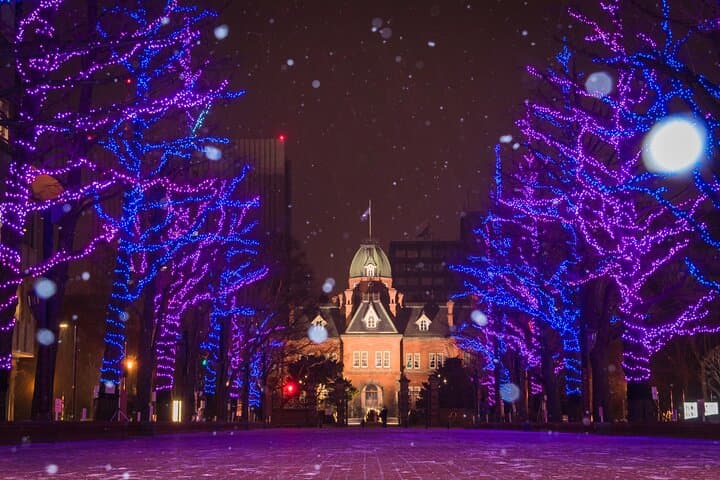
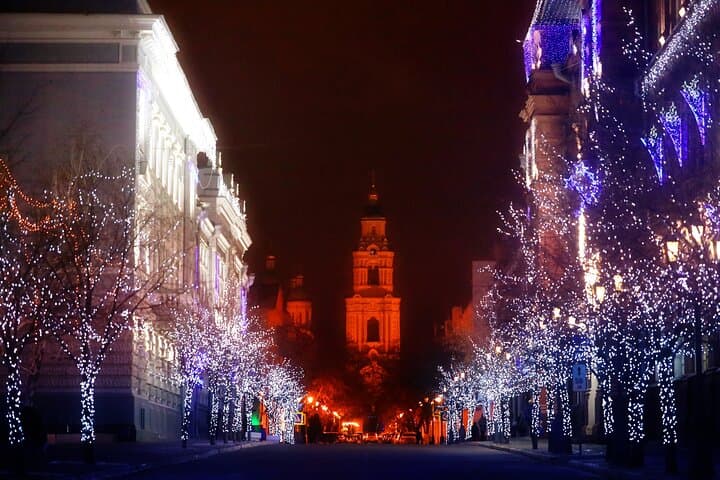
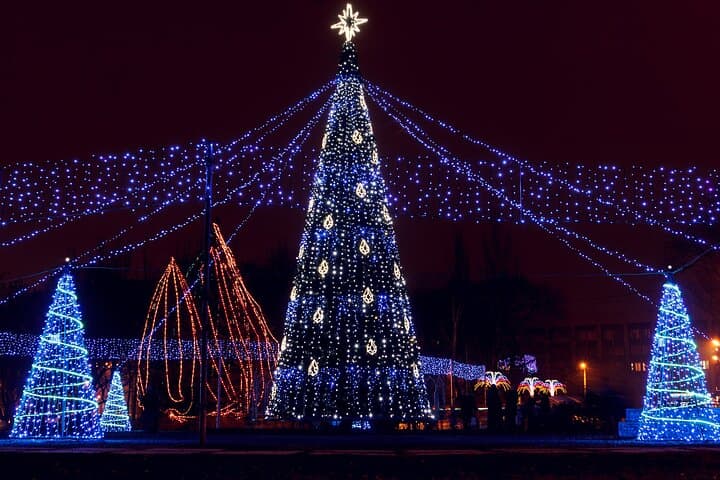
The hush of evening in Odori Park opens like a page: strings of bulbs stitch trees into lanes, steam rises from cups of heated cider, and the chatter around wooden stalls feels both intimate and continental. You step from the glow of the German-style market toward the taller silhouette of the Sapporo TV Tower, its lights cutting a clean line against the winter sky, and the city’s historic clock tower punctuates the walk with a softer, amber pulse.
The hush of evening in Odori Park opens like a page: strings of bulbs stitch trees into lanes, steam rises from cups of heated cider, and the chatter around wooden stalls feels both intimate and continental. You step from the glow of the German-style market toward the taller silhouette of the Sapporo TV Tower, its lights cutting a clean line against the winter sky, and the city’s historic clock tower punctuates the walk with a softer, amber pulse.
Sapporo’s grid and parks date to the Meiji-era development of Hokkaido; Odori Park originally served as a central promenade and firebreak, now transformed each winter into a social hearth. The nearby plazas and stone façades show the area’s layered past—early city planning over volcanic plain soils that give the streets a flat, walkable ease.
Culturally, this is where local holiday traditions intersect with imported festive forms: German-style stalls sell crafted ornaments while Sapporo’s White Illumination ties Japanese minimalism to bright, extended light displays. Guides typically weave stories about seasonal food, winter festivals, and how illumination traditions changed after the city’s postwar growth.
Practical notes: tours are short (about two hours) and centered on easy walking across paved surfaces—snow and icy patches are common, so traction-friendly shoes are essential. Expect to sample one warm drink included; other treats are pay-as-you-go. Photography is excellent just after dusk when contrasts sharpen, but crowds peak early evening on weekends and holidays. The route is wheelchair- and stroller-accessible in most sections, though occasionally narrow at market stalls.
Timing your visit on a weekday or just after dusk will give you the most atmospheric light with fewer elbows at the stalls.