THE ADVENTURE COLLECTIVE® · Independent discovery and booking for outdoor travel

Two days of highland trekking from Hanoi delivers rice-terrace panoramas, village hospitality and a short but rewarding set of hikes around Sapa. This itinerary uses cabin-bus transfers and a hotel stay to maximize hiking time and minimize fuss.
Two days of highland trekking from Hanoi delivers rice-terrace panoramas, village hospitality and a short but rewarding set of hikes around Sapa. This itinerary uses cabin-bus transfers and a hotel stay to maximize hiking time and minimize fuss.
The cabin bus eases out of Hanoi before dawn and, hours later, the mountains of northern Vietnam loom through a low mist—green steps carved into the slopes and women in embroidered jackets moving like brushstrokes across the terraces. Arrival in Sapa feels like stepping into a highland village where streams drive the fields and the air cools with altitude.
Verified experiences and guided adventures in the surrounding area.
Operated by Local Tours SAPA · Sapa, Lao Cai
The cabin bus eases out of Hanoi before dawn and, hours later, the mountains of northern Vietnam loom through a low mist—green steps carved into the slopes and women in embroidered jackets moving like brushstrokes across the terraces. Arrival in Sapa feels like stepping into a highland village where streams drive the fields and the air cools with altitude.
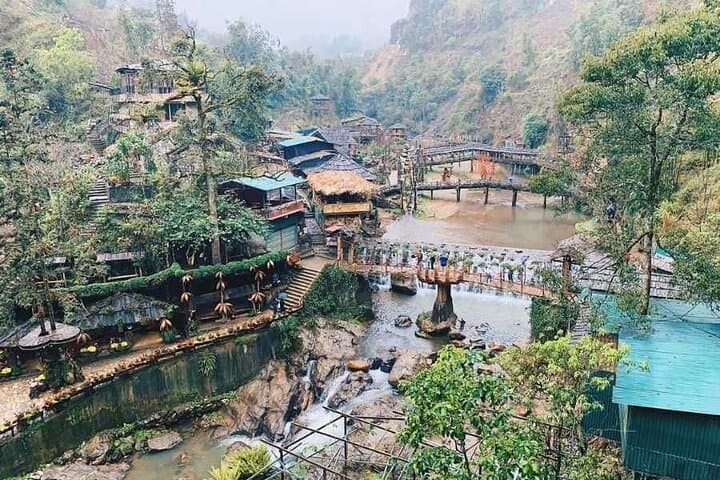
Cat Cat village sits at the valley floor beneath Fansipan, a place shaped by the Hoang Lien Son range and by French engineers who once built a small hydraulic station beside the waterfall. The rocks here are old metamorphic slopes; terraces follow the contour lines, and the Muong Hoa stream insists on its route, cutting channels that feed rice seasons. H’Mong, Dzao and Dzay communities maintain traditional weaving and seasonal markets—culture experienced as much by conversation as by observation.
Practical guidance: the first afternoon includes a 3.5 km, mostly downhill trek into Cat Cat (about 2 hours) with a return climb by bus. Day two covers roughly 6–8 km over uneven terrace paths from Y Linh Ho through Lao Chai to Ta Van, with cumulative elevation change up to 400–500 m in short ups-and-downs. Trails are dirt and stone; expect slippery sections after rain.
Pack layered clothing for rapid weather shifts, sturdy shoes, water and small local currency for village purchases. Start early to avoid midday clouds, respect village etiquette, and allow time in Sapa town for markets and a hot shower before the evening cabin ride back to Hanoi.
moderate.
2 days (approx. 48 hours including transfers).
Moderate fitness: comfortable with 4–8 km of mixed-terrain walking per day and short uphill sections
Pickup is inside Hanoi Old Quarter—confirm exact meeting point when booking; staff usually list landmarks and a 15-minute pickup window.
Trekking involves uneven dirt and stone paths with short climbs; it’s rated moderate—no technical climbing skills required but good balance helps.
Sapa sits around 1,500 m—most travelers tolerate it, but allow a gentle pace, hydrate and avoid strenuous effort on arrival if you feel unwell.
Local hotels and guides can often manage basic dietary preferences, but notify the operator in advance for strict requirements.
The Cat Cat area shows lingering French colonial influence—a small hydroelectric station and terraced routes built during that period—while indigenous groups have farmed these slopes for centuries.
Travelers should stick to marked trails, avoid single-use plastics, and buy directly from village artisans to support local economies and reduce environmental pressure.
Local Tours SAPA operates guided outdoor trips and adventures with an emphasis on safety, stewardship, and memorable experiences.



The cabin bus eases out of Hanoi before dawn and, hours later, the mountains of northern Vietnam loom through a low mist—green steps carved into the slopes and women in embroidered jackets moving like brushstrokes across the terraces. Arrival in Sapa feels like stepping into a highland village where streams drive the fields and the air cools with altitude.
The cabin bus eases out of Hanoi before dawn and, hours later, the mountains of northern Vietnam loom through a low mist—green steps carved into the slopes and women in embroidered jackets moving like brushstrokes across the terraces. Arrival in Sapa feels like stepping into a highland village where streams drive the fields and the air cools with altitude.
Cat Cat village sits at the valley floor beneath Fansipan, a place shaped by the Hoang Lien Son range and by French engineers who once built a small hydraulic station beside the waterfall. The rocks here are old metamorphic slopes; terraces follow the contour lines, and the Muong Hoa stream insists on its route, cutting channels that feed rice seasons. H’Mong, Dzao and Dzay communities maintain traditional weaving and seasonal markets—culture experienced as much by conversation as by observation.
Practical guidance: the first afternoon includes a 3.5 km, mostly downhill trek into Cat Cat (about 2 hours) with a return climb by bus. Day two covers roughly 6–8 km over uneven terrace paths from Y Linh Ho through Lao Chai to Ta Van, with cumulative elevation change up to 400–500 m in short ups-and-downs. Trails are dirt and stone; expect slippery sections after rain.
Pack layered clothing for rapid weather shifts, sturdy shoes, water and small local currency for village purchases. Start early to avoid midday clouds, respect village etiquette, and allow time in Sapa town for markets and a hot shower before the evening cabin ride back to Hanoi.