THE ADVENTURE COLLECTIVE® · Independent discovery and booking for outdoor travel

A compact 2-day trek from Cat Cat to Ta Van that pairs moderate mountain walking with a 4-star hotel night in Sapa. Discover Hmong and Giay villages, century-old rice terraces and local crafts while supported by a guide and transfers.
A compact 2-day trek from Cat Cat to Ta Van that pairs moderate mountain walking with a 4-star hotel night in Sapa. Discover Hmong and Giay villages, century-old rice terraces and local crafts while supported by a guide and transfers.
Late-afternoon light slants across terraced rice, and the trail out of Sapa drops through dripping bamboo and stone steps carved by generations. You start at a colonial-era hamlet, pass the hiss of a small hydropower channel, and walk into Hmong and Giay villages where children wave between woven homes and plump water buffalo graze in the fields.
Verified experiences and guided adventures in the surrounding area.
Operated by your indochina travel · Sapa, Lao Cai
Late-afternoon light slants across terraced rice, and the trail out of Sapa drops through dripping bamboo and stone steps carved by generations. You start at a colonial-era hamlet, pass the hiss of a small hydropower channel, and walk into Hmong and Giay villages where children wave between woven homes and plump water buffalo graze in the fields.
The two-day route covers Cat Cat, Sin Chai, Y Linh Ho, Lao Chai and Ta Van—classic northern Vietnam mountain country shaped by uplifted limestone and deep river valleys. The area’s terraces are roughly a century old, an agricultural geometry cut into steep slopes that reveal a human response to geology and monsoon rhythm. French colonial buildings mark Sapa’s brief role as a hill station; minority crafts—weaving, silverwork—keep local culture visible along the trails.
Expect steady downhill and uphill sections on dirt tracks and village lanes, with total walking distances of roughly 19 km split across two days and moderate elevation changes rather than long alpine climbs. Guides arrange a luxury hotel night with hot showers and a pool—an unusual comfort after sticky, variable weather.
Practical tips: hike with grippy footwear, waterproof layers and a small daypack; start morning sections early to avoid midday rains; carry cash for small purchases in villages. The route is suitable for hikers with a moderate fitness base and curiosity for cultural exchange rather than technical mountaineering. Water and local meals are provided; bring insect repellent, sun protection and a light headlamp for early starts or late returns.
moderate.
16 hours (2 days).
Suitable for travelers with moderate fitness: comfortable walking 6–12 km per day on uneven trails and steps.
The itinerary is graded medium: steady walking with some uphill and downhill but no technical scrambling—suitable for those with regular walking experience.
One night at a 4-star hotel (Freesia Sapa) with private rooms, hot showers and a swimming pool; the rest of the time you stay in Sapa town and villages are day visits.
Yes—meals listed in the itinerary (lunches, dinner and breakfast) are included; drinks and personal expenses are not.
The tour includes sleeping-luxury bus transfer pickup and drop-off logistics but confirm exact pickup points when booking.
Sapa was developed as a French colonial hill station in the early 20th century; local ethnic groups such as Hmong and Giay have cultivated the terraces for generations.
Stick to trails and avoid leaving waste—terrace agriculture is delicate and tourism pressure has increased erosion; support local craft sellers directly to benefit communities.
your indochina travel operates guided outdoor trips and adventures with an emphasis on safety, stewardship, and memorable experiences.



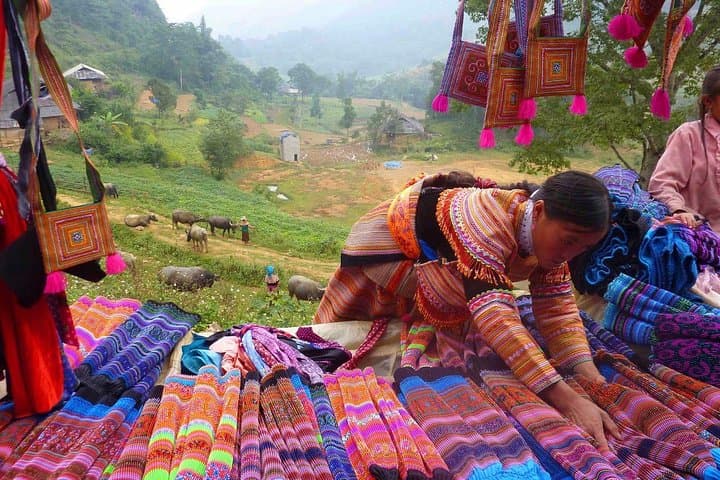
Late-afternoon light slants across terraced rice, and the trail out of Sapa drops through dripping bamboo and stone steps carved by generations. You start at a colonial-era hamlet, pass the hiss of a small hydropower channel, and walk into Hmong and Giay villages where children wave between woven homes and plump water buffalo graze in the fields.
Late-afternoon light slants across terraced rice, and the trail out of Sapa drops through dripping bamboo and stone steps carved by generations. You start at a colonial-era hamlet, pass the hiss of a small hydropower channel, and walk into Hmong and Giay villages where children wave between woven homes and plump water buffalo graze in the fields.
The two-day route covers Cat Cat, Sin Chai, Y Linh Ho, Lao Chai and Ta Van—classic northern Vietnam mountain country shaped by uplifted limestone and deep river valleys. The area’s terraces are roughly a century old, an agricultural geometry cut into steep slopes that reveal a human response to geology and monsoon rhythm. French colonial buildings mark Sapa’s brief role as a hill station; minority crafts—weaving, silverwork—keep local culture visible along the trails.
Expect steady downhill and uphill sections on dirt tracks and village lanes, with total walking distances of roughly 19 km split across two days and moderate elevation changes rather than long alpine climbs. Guides arrange a luxury hotel night with hot showers and a pool—an unusual comfort after sticky, variable weather.
Practical tips: hike with grippy footwear, waterproof layers and a small daypack; start morning sections early to avoid midday rains; carry cash for small purchases in villages. The route is suitable for hikers with a moderate fitness base and curiosity for cultural exchange rather than technical mountaineering. Water and local meals are provided; bring insect repellent, sun protection and a light headlamp for early starts or late returns.