THE ADVENTURE COLLECTIVE® · Independent discovery and booking for outdoor travel

Spend two days trekking from Sapa’s market town into the Muong Hoa valley—short, scenic hikes through Cat Cat, Lao Chai and Ta Van with an overnight hotel stay and sleeper-bus transfers to Hanoi. Expect rice terraces, ethnic villages, and variable mountain weather.
Spend two days trekking from Sapa’s market town into the Muong Hoa valley—short, scenic hikes through Cat Cat, Lao Chai and Ta Van with an overnight hotel stay and sleeper-bus transfers to Hanoi. Expect rice terraces, ethnic villages, and variable mountain weather.
A low mountain mist clings to the rice terraces as the sleeper bus eases into Sapa town, depositing you at 1,500–1,650 m where cool air pushes against the windshield. Day one drops you into Cat Cat’s narrow valley: a short 2.5 km walk leads down stone steps to a waterfall and an old French hydraulic station, then back up through Black H’Mong homesteads. The next morning, trails unfurl along Muong Hoa stream—rice terraces ripple across the slopes as you walk 9 km from Y Linh Ho through Lao Chai to Ta Van, past Dzay villages where stilt houses watch the valley.
Verified experiences and guided adventures in the surrounding area.
Operated by Vietnam Travel Landscape · Sapa, Lao Cai
A low mountain mist clings to the rice terraces as the sleeper bus eases into Sapa town, depositing you at 1,500–1,650 m where cool air pushes against the windshield. Day one drops you into Cat Cat’s narrow valley: a short 2.5 km walk leads down stone steps to a waterfall and an old French hydraulic station, then back up through Black H’Mong homesteads. The next morning, trails unfurl along Muong Hoa stream—rice terraces ripple across the slopes as you walk 9 km from Y Linh Ho through Lao Chai to Ta Van, past Dzay villages where stilt houses watch the valley.
The Hoang Lien Son range looms nearby, its highest point Fansipan (3,143 m) a constant geological presence that created the steep valleys and terraced agriculture. Sapa’s cultural landscape is shaped by H’Mong, Dao, Tay and Dzay communities whose textiles and terraces reflect generations of mountain farming.
Practically: this is a short, guided multi-day trek with a comfortable hotel night—no technical climbing, but expect uneven stone steps, muddy sections after rain, and several river crossings by bridge. Total walking is roughly 5–6 hours over two days. Bring layered breathable clothing, waterproofs, sturdy shoes, small daypack and cash for village purchases. The sleeper-bus schedule saves travel time but means early starts and late returns; plan for luggage storage at the hotel. Weather changes fast—start hikes early for clearer views and quieter trails. This itinerary suits travelers who want cultural immersion plus manageable hiking in Vietnam’s northern highlands.
moderate.
2 days (approx. 5–6 hours walking total).
Comfortable for hikers who can manage several hours on uneven, hilly trails and stone steps; not suitable for those with serious mobility limits.
The scheduled daytime transfer is roughly 5.5–6 hours one-way with comfort breaks; expect slightly different travel times depending on traffic.
Yes—routes are non-technical but include uneven terrain and stair descents; basic fitness and steady footwear are recommended.
Yes—large bags are typically held at the Sapa hotel while you pack a light daypack for the hikes.
The tour lists several meals included; inform the operator in advance about dietary restrictions so guides and hotels can prepare alternatives.
Sapa became a hill-station during French colonial times and developed as an agricultural hub for ethnic minorities; terraces are centuries-old adaptations to steep terrain.
Terrace farming supports both local livelihoods and biodiversity, but increased tourism stresses water and waste systems—use local guides and leave no trace to minimize impact.
Vietnam Travel Landscape operates guided outdoor trips and adventures with an emphasis on safety, stewardship, and memorable experiences.



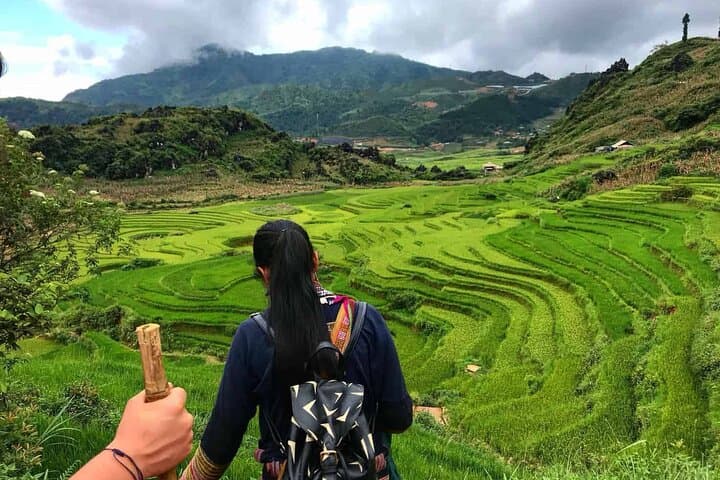
A low mountain mist clings to the rice terraces as the sleeper bus eases into Sapa town, depositing you at 1,500–1,650 m where cool air pushes against the windshield. Day one drops you into Cat Cat’s narrow valley: a short 2.5 km walk leads down stone steps to a waterfall and an old French hydraulic station, then back up through Black H’Mong homesteads. The next morning, trails unfurl along Muong Hoa stream—rice terraces ripple across the slopes as you walk 9 km from Y Linh Ho through Lao Chai to Ta Van, past Dzay villages where stilt houses watch the valley.
A low mountain mist clings to the rice terraces as the sleeper bus eases into Sapa town, depositing you at 1,500–1,650 m where cool air pushes against the windshield. Day one drops you into Cat Cat’s narrow valley: a short 2.5 km walk leads down stone steps to a waterfall and an old French hydraulic station, then back up through Black H’Mong homesteads. The next morning, trails unfurl along Muong Hoa stream—rice terraces ripple across the slopes as you walk 9 km from Y Linh Ho through Lao Chai to Ta Van, past Dzay villages where stilt houses watch the valley.
The Hoang Lien Son range looms nearby, its highest point Fansipan (3,143 m) a constant geological presence that created the steep valleys and terraced agriculture. Sapa’s cultural landscape is shaped by H’Mong, Dao, Tay and Dzay communities whose textiles and terraces reflect generations of mountain farming.
Practically: this is a short, guided multi-day trek with a comfortable hotel night—no technical climbing, but expect uneven stone steps, muddy sections after rain, and several river crossings by bridge. Total walking is roughly 5–6 hours over two days. Bring layered breathable clothing, waterproofs, sturdy shoes, small daypack and cash for village purchases. The sleeper-bus schedule saves travel time but means early starts and late returns; plan for luggage storage at the hotel. Weather changes fast—start hikes early for clearer views and quieter trails. This itinerary suits travelers who want cultural immersion plus manageable hiking in Vietnam’s northern highlands.