THE ADVENTURE COLLECTIVE® · Independent discovery and booking for outdoor travel

Two days of rice terraces, bamboo gullies and homestay evenings: this 2-day Sapa trek from Hanoi via the new Lao Cai highway pairs moderate hiking with direct cultural exchange in H’Mong and Giay villages. Learn what to pack, what to expect, and how to move respectfully through upland Vietnam.
Two days of rice terraces, bamboo gullies and homestay evenings: this 2-day Sapa trek from Hanoi via the new Lao Cai highway pairs moderate hiking with direct cultural exchange in H’Mong and Giay villages. Learn what to pack, what to expect, and how to move respectfully through upland Vietnam.
A low hum of the bus engine fades as mist lifts over the Muong Hoa valley—rice terraces stepping down like green stairs toward a restless stream. Travelers arriving from Hanoi by the new Hanoi–Lao Cai highway step into cool, thin air (Sapa village sits around 1,600 m). On this two-day route, the landscape takes the lead: carved paddies, bamboo gullies, and the Hoang Lien Son massif pushing skyward toward Fansipan.
Verified experiences and guided adventures in the surrounding area.
Operated by GLORY EXPERIENCES · Sapa, Lào Cai
A low hum of the bus engine fades as mist lifts over the Muong Hoa valley—rice terraces stepping down like green stairs toward a restless stream. Travelers arriving from Hanoi by the new Hanoi–Lao Cai highway step into cool, thin air (Sapa village sits around 1,600 m). On this two-day route, the landscape takes the lead: carved paddies, bamboo gullies, and the Hoang Lien Son massif pushing skyward toward Fansipan.
The trek follows well-trodden local paths from Y Linh Ho through Lao Chai to Ta Van, passing Black H’Mong and Giay (Dzay) villages where traditional embroidered dress and stilt houses mark a different rhythm of life. Geologically, the Hoang Lien Son is youngfolded rock—steep ridges and fast streams that created the narrow valleys you’ll cross. Culturally, Sapa reflects centuries of upland settlement: ethnic diversity, terrace rice farming, and homestay hospitality that offers a direct window into daily routines.
Practical guidance is straightforward. Day 1 is ~9 km (about 3.5 hours) along terraces and streamside paths; Day 2 is ~4 km (around 2 hours) through bamboo forest to Giang Ta Chai and the main road. Expect variable weather—sun, wind, and sudden showers—and cool nights in the homestay. Bring layered clothing, waterproof footwear, and sufficient cash for small purchases; phone signal is intermittent. Walk at a steady pace to protect joints on uneven stone steps and allow time for photos, local conversation, and a relaxed evening with your host family.
This itinerary is best for hikers with moderate fitness who want cultural immersion without technical climbing—nature nudges you forward, and village life waits to welcome you.
moderate.
2 days (approx. 48 hours).
Suitable for hikers with moderate fitness—regular walkers who can handle 3–4 hours of mixed-terrain hiking and some uphill sections.
Day 1 is about 9 km and roughly 3.5 hours of trekking; Day 2 is about 4 km and around 2 hours of walking before the bus pickup.
Overnight is at a local homestay in Ta Van village with shared facilities—simple rooms, home-cooked meals, and a chance to interact with the host family.
Sapa sits near 1,600 m—most visitors experience mild effects like slightly breathless climbs; take it steady and hydrate, but severe altitude sickness is uncommon at this elevation.
No special permits are required; the tour includes local guiding and transport logistics as described in the itinerary.
Sapa’s upland communities were shaped by French colonial mountain stations and centuries of terrace agriculture; ethnic groups here maintain distinct languages, dress, and agricultural calendars.
Terrace farming supports biodiversity but faces erosion and pressure from tourism; stick to paths, avoid single-use plastics, and buy local to support village economies.
GLORY EXPERIENCES operates guided outdoor trips and adventures with an emphasis on safety, stewardship, and memorable experiences.


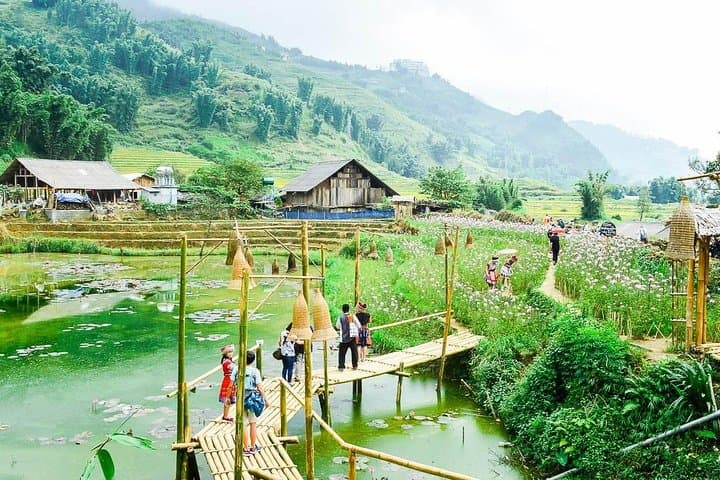
A low hum of the bus engine fades as mist lifts over the Muong Hoa valley—rice terraces stepping down like green stairs toward a restless stream. Travelers arriving from Hanoi by the new Hanoi–Lao Cai highway step into cool, thin air (Sapa village sits around 1,600 m). On this two-day route, the landscape takes the lead: carved paddies, bamboo gullies, and the Hoang Lien Son massif pushing skyward toward Fansipan.
A low hum of the bus engine fades as mist lifts over the Muong Hoa valley—rice terraces stepping down like green stairs toward a restless stream. Travelers arriving from Hanoi by the new Hanoi–Lao Cai highway step into cool, thin air (Sapa village sits around 1,600 m). On this two-day route, the landscape takes the lead: carved paddies, bamboo gullies, and the Hoang Lien Son massif pushing skyward toward Fansipan.
The trek follows well-trodden local paths from Y Linh Ho through Lao Chai to Ta Van, passing Black H’Mong and Giay (Dzay) villages where traditional embroidered dress and stilt houses mark a different rhythm of life. Geologically, the Hoang Lien Son is youngfolded rock—steep ridges and fast streams that created the narrow valleys you’ll cross. Culturally, Sapa reflects centuries of upland settlement: ethnic diversity, terrace rice farming, and homestay hospitality that offers a direct window into daily routines.
Practical guidance is straightforward. Day 1 is ~9 km (about 3.5 hours) along terraces and streamside paths; Day 2 is ~4 km (around 2 hours) through bamboo forest to Giang Ta Chai and the main road. Expect variable weather—sun, wind, and sudden showers—and cool nights in the homestay. Bring layered clothing, waterproof footwear, and sufficient cash for small purchases; phone signal is intermittent. Walk at a steady pace to protect joints on uneven stone steps and allow time for photos, local conversation, and a relaxed evening with your host family.
This itinerary is best for hikers with moderate fitness who want cultural immersion without technical climbing—nature nudges you forward, and village life waits to welcome you.