THE ADVENTURE COLLECTIVE® · Independent discovery and booking for outdoor travel

Walk from Sapa into the Muong Hoa Valley on a compact half-day guided trek to Cat Cat Village. Discover Black H’mong craft, a French-era hydro station and terraced rice slopes on a 2.5 km route suitable for most fitness levels.
Walk from Sapa into the Muong Hoa Valley on a compact half-day guided trek to Cat Cat Village. Discover Black H’mong craft, a French-era hydro station and terraced rice slopes on a 2.5 km route suitable for most fitness levels.
A narrow trail drops from Sapa’s central square into the Muong Hoa Valley and the path quickly narrows to stone steps, rutted farm tracks and occasional bamboo fences. Rain smells fresh; terraced rice paddies step away like green benches, and the rush of a stream pulls you toward the village and its small waterfall. The afternoon light catches woven cloth drying on low walls as children watch visitors pass.
Verified experiences and guided adventures in the surrounding area.
Operated by Authentic Travel Ho Chi Minh · Sapa, Lao Cai
A narrow trail drops from Sapa’s central square into the Muong Hoa Valley and the path quickly narrows to stone steps, rutted farm tracks and occasional bamboo fences. Rain smells fresh; terraced rice paddies step away like green benches, and the rush of a stream pulls you toward the village and its small waterfall. The afternoon light catches woven cloth drying on low walls as children watch visitors pass.
Cat Cat Village sits at the foot of Fansipan and grew around Black H’mong communities who have farmed these slopes for generations. The valley’s terraces are carved into metamorphic bedrock and glacially influenced slopes; French-era engineers built a hydraulic station near the waterfall during colonial times, remnants of which are still visible. Today the village mixes traditional indigo dyeing, hand-weaving and small-scale tourism.
Expect a guided 2–3 km walk (about 2 hours of trekking within a 3.5-hour tour) with steep stone steps down to the valley and a steady climb back up to the bus pickup. Terrain is uneven—mud after rain, compact earth, and packed stone stairs. Photographic stops include the old bridge and the cascade by the hydro station. Guides explain H’mong textiles, local agricultural rhythms, and etiquette when visiting homes.
Practical: wear grippy shoes, carry 1L water, and bring a light rain layer in the wet season. Morning or late-afternoon slots avoid the busiest visitor times and the midday heat. Entrance and local guide are included; bring small bills for snacks or crafts. This short but tactile walk pairs cultural insight with accessible mountain scenery.
moderate.
3–3.5 hours.
Suitable for most people with basic walking fitness; ability to handle stairs and short uphill sections required
The guided walking portion covers about 2.5 km and takes roughly 2 hours, with additional time for transfers included in the 3.5-hour tour.
Yes—people of most ages can do the walk, but it involves steep stone steps and some uneven ground; slower pace is recommended for limited-mobility guests.
Yes, entrance tickets to Cat Cat Village and a local English-speaking guide are included in the tour price per the operator details.
Yes, local artisans sell woven goods and small snacks; bring cash in small denominations and be prepared for basic bargaining.
Cat Cat developed around Black H’mong agricultural life and saw early 20th-century French infrastructure projects; the hydraulic station is a visible colonial-era remnant.
Foot traffic and craft tourism impact village life—stick to marked paths, avoid stepping on terraces, and support locally made goods to benefit the community.
Authentic Travel Ho Chi Minh operates guided outdoor trips and adventures with an emphasis on safety, stewardship, and memorable experiences.


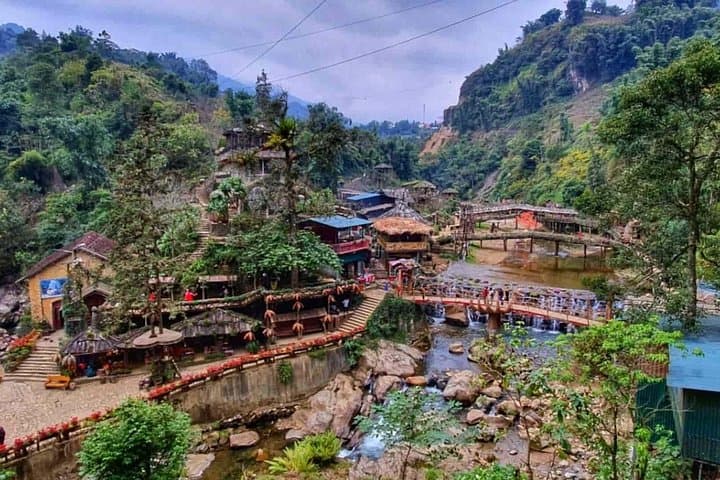

A narrow trail drops from Sapa’s central square into the Muong Hoa Valley and the path quickly narrows to stone steps, rutted farm tracks and occasional bamboo fences. Rain smells fresh; terraced rice paddies step away like green benches, and the rush of a stream pulls you toward the village and its small waterfall. The afternoon light catches woven cloth drying on low walls as children watch visitors pass.
A narrow trail drops from Sapa’s central square into the Muong Hoa Valley and the path quickly narrows to stone steps, rutted farm tracks and occasional bamboo fences. Rain smells fresh; terraced rice paddies step away like green benches, and the rush of a stream pulls you toward the village and its small waterfall. The afternoon light catches woven cloth drying on low walls as children watch visitors pass.
Cat Cat Village sits at the foot of Fansipan and grew around Black H’mong communities who have farmed these slopes for generations. The valley’s terraces are carved into metamorphic bedrock and glacially influenced slopes; French-era engineers built a hydraulic station near the waterfall during colonial times, remnants of which are still visible. Today the village mixes traditional indigo dyeing, hand-weaving and small-scale tourism.
Expect a guided 2–3 km walk (about 2 hours of trekking within a 3.5-hour tour) with steep stone steps down to the valley and a steady climb back up to the bus pickup. Terrain is uneven—mud after rain, compact earth, and packed stone stairs. Photographic stops include the old bridge and the cascade by the hydro station. Guides explain H’mong textiles, local agricultural rhythms, and etiquette when visiting homes.
Practical: wear grippy shoes, carry 1L water, and bring a light rain layer in the wet season. Morning or late-afternoon slots avoid the busiest visitor times and the midday heat. Entrance and local guide are included; bring small bills for snacks or crafts. This short but tactile walk pairs cultural insight with accessible mountain scenery.