THE ADVENTURE COLLECTIVE® · Independent discovery and booking for outdoor travel

Two days of highland terraces, village trails and the riotous colors of Bac Ha market. Expect steep stone paths, ethnic craft stalls and long drives between Hanoi and the Lao Cai highlands.
Two days of highland terraces, village trails and the riotous colors of Bac Ha market. Expect steep stone paths, ethnic craft stalls and long drives between Hanoi and the Lao Cai highlands.
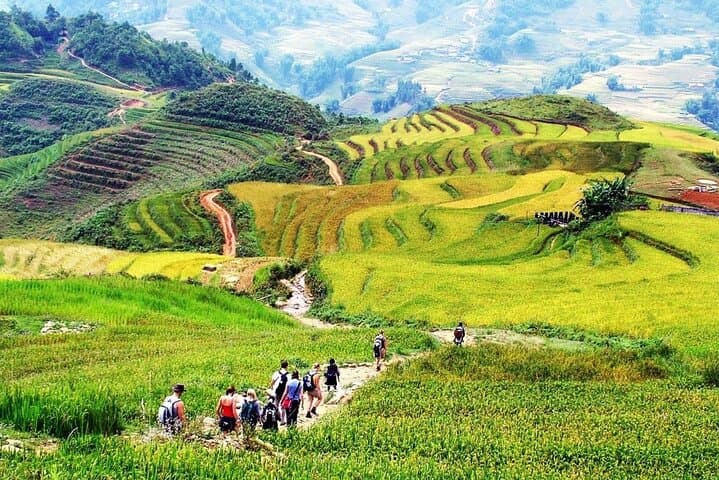
A mist-soft morning folds over stepped green ridges as the sleeping bus eases into Sapa: terraces carve the mountainside like stairways for water, and the air carries the tang of wet earth and wood smoke.
Verified experiences and guided adventures in the surrounding area.
Operated by Red Gecko Travel · Sapa, Lao Cai
A mist-soft morning folds over stepped green ridges as the sleeping bus eases into Sapa: terraces carve the mountainside like stairways for water, and the air carries the tang of wet earth and wood smoke.
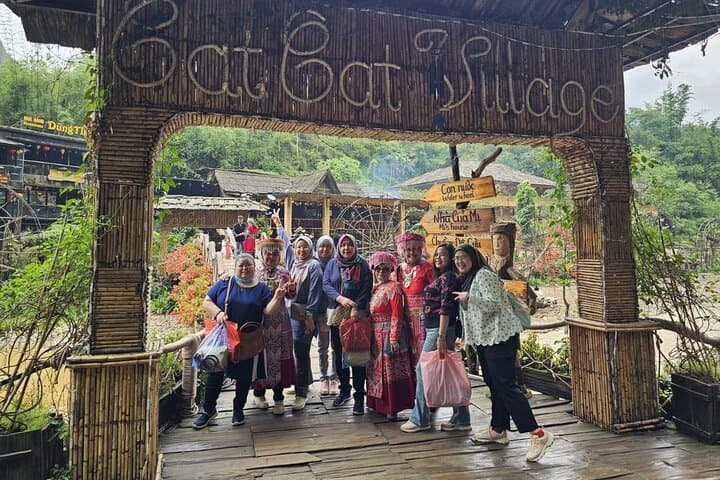
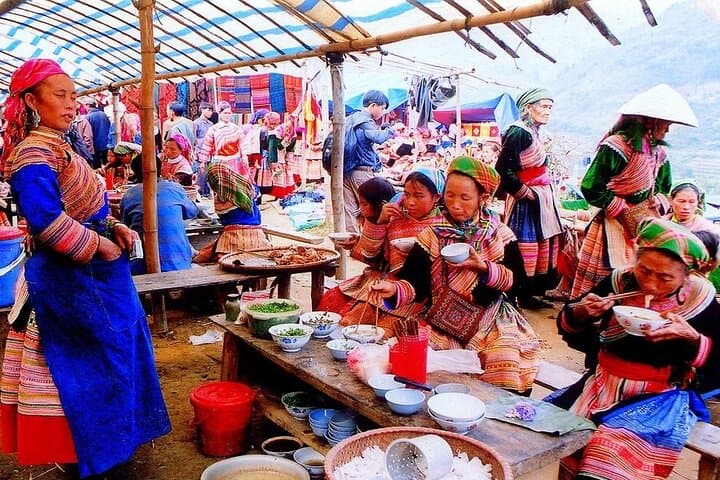
On day one visitors walk from Sapa town down to Cat Cat Village along stone steps and narrow trails (roughly 2–4 km of undulating path with a net elevation change of about 200–300 m). The Hoang Lien Son range—granite and metamorphic bedrock pushed up by tectonic collision—frames the valley. French-built hydroelectric works and colonial trails still thread the landscape; local Hmong, Dao and Tay communities maintain handwoven textiles, terraced rice farming, and distinctive foodways. Bac Ha Market on Sunday is a living archive: traders from several ethnic groups converge to sell livestock, indigo-dyed cloth, and salted goods.
Practicalities are straightforward but matter. Expect muddy steps and slippery stone after rain; a good pair of treaded boots and a waterproof shell are essential. The trip involves long drives (Hanoi–Sapa ~5 hours by sleeping bus; Sapa–Bac Ha ~3 hours each way) and short village treks—plan for 2 days, early starts, and pockets of cash for market purchases. Respect photography requests, accept invites for homemade corn wine politely, and decline single-use plastics.
This is a cultural-terrace itinerary: vivid market rhythms, close-up village life, and hands-on landscape engineering. Go prepared for variable weather, slow travel, and the steady reward of expansive terrace views and genuine encounters with highland life.
moderate.
2 days.
Moderate fitness; able to walk 2–6 km over uneven terrain and manage short elevation changes of 200–400 m
Walks are moderate: mostly well-used rural trails and stone steps with some uneven sections—good footwear and a moderate fitness level suffice.
Bac Ha Market is best known for its Sunday market when traders from surrounding villages gather; smaller local markets operate on other days.
Bring cash (Vietnamese dong) in small denominations—many stalls and homestays do not accept cards.
Yes—operators typically accommodate vegetarian, vegan and gluten-free requests if informed at booking.
The Hoang Lien Son highlands were partly surveyed and altered during the French colonial period; a small hydroelectric installation at Cat Cat dates to the early 20th century.
Tourism pressures on trails and markets are growing—pack out waste, buy directly from artisans and avoid single-use plastics to support sustainable visits.
Red Gecko Travel operates guided outdoor trips and adventures with an emphasis on safety, stewardship, and memorable experiences.

A mist-soft morning folds over stepped green ridges as the sleeping bus eases into Sapa: terraces carve the mountainside like stairways for water, and the air carries the tang of wet earth and wood smoke.
A mist-soft morning folds over stepped green ridges as the sleeping bus eases into Sapa: terraces carve the mountainside like stairways for water, and the air carries the tang of wet earth and wood smoke.
On day one visitors walk from Sapa town down to Cat Cat Village along stone steps and narrow trails (roughly 2–4 km of undulating path with a net elevation change of about 200–300 m). The Hoang Lien Son range—granite and metamorphic bedrock pushed up by tectonic collision—frames the valley. French-built hydroelectric works and colonial trails still thread the landscape; local Hmong, Dao and Tay communities maintain handwoven textiles, terraced rice farming, and distinctive foodways. Bac Ha Market on Sunday is a living archive: traders from several ethnic groups converge to sell livestock, indigo-dyed cloth, and salted goods.
Practicalities are straightforward but matter. Expect muddy steps and slippery stone after rain; a good pair of treaded boots and a waterproof shell are essential. The trip involves long drives (Hanoi–Sapa ~5 hours by sleeping bus; Sapa–Bac Ha ~3 hours each way) and short village treks—plan for 2 days, early starts, and pockets of cash for market purchases. Respect photography requests, accept invites for homemade corn wine politely, and decline single-use plastics.
This is a cultural-terrace itinerary: vivid market rhythms, close-up village life, and hands-on landscape engineering. Go prepared for variable weather, slow travel, and the steady reward of expansive terrace views and genuine encounters with highland life.