THE ADVENTURE COLLECTIVE® · Independent discovery and booking for outdoor travel

Spend two days walking between terraced rice fields, H'mong and Dao villages, and a French-era waterfall site, with one night in a 4-star Sapa hotel. This guided trek balances accessible hiking with deep cultural encounters in the Hoàng Liên Sơn range.
Spend two days walking between terraced rice fields, H'mong and Dao villages, and a French-era waterfall site, with one night in a 4-star Sapa hotel. This guided trek balances accessible hiking with deep cultural encounters in the Hoàng Liên Sơn range.
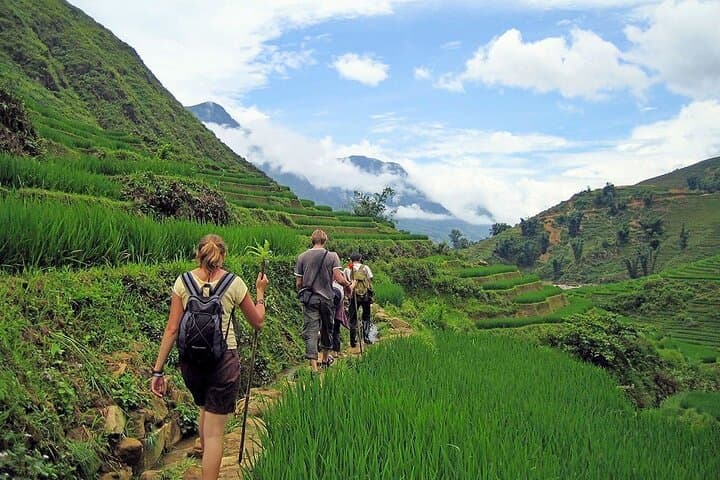
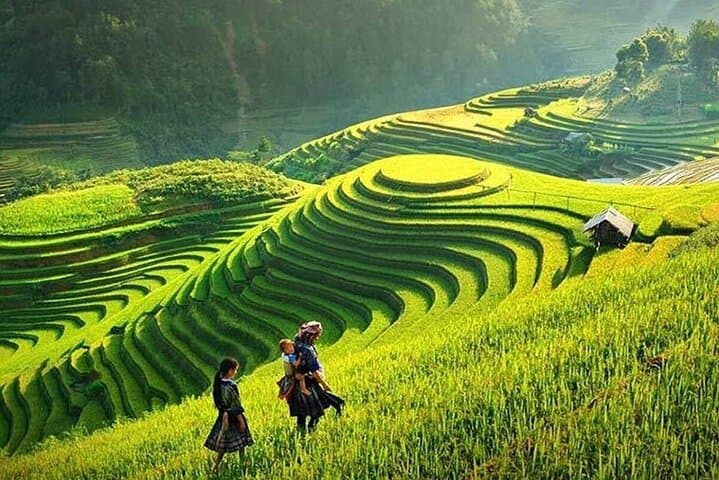
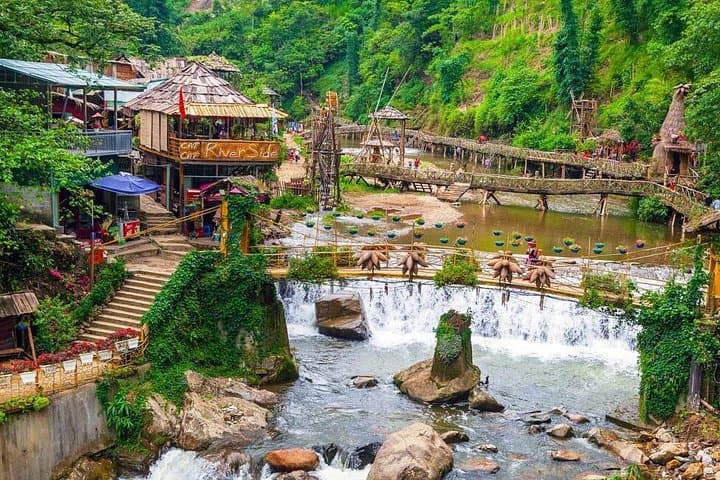
Mist clings to the ridgelines as a sleeping bus eases into Sapa Town — mist that will lift to reveal stepped rice fields and a scattering of slate-roofed houses. On day one the route drops into Cat Cat village, where short, stony trails lead to a braided stream and a small French-era hydroelectric site. Day two opens with the Muong Hoa valley: a 8–12 km trek from Y Linh Ho through Lao Chai to Ta Van, following terraces and a shallow stream with 200–500 m of cumulative elevation change depending on the route.
Verified experiences and guided adventures in the surrounding area.
Operated by Elegance Tourist · Sapa, Lào Cai
Mist clings to the ridgelines as a sleeping bus eases into Sapa Town — mist that will lift to reveal stepped rice fields and a scattering of slate-roofed houses. On day one the route drops into Cat Cat village, where short, stony trails lead to a braided stream and a small French-era hydroelectric site. Day two opens with the Muong Hoa valley: a 8–12 km trek from Y Linh Ho through Lao Chai to Ta Van, following terraces and a shallow stream with 200–500 m of cumulative elevation change depending on the route.
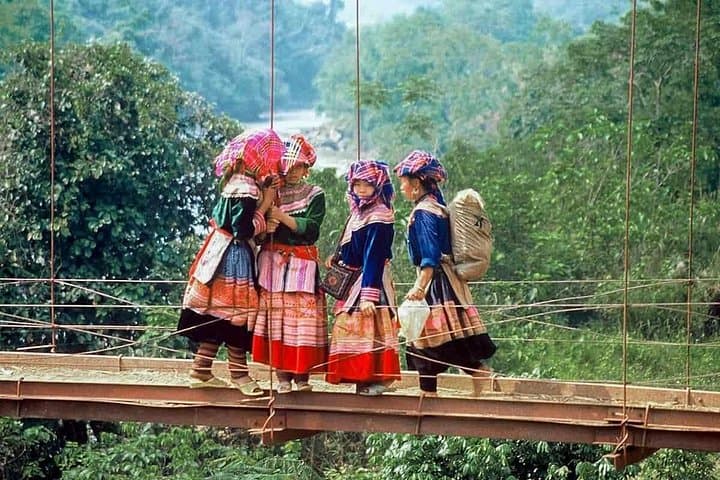
Geology here is young, folded karst and metamorphic ranges of the Hoàng Liên Sơn; soils and irrigation patterns create the iconic terraces. Culturally, Sapa is home to H'mong, Red Dao and Tay communities whose traditional dress and handicrafts are visible in village life. The trails are both path and social corridor: you’ll pass family plots, water buffalo, and hilltop viewpoints that double as photo points and communal resting spots.
Practical guidance: expect uneven stone steps, muddy sections after rain, and short steep drops—good ankle support matters. Plan for temperatures ranging from cool mornings (~10–15°C) to sunnier afternoons (up to mid-20s°C) and pack a lightweight rain shell. Hydrate on the move and carry snacks; lunches are typically family-style in village houses. Allow time for slow sections where the group will pause for photos or to meet local hosts. Transportation to and from Hanoi is by sleeping or VIP cabin bus (≈5 hours each way). If you have moderate fitness and a respect for local customs, this two-day circuit delivers landscape, culture, and accessible mountain trekking.
moderate.
2 days.
Participants should be comfortable walking 4–6 hours with short steep sections and some elevation change; basic stamina required.
Expect 3–6 hours of walking each day on uneven, sometimes steep trails with total daily distances commonly between 8–12 km; pace is moderate with stops.
Sapa sits around 1,500 m—most travelers experience mild breathlessness but not serious altitude effects; allow time to acclimate and avoid strenuous exertion on arrival.
A local English-speaking guide accompanies the trek; villagers primarily speak H'mong, Dao, Tay or Vietnamese, and many vendors may know basic tourist phrases.
The itinerary includes one night in a 4-star hotel in Sapa, plus listed breakfasts, lunches and dinners; a family lunch in Ta Van is typically part of the experience.
Sapa’s terraces were shaped over centuries by local ethnic groups; remnants of French colonial infrastructure—like an early 20th-century hydroelectric site—appear near Cat Cat village.
Visitors should stick to established paths, avoid single-use plastics in villages, and support local guides and homestays to direct revenue into community conservation.
Elegance Tourist operates guided outdoor trips and adventures with an emphasis on safety, stewardship, and memorable experiences.
Mist clings to the ridgelines as a sleeping bus eases into Sapa Town — mist that will lift to reveal stepped rice fields and a scattering of slate-roofed houses. On day one the route drops into Cat Cat village, where short, stony trails lead to a braided stream and a small French-era hydroelectric site. Day two opens with the Muong Hoa valley: a 8–12 km trek from Y Linh Ho through Lao Chai to Ta Van, following terraces and a shallow stream with 200–500 m of cumulative elevation change depending on the route.
Mist clings to the ridgelines as a sleeping bus eases into Sapa Town — mist that will lift to reveal stepped rice fields and a scattering of slate-roofed houses. On day one the route drops into Cat Cat village, where short, stony trails lead to a braided stream and a small French-era hydroelectric site. Day two opens with the Muong Hoa valley: a 8–12 km trek from Y Linh Ho through Lao Chai to Ta Van, following terraces and a shallow stream with 200–500 m of cumulative elevation change depending on the route.
Geology here is young, folded karst and metamorphic ranges of the Hoàng Liên Sơn; soils and irrigation patterns create the iconic terraces. Culturally, Sapa is home to H'mong, Red Dao and Tay communities whose traditional dress and handicrafts are visible in village life. The trails are both path and social corridor: you’ll pass family plots, water buffalo, and hilltop viewpoints that double as photo points and communal resting spots.
Practical guidance: expect uneven stone steps, muddy sections after rain, and short steep drops—good ankle support matters. Plan for temperatures ranging from cool mornings (~10–15°C) to sunnier afternoons (up to mid-20s°C) and pack a lightweight rain shell. Hydrate on the move and carry snacks; lunches are typically family-style in village houses. Allow time for slow sections where the group will pause for photos or to meet local hosts. Transportation to and from Hanoi is by sleeping or VIP cabin bus (≈5 hours each way). If you have moderate fitness and a respect for local customs, this two-day circuit delivers landscape, culture, and accessible mountain trekking.