THE ADVENTURE COLLECTIVE® · Independent discovery and booking for outdoor travel

Walk from Sapa into terrace fields and Lao Chai village on a guided day trek that mixes easy-to-moderate walking with cultural insight. Expect terraced slopes, village life, a small waterfall stop, and a local lunch before a shuttle back to Sapa.
Walk from Sapa into terrace fields and Lao Chai village on a guided day trek that mixes easy-to-moderate walking with cultural insight. Expect terraced slopes, village life, a small waterfall stop, and a local lunch before a shuttle back to Sapa.
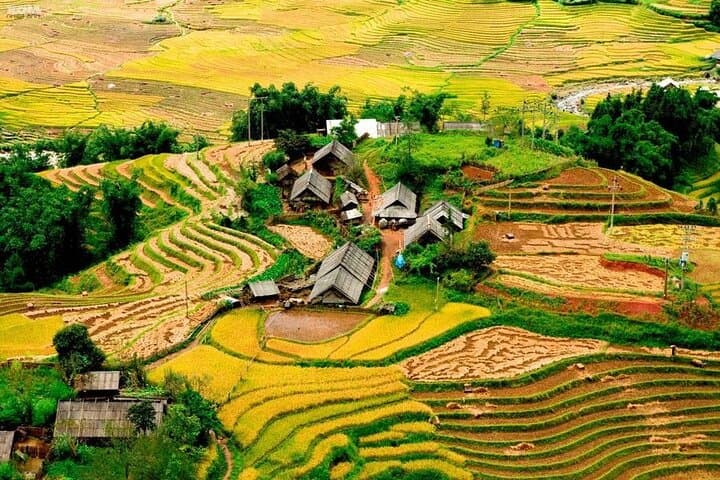
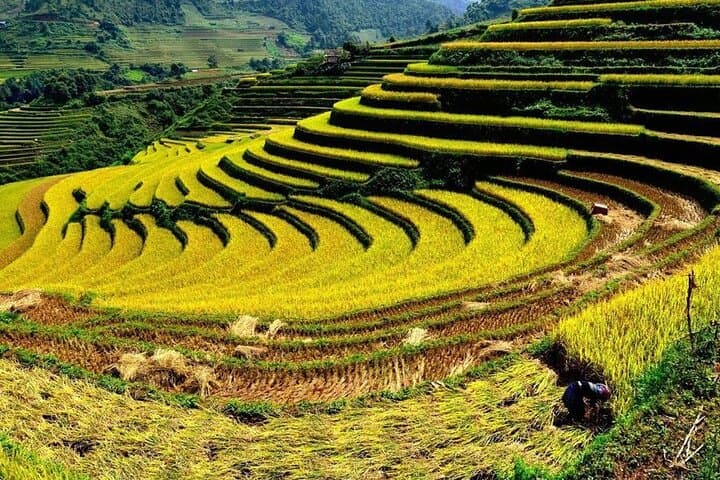
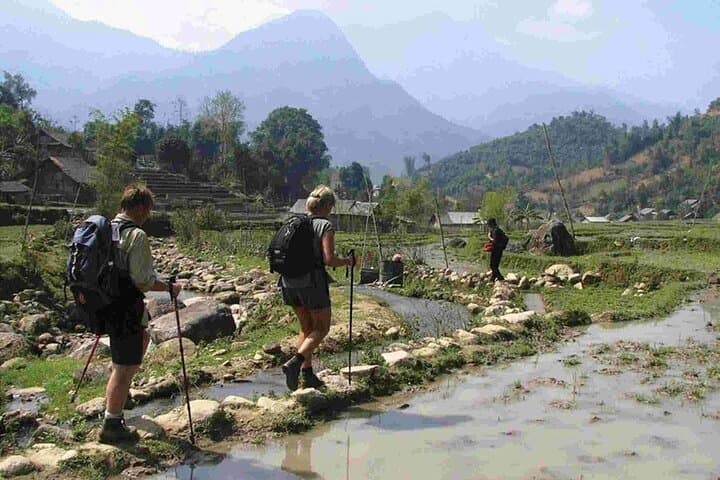
Mist lifts off carved rice terraces as a group of walkers threads a dirt path from Sapa town toward Lao Chai village. The air is cool, the terraces step down in green banding, and the guide’s voice threads stories of planting seasons and household crafts into the rhythm of boots on packed earth.
Verified experiences and guided adventures in the surrounding area.
Operated by Vietnam Real Tour · Sapa, Lao Cai Province
Mist lifts off carved rice terraces as a group of walkers threads a dirt path from Sapa town toward Lao Chai village. The air is cool, the terraces step down in green banding, and the guide’s voice threads stories of planting seasons and household crafts into the rhythm of boots on packed earth.
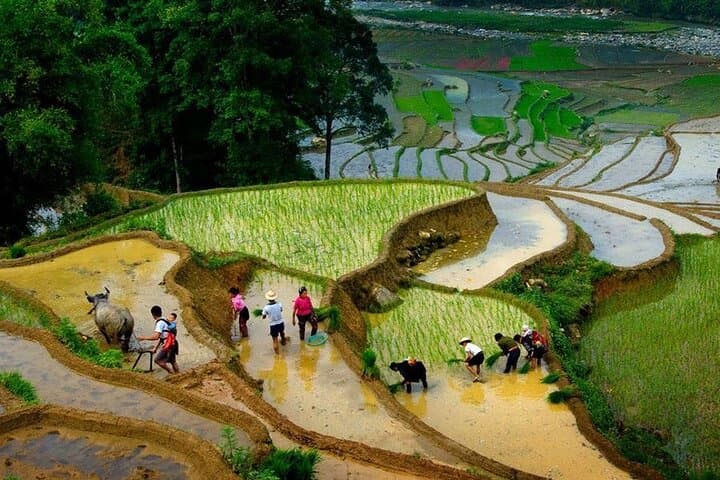
The northwest Vietnam highlands are home to Hmong and Dao communities who have shaped the steep slopes into terraces over centuries. Geologically, the region sits on rugged schist and metamorphic bedrock; heavy monsoon rains move soil and water quickly, which is why the stepped fields are both an agricultural and engineering solution. Visitors see traditional stilt houses, indigo-dyed textiles, and communal kitchen fires, and hear explanations of rice cultivation, crop rotation, and local festivals if timing aligns.
Expect village trails: narrow, sometimes muddy, with short steep pitches and stone steps. The trek favors observation and cultural exchange over technical climbing—photography stops, a small waterfall for a break, and lunch at a family-run restaurant.
Practical guidance: start early to avoid afternoon showers, bring layered waterproofs and firm footwear, and carry cash for small purchases. Respect private yards and ask before photographing people. The trip is a short, immersive introduction to mountain farming life—less about summit views and more about moving through living landscapes shaped by human hands and weather.
moderate.
5–6 hours.
Basic to moderate fitness; comfortable walking on uneven ground and short stair-like climbs
The route is suitable for most beginners with basic mobility—paths can be uneven but the guide leads at a steady, accessible pace.
Sapa sits around 1,500 m (4,900 ft); most visitors feel only mild effects—take it slow if you’re sensitive to altitude.
Lunch at a local restaurant is included; guides can usually arrange vegetarian or simple local options if requested in advance.
Yes—handmade textiles and crafts are available, but prices and quality vary; carry small bills and be prepared to bargain politely.
The Sapa terraces were expanded over generations by Hmong and Dao communities; the pattern of fields reflects agricultural practices adapted to steep slopes and monsoon cycles.
Stay on marked trails to limit erosion, avoid buying products made from endangered wildlife, and minimize single-use plastics to reduce village waste.
Vietnam Real Tour operates guided outdoor trips and adventures with an emphasis on safety, stewardship, and memorable experiences.
Mist lifts off carved rice terraces as a group of walkers threads a dirt path from Sapa town toward Lao Chai village. The air is cool, the terraces step down in green banding, and the guide’s voice threads stories of planting seasons and household crafts into the rhythm of boots on packed earth.
Mist lifts off carved rice terraces as a group of walkers threads a dirt path from Sapa town toward Lao Chai village. The air is cool, the terraces step down in green banding, and the guide’s voice threads stories of planting seasons and household crafts into the rhythm of boots on packed earth.
The northwest Vietnam highlands are home to Hmong and Dao communities who have shaped the steep slopes into terraces over centuries. Geologically, the region sits on rugged schist and metamorphic bedrock; heavy monsoon rains move soil and water quickly, which is why the stepped fields are both an agricultural and engineering solution. Visitors see traditional stilt houses, indigo-dyed textiles, and communal kitchen fires, and hear explanations of rice cultivation, crop rotation, and local festivals if timing aligns.
Expect village trails: narrow, sometimes muddy, with short steep pitches and stone steps. The trek favors observation and cultural exchange over technical climbing—photography stops, a small waterfall for a break, and lunch at a family-run restaurant.
Practical guidance: start early to avoid afternoon showers, bring layered waterproofs and firm footwear, and carry cash for small purchases. Respect private yards and ask before photographing people. The trip is a short, immersive introduction to mountain farming life—less about summit views and more about moving through living landscapes shaped by human hands and weather.