THE ADVENTURE COLLECTIVE® · Independent discovery and booking for outdoor travel

Walk from Sapa into Cat Cat Village to meet H’mong artisans, taste local street-style food, and watch waterfalls that double as performance stages. This half-day private trek balances cultural immersion with manageable terrain for moderately fit travelers.
Walk from Sapa into Cat Cat Village to meet H’mong artisans, taste local street-style food, and watch waterfalls that double as performance stages. This half-day private trek balances cultural immersion with manageable terrain for moderately fit travelers.
A cool mountain breeze cuts across the main lane of Sapa as the group sets off at 08:30, slipping down a stepped track that drops into a valley carved by terraces and mountain streams. The path moves through wet stone, packed earth, and occasional wooden bridges; huts and loom-frames appear like chapter breaks in a living village story.
Verified experiences and guided adventures in the surrounding area.
Operated by Local Tours ASIA · Sapa, Lao Cai
A cool mountain breeze cuts across the main lane of Sapa as the group sets off at 08:30, slipping down a stepped track that drops into a valley carved by terraces and mountain streams. The path moves through wet stone, packed earth, and occasional wooden bridges; huts and loom-frames appear like chapter breaks in a living village story.
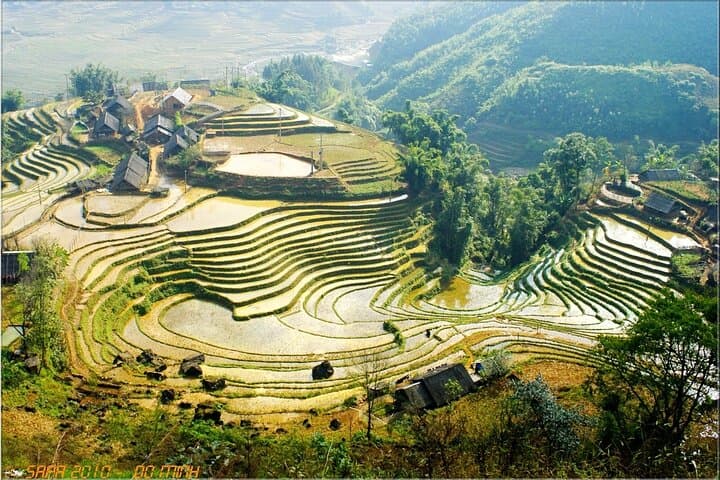
Cat Cat sits on the flank of Fansipan’s foothills, where the geology of uplifted limestone and volcanic soils has been shaped into narrow rice benches over generations. The H’mong people—who migrated here centuries ago—maintain craft traditions visible in indigo-dyed hemp and hand-stitched clothing. Small waterfalls thread the hamlet, and at certain hours local musicians perform in open-air settings beside cascades, a blend of natural sound and cultural rhythm.
Expect two hours of village time to try on H’mong textiles, watch hemp processing, and sample local bites like smoked pork and sugarcane juice; the entrance fee is included. The round-trip walk from Sapa town takes about 30–50 minutes each way over uneven terrain, with short steep sections.
Practical guidance: wear grippy shoes and layers for fog and sun swings, bring local currency for small fees and photos, and carry water—shops are limited inside the village. The route is suitable for travelers with moderate fitness; those with serious back or heart conditions should avoid the steep sections. Aim to arrive for mid-morning light for better photos and to catch waterfall performances.
moderate.
3–4 hours.
Moderately fit—able to walk on uneven descents and short steep climbs for up to an hour at a stretch.
Yes—this tour includes the Cat Cat village entrance fee and 2–3 local snacks during the visit.
Expect a 30–50 minute downhill walk each way depending on pace; return is uphill and may take longer.
No—lunch is not included; there are small food stalls in the village but bring extra snacks if you prefer more options.
The route includes uneven steps and some steep sections; it is not recommended for travelers with spinal injuries, pregnancy, or serious heart conditions.
Cat Cat has long been a H’mong community where traditional hemp weaving and terrace agriculture adapted to highland slopes over several generations.
Tourism is concentrated on narrow village lanes—stay on marked paths, avoid single-use plastics, and support local artisans directly to reduce environmental strain.
Local Tours ASIA operates guided outdoor trips and adventures with an emphasis on safety, stewardship, and memorable experiences.
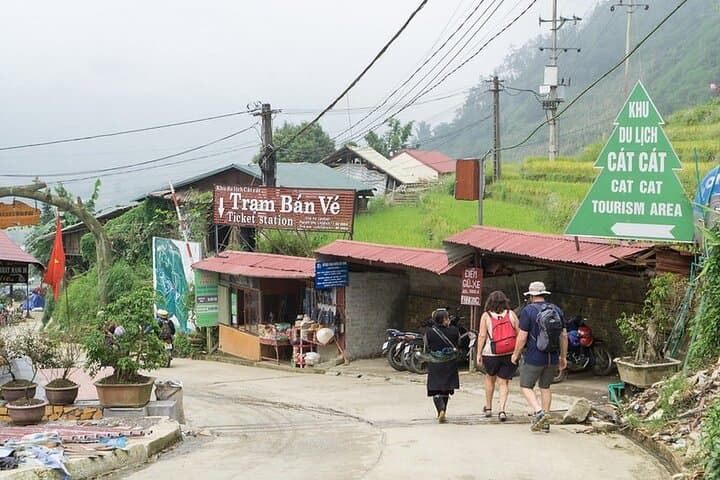
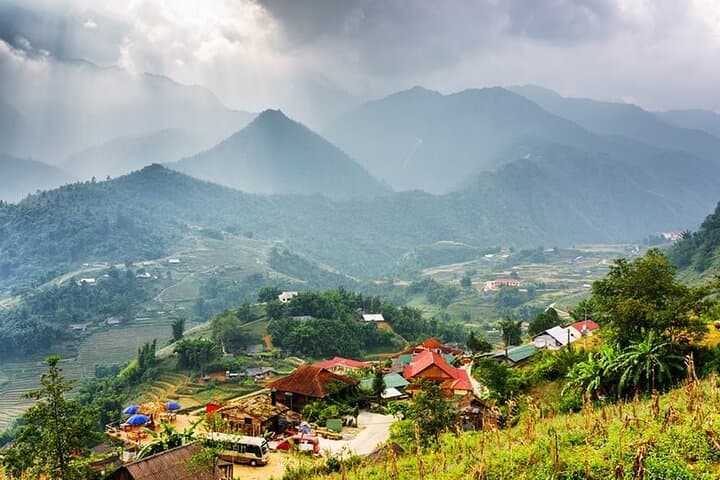
A cool mountain breeze cuts across the main lane of Sapa as the group sets off at 08:30, slipping down a stepped track that drops into a valley carved by terraces and mountain streams. The path moves through wet stone, packed earth, and occasional wooden bridges; huts and loom-frames appear like chapter breaks in a living village story.
A cool mountain breeze cuts across the main lane of Sapa as the group sets off at 08:30, slipping down a stepped track that drops into a valley carved by terraces and mountain streams. The path moves through wet stone, packed earth, and occasional wooden bridges; huts and loom-frames appear like chapter breaks in a living village story.
Cat Cat sits on the flank of Fansipan’s foothills, where the geology of uplifted limestone and volcanic soils has been shaped into narrow rice benches over generations. The H’mong people—who migrated here centuries ago—maintain craft traditions visible in indigo-dyed hemp and hand-stitched clothing. Small waterfalls thread the hamlet, and at certain hours local musicians perform in open-air settings beside cascades, a blend of natural sound and cultural rhythm.
Expect two hours of village time to try on H’mong textiles, watch hemp processing, and sample local bites like smoked pork and sugarcane juice; the entrance fee is included. The round-trip walk from Sapa town takes about 30–50 minutes each way over uneven terrain, with short steep sections.
Practical guidance: wear grippy shoes and layers for fog and sun swings, bring local currency for small fees and photos, and carry water—shops are limited inside the village. The route is suitable for travelers with moderate fitness; those with serious back or heart conditions should avoid the steep sections. Aim to arrive for mid-morning light for better photos and to catch waterfall performances.