THE ADVENTURE COLLECTIVE® · Independent discovery and booking for outdoor travel

Pedal from Sapa into Muong Hoa Valley, passing terraces and H’mong villages before learning traditional batik with local artisans. This day tour mixes steady cycling with cultural immersion and scenic stops.
Pedal from Sapa into Muong Hoa Valley, passing terraces and H’mong villages before learning traditional batik with local artisans. This day tour mixes steady cycling with cultural immersion and scenic stops.
You push off from Sapa’s cobbled streets as morning mist peels back from the terraces. The air is thin and cool at 1,500 meters, and the valley opens like a folded map—rice benches stacked into the mountain, a river cutting a bright thread below daring you to follow.
Verified experiences and guided adventures in the surrounding area.
Operated by 1Day Sapa · Sapa, Lao Cai
You push off from Sapa’s cobbled streets as morning mist peels back from the terraces. The air is thin and cool at 1,500 meters, and the valley opens like a folded map—rice benches stacked into the mountain, a river cutting a bright thread below daring you to follow.
The route runs down from Sapa toward Y Linh Ho and Lao Chai, villages shaped by centuries of upland rice farming and H’mong craftsmanship. Geologically, the Hoang Lien range is ancient metamorphic rock carved by monsoon rains into steep ridges and broad benches; culturally, these paths are arteries of trade and tradition where indigo-dyed cloth and batik patterns carry stories of clan and craft.
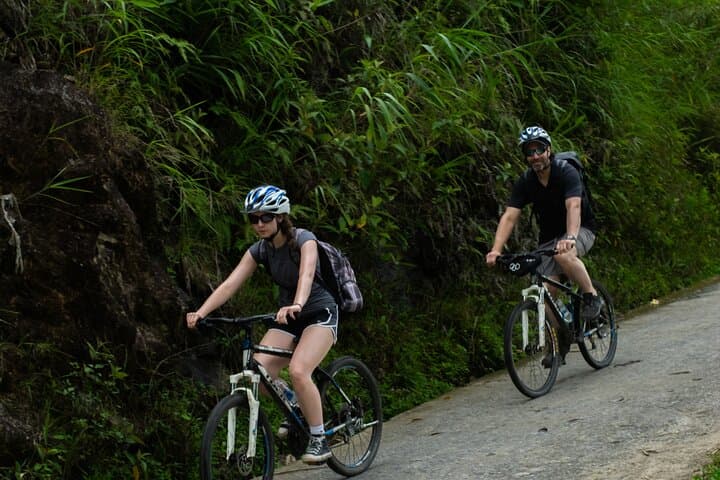
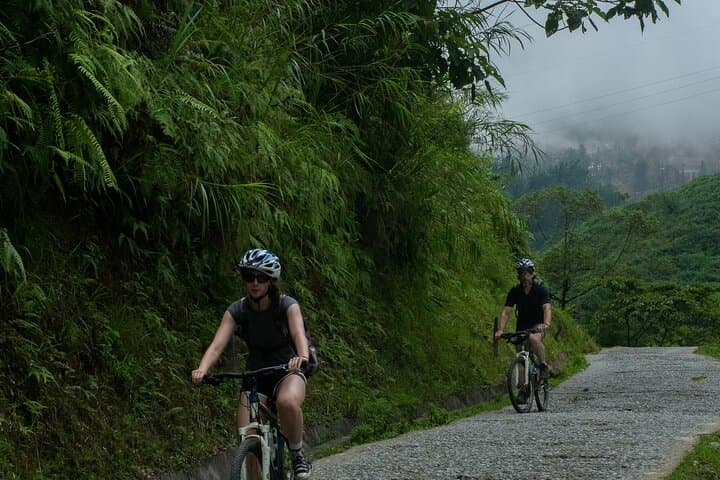
Expect 20–25 km of cycling over mixed asphalt and compact dirt, with rolling descents and several short, steep climbs—elevation generally ranges between 1,200–1,600 m. You’ll ride past bamboo stilt houses, terraces shimmering after rain, then stop in Ta Van for a homestyle lunch before the batik workshop, where H’mong artisans guide you through wax-resist techniques and symbolic motifs.
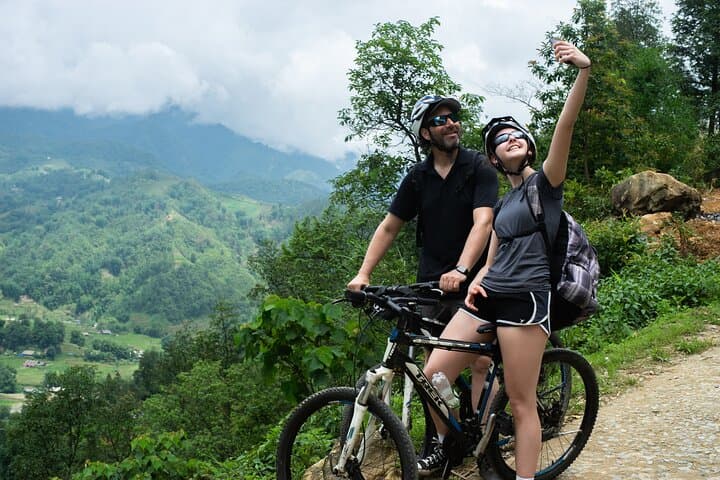
Practical guidance: arrive with a medium level of fitness and basic bike-handling skills; average speeds are modest given village traffic and narrow lanes. Bring a daypack with water (1.5–2 L), sunscreen, and layers—the weather can swing from bright sun to mist in a single hour. Photography opportunities abound at viewpoints above Y Linh Ho; be respectful when visiting homes and ask before photographing people. The return to Sapa is by vehicle, easing tired legs after a full day of cultural immersion and steady pedaling.
moderate.
6–8 hours.
Moderate fitness—able to cycle 20–25 km with some short climbs and handle uneven road surfaces.
Expect roughly 20–25 km of cycling across mixed road surfaces with several short climbs and longer descents.
No advanced skills needed, but you should be comfortable riding on narrow lanes, handling small climbs, and sharing the road with local traffic.
Yes—lunch at a local restaurant in Ta Van is included and typically features regional dishes and fresh ingredients.
The workshop is seated and accessible for most, but the cycling portion may be limited for anyone with mobility or spinal restrictions; discuss accommodations when booking.
The Muong Hoa Valley has been shaped by centuries of upland rice cultivation and ethnic H’mong settlement; trails link villages that trade goods and maintain textile traditions.
Stick to marked lanes, avoid leaving litter in terraces, and support local artisans by buying directly to ensure income stays in the community.
1Day Sapa operates guided outdoor trips and adventures with an emphasis on safety, stewardship, and memorable experiences.
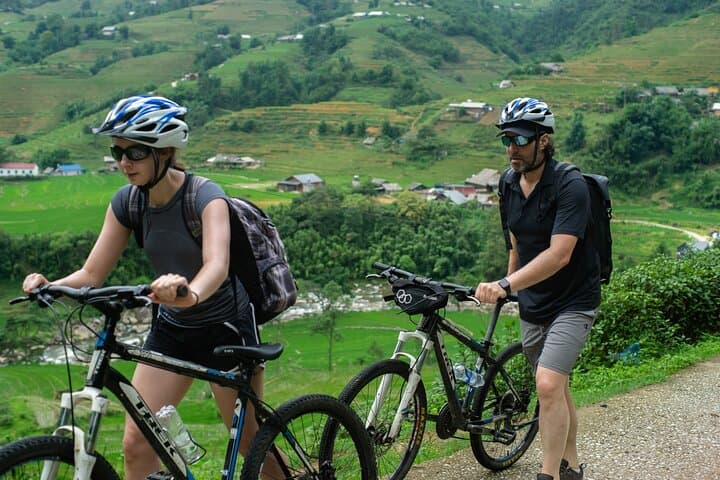
You push off from Sapa’s cobbled streets as morning mist peels back from the terraces. The air is thin and cool at 1,500 meters, and the valley opens like a folded map—rice benches stacked into the mountain, a river cutting a bright thread below daring you to follow.
You push off from Sapa’s cobbled streets as morning mist peels back from the terraces. The air is thin and cool at 1,500 meters, and the valley opens like a folded map—rice benches stacked into the mountain, a river cutting a bright thread below daring you to follow.
The route runs down from Sapa toward Y Linh Ho and Lao Chai, villages shaped by centuries of upland rice farming and H’mong craftsmanship. Geologically, the Hoang Lien range is ancient metamorphic rock carved by monsoon rains into steep ridges and broad benches; culturally, these paths are arteries of trade and tradition where indigo-dyed cloth and batik patterns carry stories of clan and craft.
Expect 20–25 km of cycling over mixed asphalt and compact dirt, with rolling descents and several short, steep climbs—elevation generally ranges between 1,200–1,600 m. You’ll ride past bamboo stilt houses, terraces shimmering after rain, then stop in Ta Van for a homestyle lunch before the batik workshop, where H’mong artisans guide you through wax-resist techniques and symbolic motifs.
Practical guidance: arrive with a medium level of fitness and basic bike-handling skills; average speeds are modest given village traffic and narrow lanes. Bring a daypack with water (1.5–2 L), sunscreen, and layers—the weather can swing from bright sun to mist in a single hour. Photography opportunities abound at viewpoints above Y Linh Ho; be respectful when visiting homes and ask before photographing people. The return to Sapa is by vehicle, easing tired legs after a full day of cultural immersion and steady pedaling.