THE ADVENTURE COLLECTIVE® · Independent discovery and booking for outdoor travel

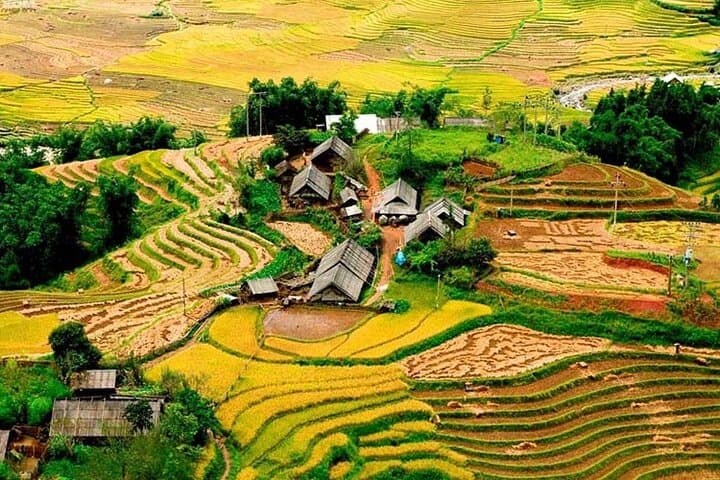
Three days of accessible trekking through Muong Hoa Valley with overnight train travel, a local homestay and a night in Sapa town. Expect rice terraces, village visits with Black H’mong and Red Dzao communities, and mostly moderate dirt trails.
Three days of accessible trekking through Muong Hoa Valley with overnight train travel, a local homestay and a night in Sapa town. Expect rice terraces, village visits with Black H’mong and Red Dzao communities, and mostly moderate dirt trails.
Night train windows blur as Hanoi recedes and the mountains of northern Vietnam sharpen into silhouette.
Verified experiences and guided adventures in the surrounding area.
Operated by LOCAL TOURS VIETNAM · Sapa, Lao Cai
Night train windows blur as Hanoi recedes and the mountains of northern Vietnam sharpen into silhouette.
By dawn the landscape opens—stepped rice terraces cut into the slopes, streams that seem to push walkers forward, and villages where woven indigo and embroidered collars mark family ties. This three-day itinerary threads the Muong Hoa Valley: Y Linh Ho, Lao Chai, Ta Van, Giang Ta Chai and Cat Cat, mixing 6–10 km day treks with a night in a guest homestay and one in a Sapa hotel.
The region is home to Black H’mong, Dzay and Red Zao communities whose livelihoods remain linked to rice farming and handicraft. Geologically, the Hoang Lien Son range is the uplifted edge of karst and metamorphic formations that create steep ridgelines and fertile terraces. Travelers will pass vestiges of early 20th-century hydro works and see Fansipan’s bulk—Vietnam’s highest peak—quietly dominating the horizon.
Practical notes: trails are mostly dirt and stone with modest elevation change but become slippery when wet; trekking difficulty ranges 4–6/10. Expect early starts, communal meals, and basic homestay comforts. Bring layered clothing for sudden temperature swings, waterproof footwear, and cash for markets and tips. Respect local customs—ask before photographing people—and pack out litter.
For those wanting immersive culture with achievable daily mileage, this tour pairs scenic walking with logistic ease: train transfers limit road time, guides provide local context, and homestay hospitality offers a direct connection to valley life.
moderate.
3 days.
Suitable for travelers who can walk 6–10 km per day on uneven terrain and handle stairs and short hills.
Daily walks are typically 6–10 km over uneven, sometimes steep terrain; overall difficulty is moderate (4–6/10) and suitable for reasonably fit travelers.
Homestays are simple family homes with shared facilities; expect local meals, basic mattresses and an opportunity to learn local customs.
The shared soft-sleeper cabins are a practical way to travel; bring earplugs and a small pillow for comfort and secure valuables.
ATMs are available in Sapa and Lao Cai but can be unreliable in small villages—carry sufficient cash for purchases and tips.
Sapa grew as a hill station under French colonial rule and the valley has long been home to ethnic minority groups who maintain distinctive dress and crafts.
Trail erosion and litter are growing issues; travel with a guide, stick to paths, and favor homestays and vendors who invest in local livelihoods.
LOCAL TOURS VIETNAM operates guided outdoor trips and adventures with an emphasis on safety, stewardship, and memorable experiences.



Night train windows blur as Hanoi recedes and the mountains of northern Vietnam sharpen into silhouette.
Night train windows blur as Hanoi recedes and the mountains of northern Vietnam sharpen into silhouette.
By dawn the landscape opens—stepped rice terraces cut into the slopes, streams that seem to push walkers forward, and villages where woven indigo and embroidered collars mark family ties. This three-day itinerary threads the Muong Hoa Valley: Y Linh Ho, Lao Chai, Ta Van, Giang Ta Chai and Cat Cat, mixing 6–10 km day treks with a night in a guest homestay and one in a Sapa hotel.
The region is home to Black H’mong, Dzay and Red Zao communities whose livelihoods remain linked to rice farming and handicraft. Geologically, the Hoang Lien Son range is the uplifted edge of karst and metamorphic formations that create steep ridgelines and fertile terraces. Travelers will pass vestiges of early 20th-century hydro works and see Fansipan’s bulk—Vietnam’s highest peak—quietly dominating the horizon.
Practical notes: trails are mostly dirt and stone with modest elevation change but become slippery when wet; trekking difficulty ranges 4–6/10. Expect early starts, communal meals, and basic homestay comforts. Bring layered clothing for sudden temperature swings, waterproof footwear, and cash for markets and tips. Respect local customs—ask before photographing people—and pack out litter.
For those wanting immersive culture with achievable daily mileage, this tour pairs scenic walking with logistic ease: train transfers limit road time, guides provide local context, and homestay hospitality offers a direct connection to valley life.